
Sports Event Photography: Building Media Assets for Teams, Events, and Sponsors
Professional sports event photography turns a single sporting event into a library of reusable marketing assets. Here's what that coverage involves, how to plan for it, and why it matters for every stakeholder in the space.
What Sports Event Photography Actually Covers (And Why It Matters)
Sports event photography is full-coverage media production for a live competition-not simply a person in the stands with a phone. It spans four pillars: action coverage of athletes in play, atmosphere shots of the crowd and venue, branded moments featuring sponsor signage, and deliverables built specifically for teams, organizers, and potential sponsors. Notable photographers throughout the industry historically worked for publications like Life or Sports Illustrated, but today the same caliber of work fuels social clips, galleries, Instagram content creation, and traditional media from one full set of images.
A professional sports event photographer brings consistency that parents on the bleachers simply cannot: timing, sideline access, and planned media delivery. Consider the difference in coverage styles-a weekend basketball tournament needs fast indoor lighting adaptation in a gym, while a summer soccer showcase demands long lens outdoor work and golden-hour light. A CrossFit throwdown combines dynamic movement with branded zones and athlete portraits between each session. Effective sports photography includes capturing the atmosphere and context of the event, and candid shots capture emotions and tell a broader story.
Sports photographers often provide candid images of athletes and fans, giving organizers content that makes the audience cheer.
Each stakeholder walks away with something different. Event organizers get photos that promote future registration and increase attendance. Teams produce recruiting materials and highlight reels. Sponsors receive visible logo placement and measurable value for their investment, which supports growth across seasons.
Discuss Sports Event Media Coverage →
Planning a Sporting Event for Successful Photography Coverage
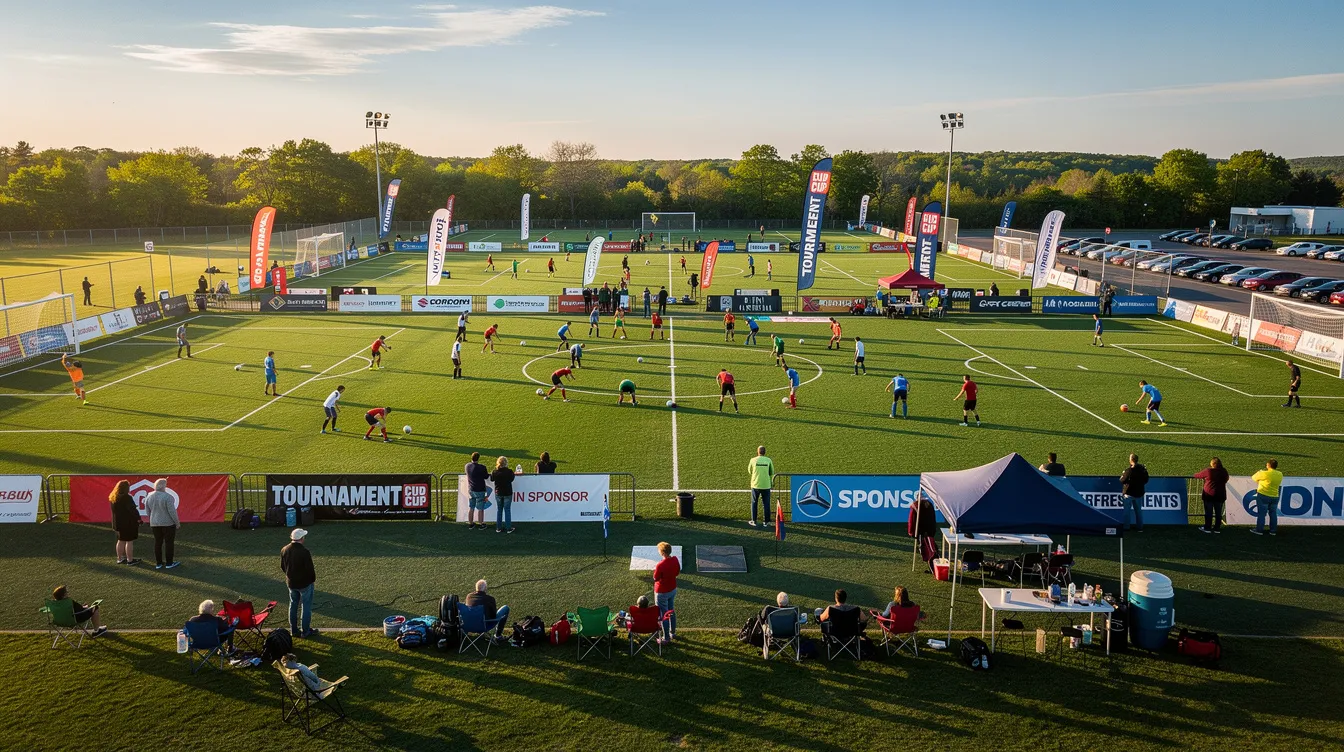
Before the first whistle, organizers and the photographer need to agree on fundamentals: event date, every location (courts, fields, arenas), lighting conditions-natural versus artificial, day versus evening games-and a detailed schedule of all games or heats.
Build a coverage map. Identify which fields matter most for sponsors, which divisions need guaranteed key shots, and where branded signage will be best showcased. Photographers should plan for key shots during events, and scouting the venue before shooting helps identify the best spots and assess lighting conditions. Anticipating action involves learning the sport's rules to predict player movement, and learning those rules helps photographers understand where key moments will happen on the field or court.
Secure access and credentials. Confirm sideline and bench access, define safe movement paths, and distribute photographer IDs. Coordinate with announcers and tournament directors so the photographer knows exact times for national anthems, walkouts, and trophy presentations. A basic run sheet-or a shared document in a collaborative spreadsheet-should list every critical moment with times and assigned roles. This is the default approach that keeps the shoot organized and ensures nothing essential is missed in the chaos of event day.
Key Shots Every Sports Event Needs in Its Full Set
Key shots are the non-negotiable images that turn a random collection of game photos into a powerful story. Don't leave without this shot: opening scenes of the empty venue, event signage, and sponsor banners before a single fan arrives. Then capture the crowd building, teams arriving, warm-ups, the national anthem, and the coin toss-all anchoring the idea of beginning.
Action coverage must include peak plays-goals, dunks, takedowns, PR lifts-because capturing peak action moments is essential in sports photography. Key moments include touchdowns, goals, and jumps. But emotion matters equally: coaches reacting, bench energy, and sideline intensity bring life to the images. Candid shots of athletes convey emotion and intensity, and to capture that emotion, photographers should focus on celebrations and interactions. Experiment with different angles to tell a story through the images.
Storytelling frames supply depth. Wide-angle venue shots with packed stands set scale. Scoreboards with visible context-time, score, sponsor logos-wrap the narrative. Behind-the-scenes prep, medical staff, volunteers, and event workers all contribute texture. Photography in sports often captures emotional storytelling moments beyond just the action, and that broader view is what makes memories last.
Sponsor-focused key shots are critical for brand visibility: winner interviews in front of branded backdrops, hero plays where signage is in frame, and step-and-repeat photos where champions and sponsor reps are present together. Post-event deliverables complete the arc. The tradition of starting XI photographs began in 1863, became common after the 1871–72 FA Cup, and remains a staple-Brazil took a starting XI photograph in the 2002 FIFA World Cup Final. Awards podiums, full team photos, and the captain with the trophy all reinforce achievement and fulfill sponsor commitments. Starting XI photographs have existed since 1863 and remain helpful for leagues, schools, and tournaments at every level.
Gear, Shooting Techniques, and Live Sports Timing
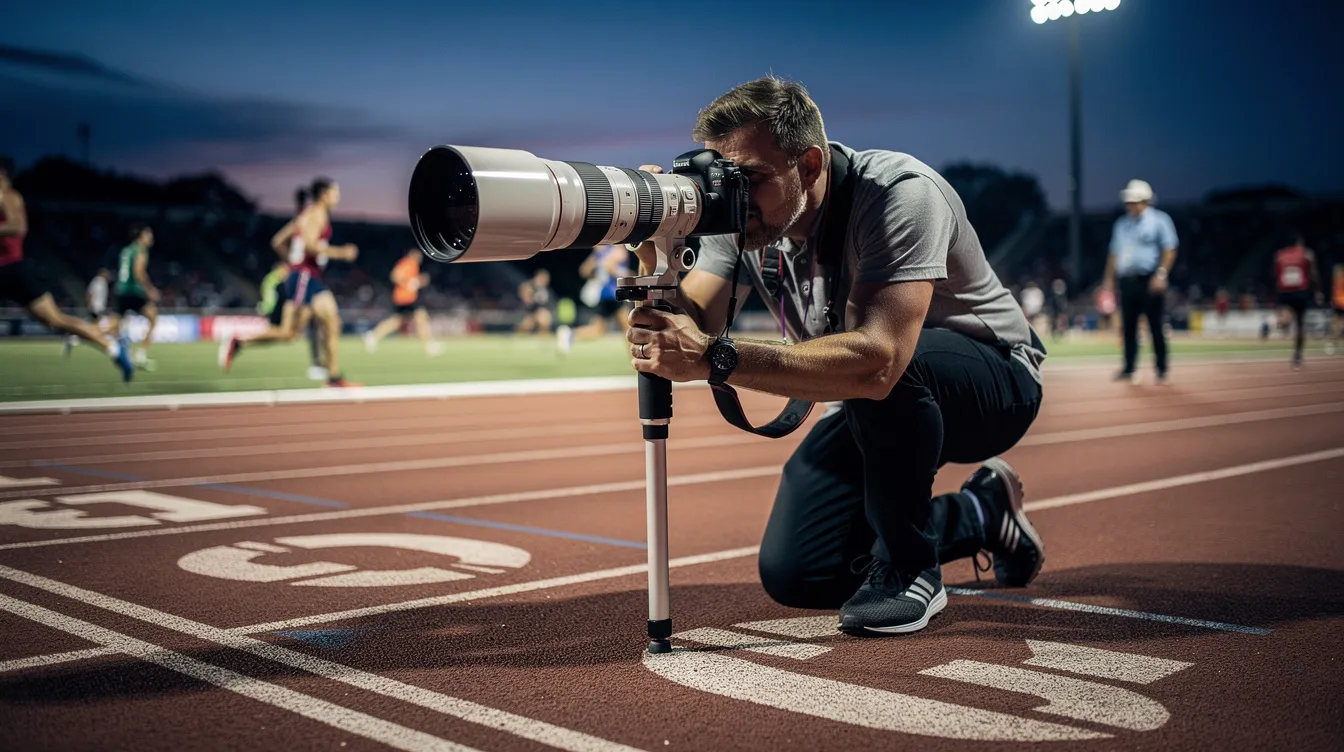
Sports event photography requires managing fast motion using specialized techniques and equipment. Dual camera bodies are standard-one fitted with a telephoto zoom lens like a 70–200mm f/2.8 for action, and a second with a 24-70mm lens, which is often preferred for sports photography when you need closer atmosphere and compositional shots. For venue-wide and ceremony coverage, an ultra-wide 16–35mm captures scale. High-speed DSLRs or mirrorless cameras are crucial for capturing peak action.
A common starting camera setting for sports is a shutter speed of 1/1000 second or faster-use fast shutter speeds to capture high-speed action clearly. Using a low aperture allows for more light and a shallow depth of field, isolating the athlete from distracting backgrounds. Managing ISO is important for maintaining fast shutter speeds in dim light during sports events; a Friday-evening high school football game under stadium lights in October, for instance, may push ISO into the thousands.
Continuous autofocus is used to track moving subjects, and using continuous autofocus modes is essential for accurate tracking of moving athletes. Using fast memory cards is necessary to handle continuous burst shooting without buffering, and shooting in RAW file format provides better editing flexibility for fast-paced sports.
This is paragraph text. Click it or hit the Manage Text button to change the font, color, size, format, and more. To set up site-wide paragraph and title styles, go to Site Theme.