

EAST COAST SPORTS LIVE
NCAA College Football
college football news
For decades, one of the biggest frustrations surrounding Miami football has been watching elite South Florida talent leave for powerhouse programs across the country. Every recruiting cycle seemed to produce another five-star prospect heading to Alabama, Georgia, LSU, Ohio State, or another national contender instead of staying home. Mario Cristobal has made changing that narrative one of his top priorities since returning to Coral Gables. Now, the commitment of A'mir Sears , one of the nation's premier defensive prospects in the 2027 recruiting class, may represent the clearest sign yet that Miami's recruiting strategy is beginning to pay off. While one commitment alone won't define a recruiting cycle, Sears' decision carries significance because it reinforces a growing trend: some of South Florida's best players are choosing to build their futures with the Hurricanes instead of leaving the state. A Major Recruiting Victory Sears' commitment immediately strengthened what was already one of the nation's top recruiting classes. After recently reclassifying from the 2028 class to the 2027 cycle, Sears announced his commitment to Miami over a list of national programs that included LSU, Michigan, and Texas A&M . His decision gives Cristobal another elite defensive prospect while adding one of Florida's highest-rated recruits to the Hurricanes' class. The commitment also highlights Miami's ability to win a recruiting battle against programs that have traditionally succeeded in attracting top talent from South Florida. For a program trying to return to national championship contention, victories like this can be just as meaningful as wins on the field. Cristobal's Strategy Is Centered on South Florida From the day he became Miami's head coach, Cristobal has consistently emphasized the importance of recruiting locally. South Florida has long been considered one of the richest talent-producing regions in the country, yet Miami has often struggled to keep many of its highest-ranked prospects from leaving for other schools. Sears' decision suggests that dynamic may be starting to shift. The standout defensive back developed into one of the nation's most complete two-way players while competing in South Florida, first at West Broward High School before transferring to Christopher Columbus High School, Cristobal's alma mater. His familiarity with the area and Miami's recruiting efforts made him one of the Hurricanes' top priorities throughout the process. Landing a player with those connections sends a message that Miami intends to make local recruiting the foundation of its future success. More Than One Commitment Sears does not stand alone. According to the uploaded sources, Miami's 2027 recruiting class already features several nationally regarded prospects, including wide receiver Nick Lennear , defensive end Jaiden Bryant , and cornerback Donte Wright . Together, they have helped position the Hurricanes among the highest-ranked recruiting classes in the country. Multiple recruiting services project Miami's class among the nation's top three entering the upcoming high school football season. That consistency matters. Elite recruiting classes are rarely built around one player. They are built through sustained success in attracting top prospects across multiple positions. Why Sears Fits Miami's Future Sears earned national recognition because of his versatility. As a sophomore, he excelled on both sides of the ball, recording 61 tackles, 11 pass breakups, and three interceptions on defense while also catching 49 passes for 942 yards and 11 touchdowns on offense. Although Miami projects him primarily as a defensive back at the college level, his athletic ability gives the coaching staff multiple options as he continues to develop. Recruiting analysts have praised Sears for his instincts in coverage, his ability to stay with receivers downfield, and the upside he possesses as his frame continues to mature. Those qualities make him one of the most valuable additions to Miami's defensive future. The Momentum Continues to Build Recruiting success often creates more recruiting success. Highly rated prospects want to play alongside other elite players, and Miami's growing collection of blue-chip commitments gives the Hurricanes additional momentum as they pursue the remainder of the 2027 class. The sources also note that Sears' commitment could position Miami to sign one of the strongest recruiting classes in modern program history if the current group remains intact through signing day. While verbal commitments can always change before National Signing Day, assembling this level of talent has strengthened Miami's standing among the nation's recruiting powers. Changing the Program's Identity Perhaps the biggest significance of Sears' commitment has little to do with recruiting rankings. For years, Miami fans watched many of the area's biggest stars leave South Florida for other national programs. That trend became one of the defining frustrations surrounding the Hurricanes' efforts to return to prominence. Landing Sears represents another example of Cristobal convincing elite local talent that staying home can provide the same opportunities as leaving for another conference powerhouse. If that pattern continues over several recruiting cycles, Miami could dramatically reshape both its roster and its long-term outlook. One Commitment Doesn't Change Everything—But It Can Change Momentum Recruiting victories are only meaningful if they eventually produce victories on Saturdays. Sears still has his senior season ahead before arriving in Coral Gables, and Miami must keep its current class together while continuing to develop the players already on campus. Still, this commitment feels different because of what it represents. Rather than simply adding another talented prospect, Miami secured one of South Florida's premier players over several national contenders. For a program built on local talent throughout its championship years, that may be the most encouraging sign of all. If Mario Cristobal continues winning those battles close to home, the Hurricanes may finally be rebuilding the recruiting foundation that once made Miami one of college football's dominant programs.
For years, the Big Ten and SEC have dominated college football on the field. Between national championships, lucrative television contracts, and expanding conference footprints, the two leagues have become the sport's undisputed financial leaders. Now, their influence appears to extend well beyond stadiums and boardrooms. The recent negotiations surrounding the Protect College Sports Act have highlighted how much political leverage the Big Ten and SEC now possess. After initially withholding support for the proposed legislation, both conferences ultimately endorsed the bill following days of negotiations with federal lawmakers over several key provisions. Their approval immediately changed expectations for the legislation's future in Congress, underscoring just how much influence the two conferences now wield over the direction of college athletics. Their Support Changed the Conversation The Protect College Sports Act appeared to face an uncertain path until the Big Ten and SEC reached an agreement with lawmakers. According to the uploaded sources, conference presidents and chancellors voted to support the legislation after late-stage negotiations resulted in revisions addressing several of their concerns. Once the conferences announced their backing, expectations shifted quickly, with lawmakers expressing confidence that the bill had enough support to move through the Senate. The sequence of events demonstrated an important reality. The legislation did not simply require congressional support—it effectively required the support of the two conferences that now sit at the center of college football's power structure. Negotiations Focused on More Than NIL Much of the public discussion has centered on NIL and athlete compensation, but the negotiations extended much further. One of the biggest issues involved preventing schools from bypassing proposed athlete compensation limits through third-party sponsorships and affiliated business agreements. Revised language in the bill created an attestation process designed to distinguish legitimate endorsement agreements from payments intended to circumvent the proposed revenue-sharing cap. The legislation also increased the overall compensation framework to an effective $48.8 million , combining the original revenue-sharing cap with additional retention funding and designated support for women's and non-revenue sports. Those revisions became central to securing support from conference leaders. Critics See Growing Conference Control Not everyone views the agreement as a victory for college athletics. One opinion piece included among the uploaded sources argues that the Big Ten and SEC successfully used their leverage to obtain concessions that strengthen their long-term position while making it more difficult for smaller conferences to compete financially. The commentary suggests that the conferences' influence over the legislative process reflects a broader shift in power within college sports. That perspective differs from straightforward news reporting but illustrates why the legislation has generated such strong reactions across the college athletics landscape. Supporters of the bill, meanwhile, argue that stronger national rules are necessary to replace the current patchwork of NIL regulations and ongoing legal uncertainty. The Revenue-Sharing Debate Remains Central One of the most closely watched elements of the proposed legislation remains the athlete compensation model. College leaders have argued that schools need enforceable national standards after some programs reportedly exceeded existing revenue-sharing expectations through outside NIL arrangements. The revised proposal attempts to create clearer limits while preserving opportunities for legitimate endorsement deals that meet certification requirements. Whether those safeguards will prove effective remains an open question. Even supporters acknowledge that enforcement will ultimately determine whether the new framework achieves its intended purpose. The Bill Extends Beyond Athlete Compensation Although revenue sharing has received most of the attention, the proposed legislation addresses several additional issues affecting college sports. According to the uploaded sources, the bill includes provisions that would: Establish a nationwide five-year eligibility policy. Reinstate a standardized one-time transfer exception. Create an agent registry with a maximum fee structure. Limit future conference expansion by capping power conferences at 19 member institutions. Require schools changing power conferences to spend five years as independents. Prevent coaches from leaving their teams during the season under a provision informally referred to as the "Lane Kiffin Rule." Together, these measures demonstrate that the legislation aims to reshape several aspects of college athletics rather than focusing exclusively on NIL. Why This Moment Matters Regardless of whether the Protect College Sports Act ultimately becomes law, the negotiations have already revealed something significant about today's college football landscape. The Big Ten and SEC were not simply participants in the legislative process. They were widely viewed as essential stakeholders whose approval could determine whether the proposal advanced. Their ability to influence revisions before offering support reflects the growing concentration of power among the sport's two wealthiest conferences. That influence extends beyond television contracts, playoff expansion, and conference realignment. It now reaches into discussions that could shape the national legal framework governing college athletics. The Future of College Football May Depend on More Than Congress The Protect College Sports Act still faces additional legislative hurdles, including consideration in the House of Representatives and the possibility of future legal challenges if it becomes law. But regardless of its final outcome, one conclusion has become increasingly difficult to ignore. The Big Ten and SEC have evolved from successful athletic conferences into the most influential voices in college football. Their decisions now affect not only scheduling, championships, and media rights but also the national conversation surrounding athlete compensation, governance, and the future structure of the sport itself. As college athletics continues to change, the biggest question may no longer be which conference is the strongest on the field. Instead, it may be which organizations hold the greatest power to shape the game long before kickoff.

FIFA's World Cup investment proposal has sparked opposition from major football confederations, with governance and transparency emerging as the central issues.
Build a stronger 2026 fantasy football roster by understanding why drafting running backs early can create flexibility and long-term value in half-PPR leagues.
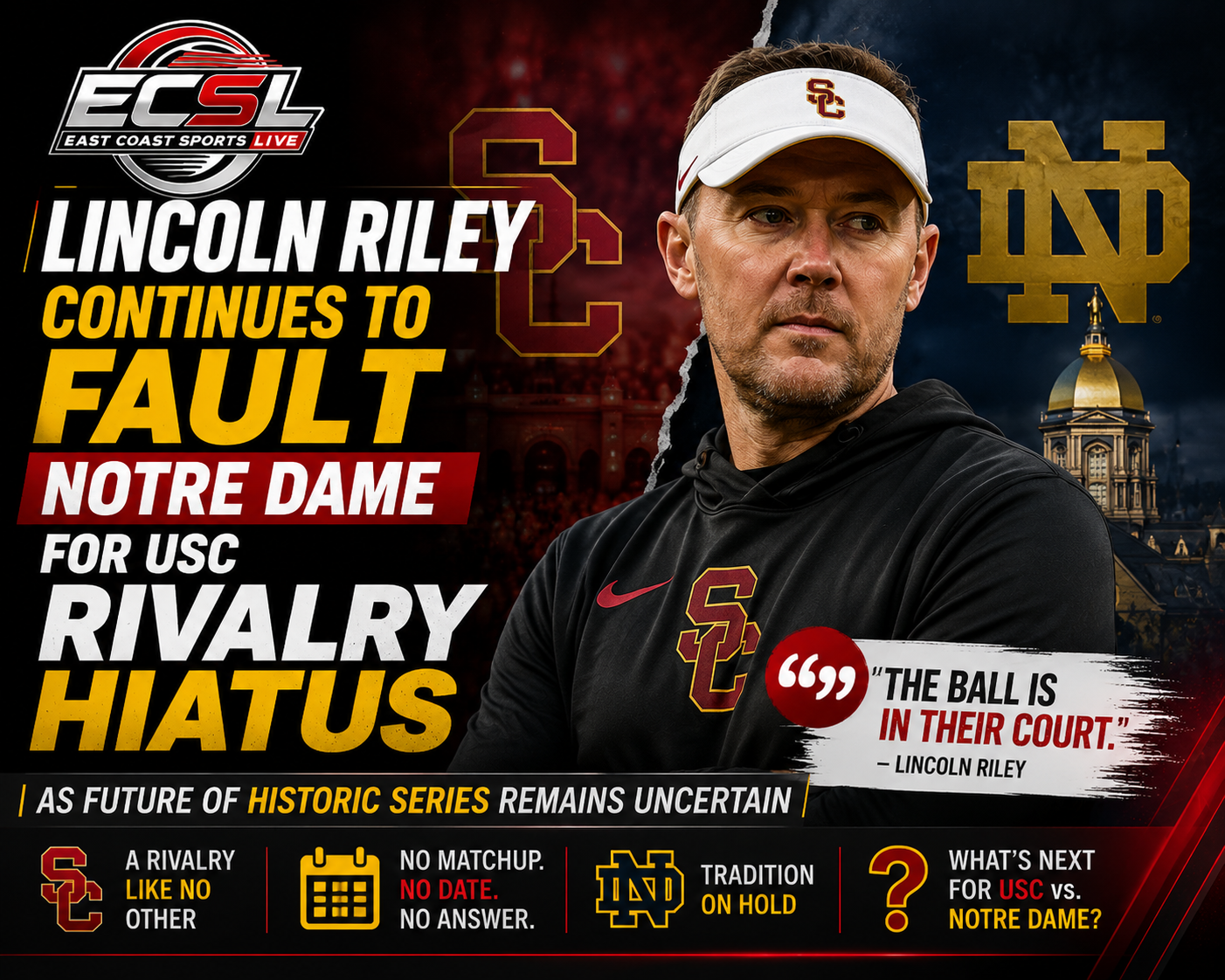
One of college football's most iconic rivalries remains on pause, and USC head coach Lincoln Riley continues to believe the series could have continued if negotiations had unfolded differently. Speaking during Big Ten Media Days , Riley reiterated that he wants the annual matchup between USC and Notre Dame to remain on the schedule. However, he also suggested the Fighting Irish bear responsibility for the current hiatus after the two schools failed to reach an agreement on extending the series beyond its previous contract. The rivalry, which has been played nearly every year for almost a century, will not be contested this season for just the fifth time since World War II, ending one of the longest continuous traditions in college football. Lincoln Riley Says USC Wanted to Keep Playing Riley made it clear that USC's desire to continue the rivalry has not changed. When asked about the status of future games, the Trojans coach said his position remains the same and expressed hope that the two programs can eventually return the matchup to the college football calendar. According to Riley, the game would still be taking place had previous discussions resulted in the agreement USC expected. "Nothing's changed from my vantage point," Riley said. "We want to play the game. I want to play the game." While Riley stopped short of directly criticizing Notre Dame by name, his comments reinforced USC's longstanding position regarding the stalled negotiations. Why the Rivalry Was Paused The disagreement centered largely on scheduling. USC reportedly wanted to move the annual rivalry from its traditional late-season date to Week 0 , believing an early-season matchup would reduce the potential impact a late loss could have on the Trojans' College Football Playoff hopes. Notre Dame declined that proposal. Head coach Marcus Freeman previously explained that while he is willing to play USC "anytime, anywhere," moving a game that had historically been scheduled near the end of the regular season to the opening week was not in the best interest of the Irish program. Without an agreement on scheduling, the rivalry was placed on hold. A Rivalry Unlike Almost Any Other Few games in college football carry the historical significance of Notre Dame versus USC. The programs have met: 96 times entering the hiatus 78 of the last 79 seasons Every year except the COVID-affected 2020 season during that stretch Before the 2020 interruption, the only extended pause came during World War II , when the rivalry was not played for three consecutive seasons. The annual matchup has featured numerous Hall of Fame players, Heisman Trophy winners, national championship teams, and unforgettable finishes that helped shape college football's national popularity. Why Scheduling Became More Complicated The changing landscape of college football has made scheduling marquee nonconference games increasingly difficult. USC now competes in the Big Ten , where annual conference schedules already include several nationally ranked opponents. Combined with expanded College Football Playoff discussions, many programs are carefully evaluating how difficult nonconference schedules could affect postseason opportunities. Some observers believe that concern influenced USC's request to move the rivalry earlier in the season, allowing the Trojans additional opportunities to recover from a loss before playoff selections are made. Notre Dame, meanwhile, maintained that preserving the rivalry's traditional place on the calendar remained important. Notre Dame Quickly Filled the Opening Following the breakdown in negotiations, Notre Dame moved quickly to adjust its future schedule. The Irish announced a home-and-home series with BYU , a decision USC supporters have pointed to as evidence that Notre Dame was prepared to move on from the rivalry rather than continue negotiations. Notre Dame officials have not publicly blamed USC for the hiatus, instead emphasizing that scheduling decisions must reflect what is best for the football program as a whole. Freeman has consistently stated that he understands USC must also make decisions based on its own competitive priorities. Could the Rivalry Return? Despite the current break, neither school appears ready to end the rivalry permanently. Reports referenced in the source material indicate both programs remain interested in renewing the series, with 2030 viewed as the earliest realistic opportunity for games to resume. Several factors could make future negotiations easier. Among them are: Potential expansion of the College Football Playoff Changes to conference scheduling models Greater flexibility in nonconference scheduling Long-term television agreements that accommodate marquee rivalry games If those developments occur, both schools may find it easier to restore one of college football's premier annual matchups. Fans Continue Hoping for a Resolution The pause has disappointed fans on both sides. For generations, Notre Dame and USC have represented one of the sport's defining intersectional rivalries, regularly matching national powers from opposite coasts in games that often carried championship implications. The series has also produced some of college football's most memorable moments while featuring legendary coaches and countless future NFL stars. Its absence leaves a noticeable gap on the national schedule. The Tradition Isn't Gone—Just Waiting While Lincoln Riley continues to suggest Notre Dame deserves much of the blame for the current hiatus, both programs have consistently expressed a desire to eventually bring the rivalry back. Whether that happens in 2030 or later remains uncertain, but there appears to be mutual recognition that college football is better when Notre Dame and USC share the field. Until an agreement is reached, one of the sport's greatest traditions will remain on hold, with fans left hoping the rivalry returns before another generation misses the opportunity to experience one of college football's most celebrated annual games.
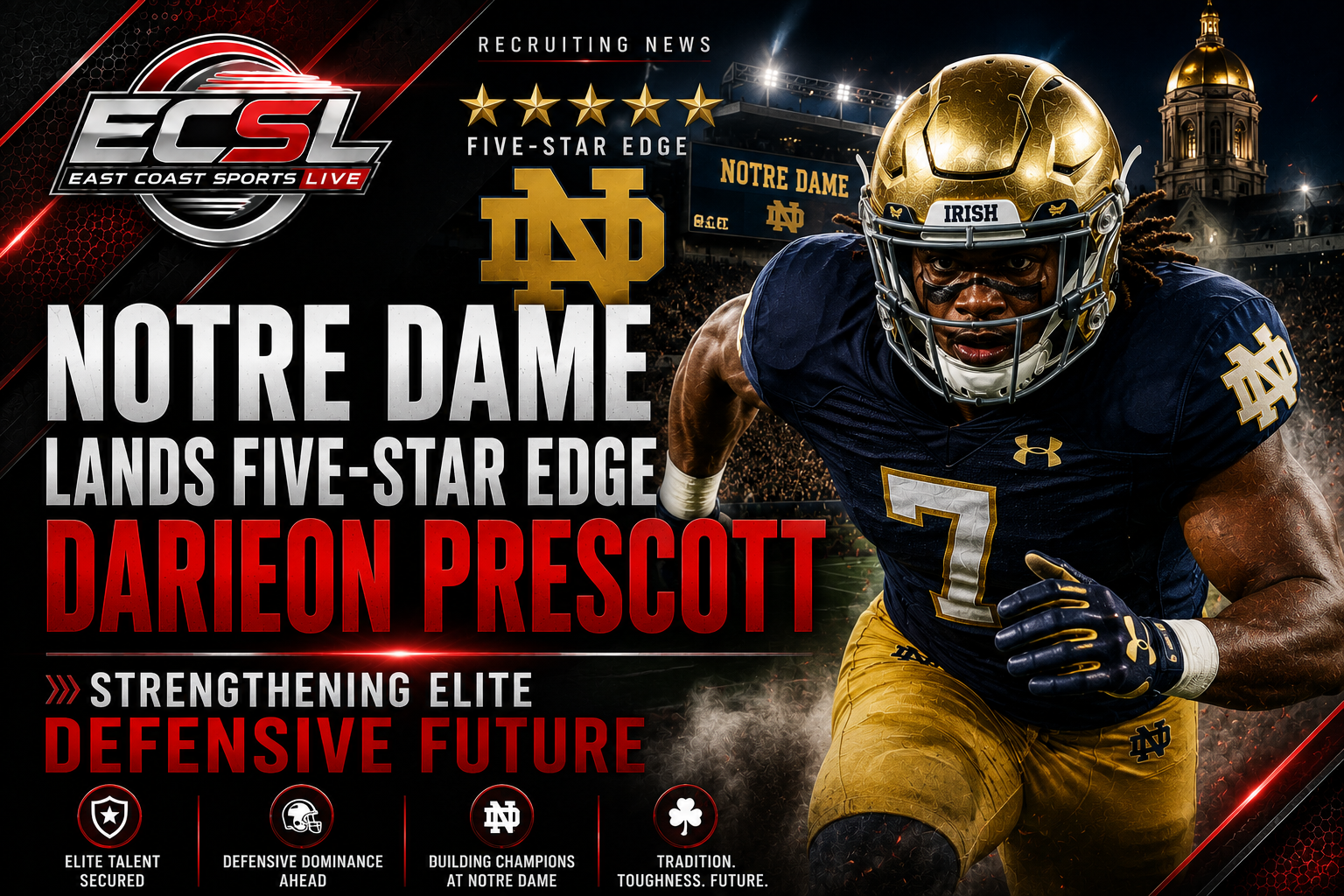
Notre Dame added another major piece to its already impressive recruiting pipeline Monday as five-star edge rusher Darieon Prescott announced his commitment to the Fighting Irish, choosing Marcus Freeman's program over fellow finalists Oregon and Texas A&M . The highly coveted defensive standout from Bolingbrook High School in Illinois revealed his decision after an extensive recruiting process that included visits to each of his finalists. His commitment gives Notre Dame one of the nation's premier defensive prospects in the 2028 recruiting class and continues the program's momentum on the recruiting trail. Prescott becomes just the third commitment in Notre Dame's 2028 class, but his decision immediately elevates the group's profile while reinforcing Freeman's reputation as one of college football's top recruiters. Notre Dame Wins Another High-Profile Recruiting Battle Landing Prescott required beating several national powers. The Fighting Irish emerged victorious over Oregon and Texas A&M, while Prescott also held scholarship offers from programs including Alabama, Georgia, Michigan, Ohio State, Texas, Indiana, and many others throughout the country. Recruiting analysts viewed Oregon and Texas A&M as serious contenders throughout the process, but Notre Dame's consistent recruiting efforts and strong relationships ultimately proved decisive. His announcement represents another recruiting victory for Freeman, whose staff has continued attracting elite talent on both sides of the football. One of the Nation's Top Defensive Prospects Prescott enters the 2028 recruiting class with impressive national rankings across multiple recruiting services. Darieon Prescott Recruiting Rankings No. 18 overall prospect (247Sports Composite) No. 5 EDGE prospect nationally (247Sports Composite) No. 1 player in Illinois (247Sports Composite) No. 36 overall prospect (ESPN Junior 300) No. 7 EDGE prospect (ESPN) No. 18 overall recruit (Rivals Industry Ranking) No. 5 EDGE nationally (Rivals Industry Ranking) Top-ranked player in Illinois (Rivals Industry Ranking) Standing between 6-foot-4 and 6-foot-5 and weighing approximately 255 to 260 pounds , Prescott already possesses the physical frame college coaches seek in an elite pass rusher. Sophomore Season Showed Why Recruiters Took Notice Prescott's breakout sophomore campaign helped establish him as one of the country's most sought-after defenders. 2025 Season Statistics 65 total tackles 14 tackles for loss Five sacks 26 quarterback pressures Eight pass breakups Three forced fumbles Two fumble recoveries Two blocked kicks Those numbers only tell part of the story. Recruiting analysts consistently praise Prescott's explosive first step, closing speed, athletic versatility, and relentless motor. He has demonstrated the ability to line up in multiple defensive alignments while remaining effective against both the run and the pass. Athleticism Extends Beyond Football Prescott's upside isn't limited to what he has already accomplished on the football field. A standout multi-sport athlete, he has also competed in track and field, recording impressive sprint times that showcase the athleticism necessary to become an elite edge defender at the college level. Scouting evaluations describe him as a player still developing technically, suggesting his greatest football may still be ahead of him. Among the strengths highlighted by recruiting analysts are: Explosive first-step quickness Outstanding closing speed Ability to rush from multiple alignments Strong pursuit against the run High football motor Physical frame capable of adding more strength without sacrificing athleticism Those traits have made Prescott one of the most intriguing defensive prospects in the country. Charlie Partridge Continues Building Notre Dame's Defensive Line Prescott's commitment also represents another recruiting victory for first-year defensive line coach Charlie Partridge . Originally recruited by former Notre Dame assistant Al Washington, Prescott developed a strong relationship with Partridge after the coaching transition. That connection helped solidify Notre Dame's position throughout the recruiting process. The addition further strengthens what is quickly becoming one of the nation's deepest collections of defensive line talent. Notre Dame's 2027 recruiting class already features multiple highly regarded defensive linemen, and Prescott gives the Irish another cornerstone piece for the future. Notre Dame's 2028 Recruiting Class Continues Growing Prescott joins a small but talented 2028 recruiting class that now includes: Darieon Prescott — EDGE (Illinois) Andre Jones — Safety (Florida) Owen Davies — Kicker (Tennessee) Although the class remains in its early stages, Notre Dame has already secured commitments from players viewed as leaders at their respective positions. Recruiting analysts expect the class to continue climbing the national rankings as additional commitments are announced over the coming months. Momentum Builds Under Marcus Freeman Freeman has made recruiting one of the defining strengths of his tenure. Notre Dame's 2027 recruiting class currently ranks among the nation's best, and the early success in the 2028 cycle suggests that momentum is continuing. Landing prospects like Prescott demonstrates the program's ability to compete head-to-head with traditional recruiting powers for elite talent, particularly in the Midwest, where Notre Dame has historically built its foundation. Keeping top Illinois prospects close to South Bend has long been a priority for the Fighting Irish, and Prescott's commitment reinforces that strategy. Why This Commitment Matters Elite edge rushers remain among the most valuable players in modern college football. Defensive linemen capable of consistently disrupting opposing quarterbacks are increasingly difficult to find, making Prescott one of the most important additions Notre Dame could make this early in the recruiting cycle. His combination of size, athleticism, production, and developmental potential gives the Fighting Irish another player who could eventually become a difference-maker at the collegiate level. While there is still plenty of time before the 2028 signing period, Notre Dame has already secured one of the cycle's premier defensive prospects. If Marcus Freeman and his staff can continue building around commitments like Prescott, the Fighting Irish appear well-positioned to remain among college football's recruiting elite for years to come.
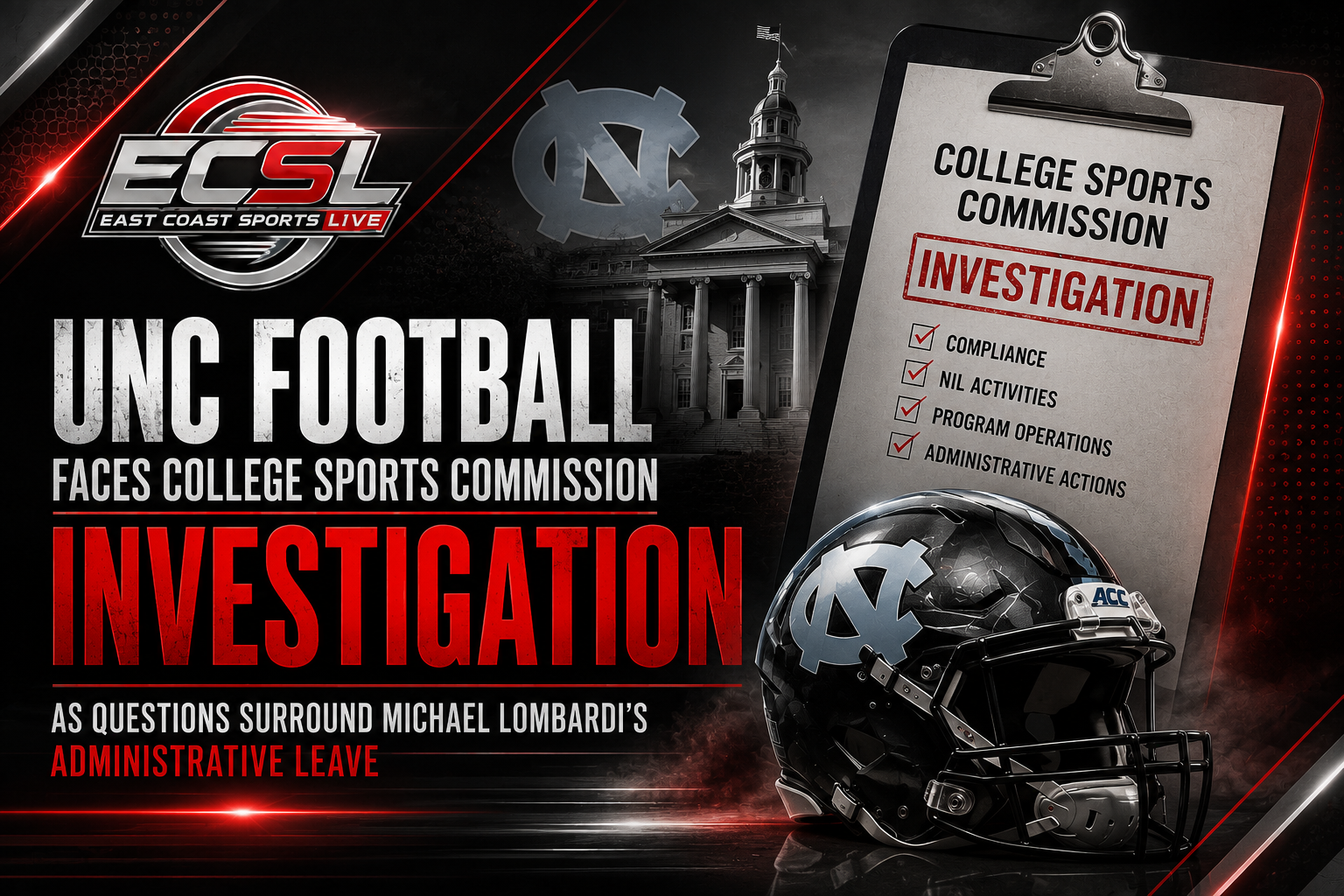
The University of North Carolina football program is facing increased scrutiny after reports revealed the College Sports Commission (CSC) has opened an investigation into the Tar Heels' football operations. The development comes on the same day that general manager Michael Lombardi was placed on paid administrative leave, creating another major challenge for a program entering its second season under head coach Bill Belichick . While university officials have not publicly connected the two matters, the timing has intensified speculation as North Carolina prepares for the upcoming college football season. At this stage, neither the university nor the CSC has disclosed the specific allegations that prompted the investigation. What Is the College Sports Commission Investigating? According to multiple reports, the College Sports Commission is reviewing matters related to college athletics' modern financial structure rather than on-field competition. The CSC oversees compliance involving: Institutional revenue sharing Third-party NIL (Name, Image and Likeness) agreements Sport-specific roster limits Enforcement of NCAA-related financial regulations Exactly which area prompted the investigation into North Carolina has not been disclosed. The commission also reviews NIL agreements valued at $600 or more to determine whether they represent legitimate business arrangements and whether compensation falls within what regulators consider a reasonable range. Michael Lombardi Placed on Administrative Leave Earlier in the day, North Carolina announced that football general manager Michael Lombardi had been placed on paid administrative leave. University officials did not explain the reason for the decision, stating only that personnel matters are handled confidentially. Reports cited in the source material indicate Lombardi's leave is related to a human resources complaint, although UNC has not publicly confirmed those reports. Additional reporting suggests Lombardi's actions may also be of interest in the CSC investigation, but no formal connection has been established by the university or the commission. Bill Belichick's NFL Approach Drew National Attention North Carolina made national headlines when it hired Bill Belichick in December 2024 following his legendary NFL coaching career. Belichick immediately brought familiar personnel with him, including Lombardi, a longtime NFL executive who previously served as general manager of the Cleveland Browns and worked alongside Belichick for years. The goal was ambitious: transform North Carolina into a program operating more like a professional franchise. Earlier in Belichick's tenure, Lombardi famously described UNC as "the 33rd NFL team," emphasizing the staff's professional football background and organizational philosophy. That NFL-style approach generated excitement throughout college football, but recent developments have shifted attention away from the field. Investigation Comes During Changing NIL Landscape The College Sports Commission was created as college athletics entered a new era of revenue sharing and expanded NIL opportunities. Among its responsibilities are monitoring whether NIL agreements serve legitimate business purposes and ensuring schools comply with evolving financial regulations governing student-athletes. Earlier this year, the CSC successfully challenged NIL agreements involving Nebraska athletes, a case viewed by many observers as establishing an important precedent for future enforcement actions. Although no similar findings have been announced involving North Carolina, the investigation demonstrates the commission's willingness to actively examine compliance issues across major college football programs. Questions Remain Unanswered At this point, many of the most important details remain unknown. Among the unanswered questions are: What specific issues prompted the CSC investigation? Is the investigation connected to Michael Lombardi's administrative leave? Are any coaches, staff members, or student-athletes accused of violating NIL regulations? Has North Carolina received formal allegations from the commission? Could the investigation affect the upcoming football season? Neither UNC nor the College Sports Commission has publicly answered those questions. Public Reaction Has Been Swift News of the investigation quickly spread throughout the college football world. Much of the online discussion has focused on Belichick's high-profile arrival in Chapel Hill and whether increased expectations have placed additional attention on the program's operations. Social media commentary has ranged from criticism of the program to speculation about potential consequences, though none of those reactions constitute official findings in the investigation. The reports also renewed discussion about how quickly NIL enforcement continues to evolve as governing bodies establish new compliance standards for schools nationwide. Season Preparation Continues Despite the off-field distractions, North Carolina continues preparing for the upcoming season. Belichick enters his second year leading the Tar Heels after an opening campaign that fell short of the expectations surrounding his arrival. With preseason practices approaching, the coaching staff must now balance football preparation while university officials address questions surrounding the investigation and Lombardi's status. Investigation Still in Its Early Stages For now, the CSC investigation remains exactly that—an investigation. No findings have been announced, no violations have been confirmed, and no disciplinary action has been issued against North Carolina or its football program. The university has provided limited public comment while the review continues, leaving many questions unanswered. As college athletics continues adapting to an evolving NIL and revenue-sharing landscape, North Carolina has become one of the latest high-profile programs facing regulatory scrutiny. Whether the investigation ultimately results in violations or concludes without sanctions will depend on what the College Sports Commission uncovers in the weeks and months ahead.
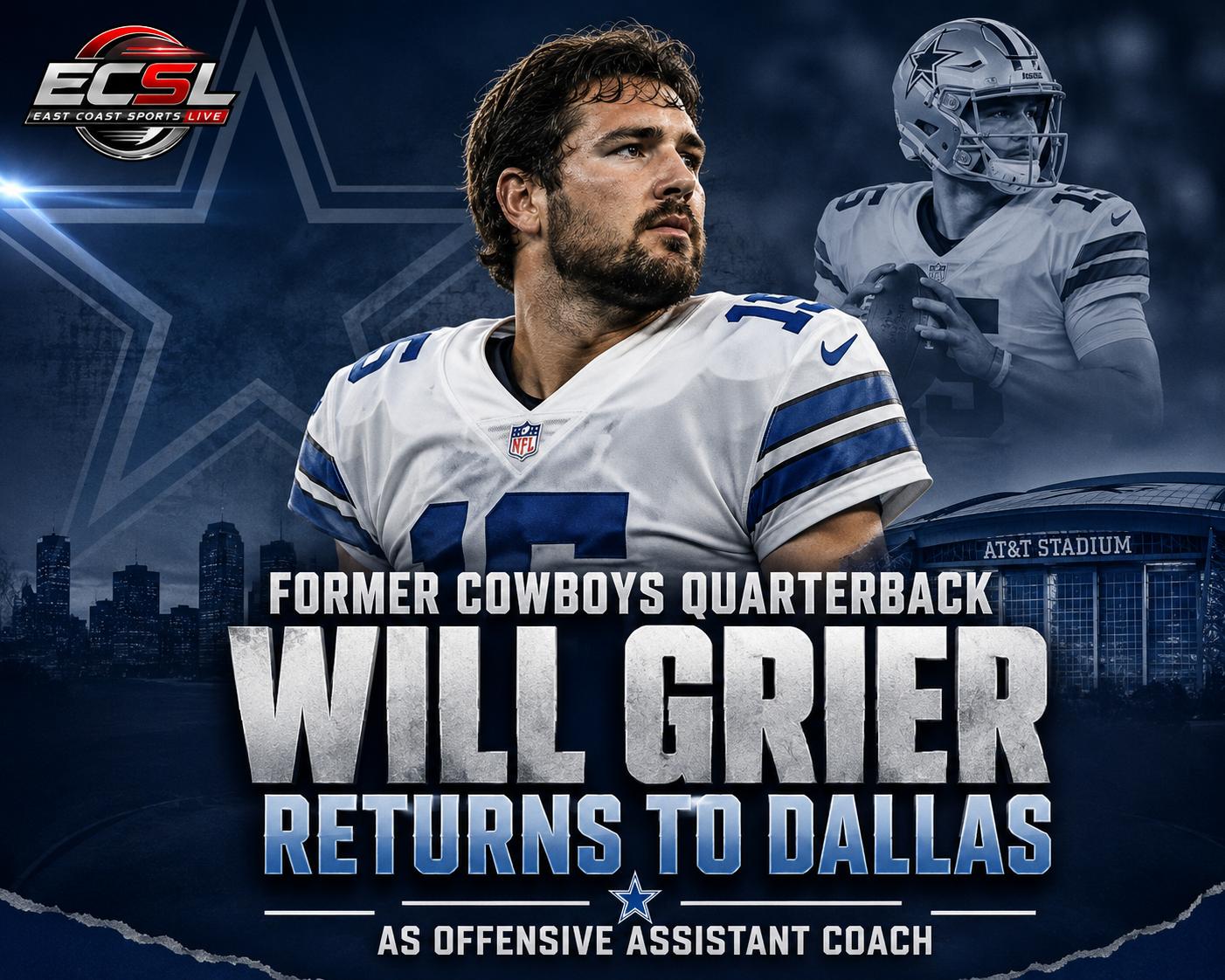
Less than two weeks after announcing his retirement from professional football, Will Grier is already beginning the next chapter of his NFL career. The former Dallas Cowboys quarterback is returning to the organization as an offensive assistant coach , reuniting with head coach Brian Schottenheimer and an offense that ranked among the league's best last season. The move allows Grier to remain in the game while transitioning from playing to coaching at just 31 years old. Although Grier's NFL playing career never unfolded as many projected after his standout collegiate career, his familiarity with Dallas' offensive system and coaching staff made him a natural fit for an immediate move into coaching. A Quick Transition From Player to Coach Grier's move from the field to the sidelines happened remarkably fast. Earlier this offseason, he briefly returned to the Carolina Panthers , the team that originally selected him in the third round of the 2019 NFL Draft. However, after deciding to retire from playing earlier this month, Grier accepted the opportunity to join Schottenheimer's coaching staff in Dallas. The transition means Grier will report to training camp in Oxnard, California, not as a quarterback competing for a roster spot, but as one of the coaches helping prepare Dallas' offense for the upcoming season. Familiar Faces Await in Dallas The Cowboys organization is hardly unfamiliar territory for Grier. He spent two separate stints with Dallas, first between 2021 and 2023 before returning to the club in 2024 , primarily serving as a backup or practice squad quarterback. During that time, he developed strong relationships with both Schottenheimer and franchise quarterback Dak Prescott , relationships that ultimately helped pave the way for his coaching opportunity. Now, instead of learning the offense himself, Grier will help teach it. NFL Career Spanned Multiple Teams While Grier is best known for his time with the Cowboys, his professional journey included several organizations. During his NFL career, Grier spent time with: Carolina Panthers Dallas Cowboys Cincinnati Bengals New England Patriots Los Angeles Chargers Philadelphia Eagles He appeared in two regular-season games during his rookie season with Carolina before spending much of the remainder of his career as a reserve quarterback, practice squad player, or developmental option. Although opportunities during the regular season were limited, Grier continued earning chances throughout the league because of his football intelligence, work ethic, and familiarity with multiple offensive systems. College Star Before Reaching the NFL Long before entering the NFL, Grier established himself as one of college football's most productive quarterbacks. After beginning his collegiate career at Florida, he transferred to West Virginia , where he emerged as one of the nation's premier passers. His strong performances eventually led Carolina to select him in the third round of the 2019 NFL Draft. While his professional career did not mirror his collegiate success, his experience learning different offensive systems now provides valuable knowledge he can pass along as a coach. Helping Guide One of the NFL's Top Offenses Grier joins a Dallas offense coming off an impressive season. The Cowboys finished second in the NFL in total offense during the 2025 campaign while ranking among the league's highest-scoring teams. As an offensive assistant, Grier will work alongside Schottenheimer and offensive coordinator Klayton Adams while supporting an offense led by Dak Prescott and featuring playmakers including CeeDee Lamb , George Pickens , and Javonte Williams . His firsthand understanding of the Cowboys' offensive philosophy should allow him to contribute immediately despite beginning his coaching career. Coaching Opportunity Almost Happened Earlier Interestingly, this transition nearly occurred months ago. According to reports referenced in the source material, Grier strongly considered accepting a coaching position with Dallas immediately following last season. Instead, he chose to continue pursuing one final opportunity as a player by signing with Carolina before ultimately deciding retirement was the right decision. That decision delayed—but did not prevent—his move into coaching. Training Camp Will Begin a New Chapter Grier's first assignment as an NFL coach begins when the Cowboys open training camp later this month. Dallas will prepare for preseason contests against the: Seattle Seahawks Arizona Cardinals New Orleans Saints The Cowboys will also hold joint practices with the Los Angeles Rams and New Orleans Saints , giving Grier valuable early coaching experience against multiple NFL opponents. Training camp will provide his first opportunity to transition from preparing game plans as a quarterback to helping build them as a member of the coaching staff. A Career in Football Continues Although Will Grier's playing career has officially come to an end, his future in football appears to be just beginning. Quarterbacks often make successful transitions into coaching because of their understanding of offensive schemes, leadership responsibilities, and film study. Grier's years spent learning from multiple coaching staffs around the NFL give him a strong foundation as he begins this new role. For the Cowboys, adding someone already familiar with the organization offers continuity as Dallas looks to build on one of the league's most productive offenses. For Grier, the opportunity represents a chance to remain part of the NFL while beginning what could become a long coaching career on the same sidelines where he once competed as a player.


