
EAST COAST SPORTS LIVE
Women's Basketball
woMen's basketball news
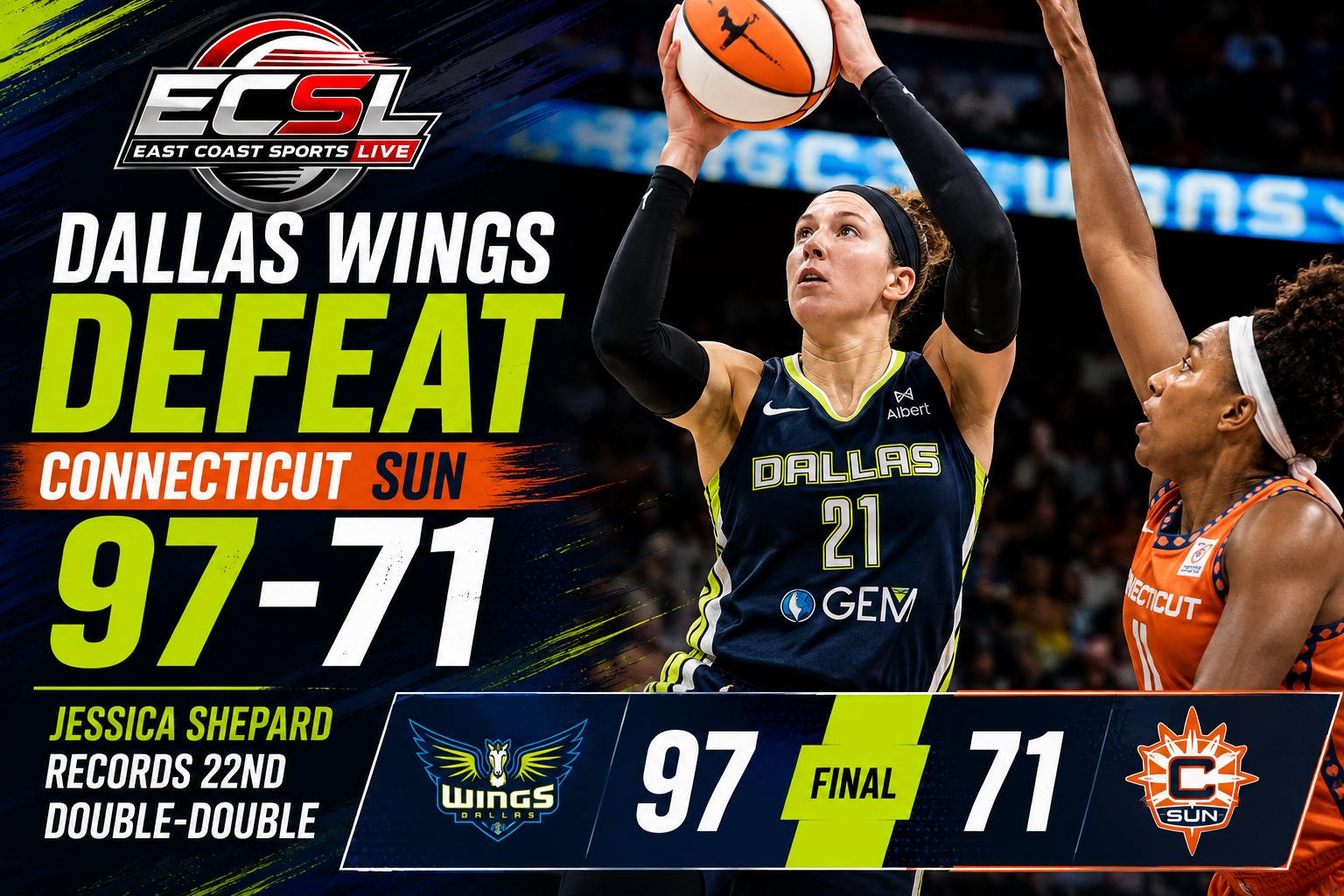
The Dallas Wings entered the FIBA Women's World Cup break with momentum, another dominant victory and an increasingly important position in the WNBA playoff race. Arike Ogunbowale scored 18 points, Jessica Shepard recorded 17 points and 10 rebounds, and the Wings defeated the Connecticut Sun 97-71 on Sunday night at College Park Center in Arlington, Texas. The victory extended Dallas' winning streak to four games and completed a season sweep of Connecticut. Paige Bueckers added 15 points and six assists, while Maddy Siegrist scored 11 as Dallas improved to 24-16 . The Wings now have their most victories in a season since the franchise won 24 games as the Detroit Shock in 2007. More importantly, Dallas enters the break tied with New York and Washington in a crowded battle for playoff positioning. Jessica Shepard Extends Wings Double-Double Record Shepard continued one of the most productive rebounding seasons in franchise history. Her 17-point, 10-rebound performance marked her 22nd double-double of the season , extending the Wings' franchise record. Only Angel Reese, with 29, has recorded more double-doubles in the WNBA this season. Shepard established herself early. After Connecticut briefly took an 11-10 lead, Dallas began repeatedly attacking the basket. Shepard drove through the defense for a three-point play that pushed the Wings ahead 22-14, then added another interior basket later in the first. She finished the opening half with 12 points and six rebounds. Her combination of scoring and rebounding helped Dallas establish control that Connecticut never regained. Dallas Takes Command With 32-Point First Quarter The Sun briefly took their first lead when Saniya Rivers converted a driving layup approximately four and a half minutes into the game. It lasted only 11 seconds. Bueckers answered with an inside basket to put Dallas back in front, and the Wings never trailed again. Ogunbowale then drove through the Connecticut defense and completed a three-point play for a 15-11 advantage. Dallas continued attacking the rim. Bueckers scored inside. Awak Kuier followed with another basket. Shepard added her three-point play. Alysha Clark provided the perimeter complement, knocking down two three-pointers late in the quarter. By the end of the first, the Wings had built a 32-18 advantage . Paige Bueckers Helps Dallas Score 60 Before Halftime Dallas didn't slow down much during the second quarter. Bueckers continued her efficient offensive performance and reached halftime with 15 points and four assists on 6-of-10 shooting . Ogunbowale had 12 points at the break, while Shepard had already collected 12 points and six rebounds. The Wings scored 60 first-half points and took a 60-47 advantage into halftime. Connecticut remained within reach largely because of Aaliyah Edwards. Aaliyah Edwards Scores 21 Points in First Half While Dallas produced balanced offense, Edwards carried much of Connecticut's scoring load. She scored 21 of her 26 points before halftime , including 16 during the second quarter. Her 26 points matched her career high. Edwards' production prevented Dallas from completely breaking the game open before halftime. The Wings changed that after the break. Connecticut struggled dramatically on offense during the third quarter, shooting just 4-of-17 from the field and 1-of-6 from three-point range . The Sun also made only three of six free throws. Dallas outscored Connecticut 23-12 in the third , transforming a 13-point halftime advantage into a commanding lead. Edwards, meanwhile, was held to only five points after halftime. Arike Ogunbowale Pushes the Lead Higher Ogunbowale helped Dallas establish control immediately after halftime. Bueckers found her in transition on the Wings' opening possession, and Ogunbowale connected on her first two three-pointers of the game during the opening three minutes of the third quarter. Dallas quickly stretched its 13-point halftime advantage to 17. Ogunbowale eventually finished with a team-high 18 points . Her scoring was part of a balanced Dallas performance in which the Wings did not need to overwork their starters. None of the Dallas starters played more than 26 minutes. That became possible because the Wings' reserves helped finish the job. Aziaha James Sparks Decisive Third-Quarter Run Aziaha James provided one of the most important bench performances of the night in her return to action. James had missed the previous five games after suffering a foot injury against Toronto on August 12. Against Connecticut, she scored seven of her nine points during six third-quarter minutes . Her impact went beyond scoring. James battled for an offensive rebound following a missed Shepard free throw, creating another possession that ended with a Siegrist basket. She later connected on a three-pointer from the right wing to put Dallas ahead 78-57. James then hit a pull-up jumper in the lane as the Wings continued pulling away. Her energy helped fuel a 14-4 Dallas run late in the third. By the end of the quarter, the Wings led 83-59 . The competitive portion of the game was essentially over. Wings Stretch Advantage to 30 Points Dallas continued applying pressure in the fourth quarter. The Wings eventually pushed their advantage to 30 points midway through the period before turning the game over to their reserves. That comfortable finish demonstrated just how thoroughly Dallas had taken control after halftime. The Wings entered the break ahead by 13. By the fourth, Connecticut had little realistic opportunity to mount a comeback. Dallas' ability to attack the basket, generate transition opportunities and receive contributions throughout the rotation proved too much. Awak Kuier Sets Wings Blocked-Shot Record The victory also included a franchise milestone for Awak Kuier. Kuier recorded three blocked shots , increasing her season total to 57 and establishing a new Wings franchise record for blocked shots in a single season . Her defensive presence gave Dallas another reason to celebrate before the World Cup break. The Wings did have some difficulty defending Connecticut inside during portions of the first half, particularly against Edwards. But their second-half adjustment was significant. After Connecticut scored 47 points before halftime, the Sun managed only 24 points over the final two quarters . Charlisse Leger-Walker Adds 17 for Connecticut Edwards was not Connecticut's only double-digit scorer. Charlisse Leger-Walker made five three-pointers and finished with 17 points . Still, Connecticut could not match Dallas' depth and balance. The Sun fell to 10-30 , while the Wings secured the season sweep. For Connecticut, the game represented the final meeting with Dallas before the franchise's planned rebrand to the Houston Comets next season, according to the supplied source. Dallas Wins Fourth Straight and Strengthens Playoff Position The Wings have picked an ideal time to play their best basketball. Dallas has now won four consecutive games and improved to 24-16 with four regular-season games remaining. The Wings enter the World Cup break in a three-way tie with the New York Liberty and Washington Mystics for sixth place , sitting two games behind Indiana and Atlanta. The supplied source notes an important detail in that three-team race: Washington owns the head-to-head tiebreaker over Dallas, while the Wings hold the head-to-head advantage over New York. That makes the final four games especially significant. Dallas will return from the break on September 17 against the Los Angeles Sparks at home. Connecticut resumes its schedule the same day on the road against Atlanta. Wings Enter World Cup Break With Momentum Dallas couldn't have asked for a much stronger finish before the league's World Cup pause. The Wings scored 60 points in the first half, held Connecticut to 24 in the second and led by as many as 30. Ogunbowale led the scoring. Bueckers provided another efficient offensive performance. Kuier established a franchise record. James made an immediate impact in her return. And Shepard continued a remarkable season with her 22nd double-double . The result was a convincing 97-71 victory and a fourth consecutive win for a Dallas team entering the final stretch of the regular season with playoff positioning still very much in play. The Wings have four games remaining. After Sunday's performance, they will enter those games carrying considerable momentum.
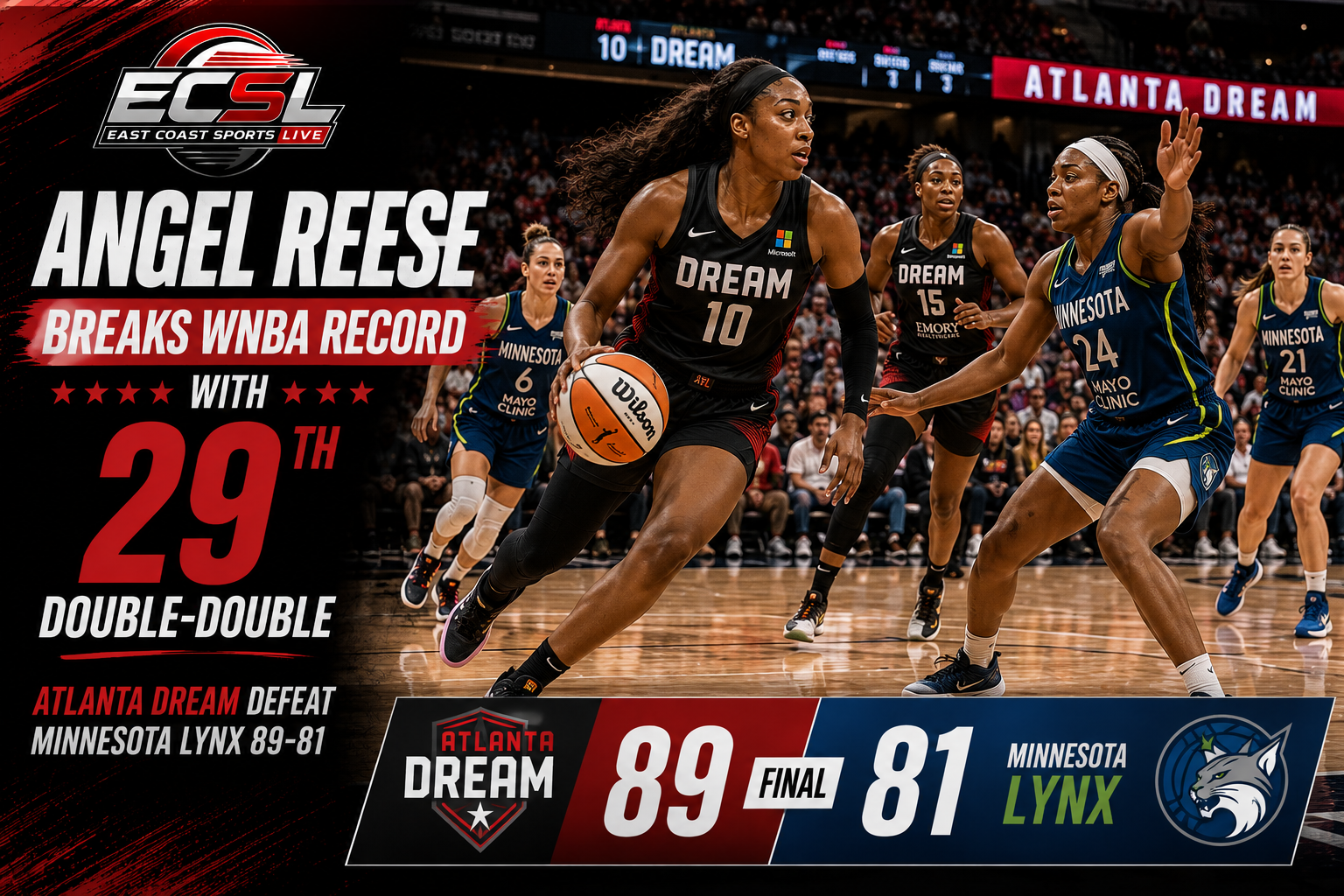
Angel Reese entered the WNBA record book Sunday while helping the Atlanta Dream secure one of their biggest victories of the season. Reese finished with 15 points and 11 rebounds to record her 29th double-double of the season, breaking the WNBA single-season record, as Atlanta defeated the league-leading Minnesota Lynx 89-81 in College Park, Georgia. Allisha Gray added a dominant performance of her own with 23 points and 11 rebounds , while Jordin Canada recorded 16 points and 10 assists . Rhyne Howard scored 12 of her 16 points in the fourth quarter as Atlanta improved to 26-14 heading into the FIBA Women's World Cup break. Minnesota fell to 31-9 and had its eight-game road winning streak snapped. Angel Reese Sets WNBA Double-Double Record Reese's remarkable season added another milestone. Her 15-point, 11-rebound performance gave her 29 double-doubles this season , moving her past Alyssa Thomas for the most in a single WNBA season. Thomas previously held the record with 28 in 2023. The achievement adds to a season in which Reese has already established records for rebounds in a single game and across a season, according to the supplied source. Reese also contributed two steals and one blocked shot against Minnesota. But Sunday's accomplishment was about more than an individual record. Atlanta needed Reese's production to beat the team sitting atop the league standings. Allisha Gray Delivers 23 Points and 11 Rebounds Reese was not the only Dream player to record a double-double. Gray led Atlanta with 23 points and 11 rebounds , giving the Dream another major presence on both ends of the floor. Her perimeter shooting was especially important. Gray made six three-pointers , providing Atlanta with the outside scoring needed to challenge Minnesota's defense. The Dream ultimately had three players produce double-doubles. Along with Reese and Gray, Canada combined 16 points with 10 assists. That balance helped Atlanta overcome 18 turnovers and still finish with an eight-point victory over the WNBA's top team. Jordin Canada Controls the Offense Canada's contribution gave Atlanta another dimension. She scored 16 points and distributed 10 assists , directly creating offense while limiting the burden on Atlanta's primary scorers. The Dream's ability to receive major contributions from several players became especially important against a Minnesota lineup that featured multiple double-digit scorers. Reese controlled the glass. Gray provided outside shooting. Canada created opportunities. Then Howard took over when Minnesota made its push. Minnesota Makes a Late Run The Lynx did not disappear quietly. Minnesota produced a 13-2 run that cut Atlanta's advantage to seven points and created an opportunity for the league leaders to turn the game around. Atlanta needed an answer. Howard supplied it. After missing her first five attempts from three-point range, she connected on back-to-back threes to restore a 14-point Dream advantage with 5:55 remaining. The shots changed the direction of the fourth quarter. Instead of allowing Minnesota's comeback to continue, Atlanta quickly rebuilt a comfortable cushion. Rhyne Howard Scores 12 in Fourth Quarter Howard saved her best basketball for the most important part of the game. She scored 12 of her 16 points during the fourth quarter , providing Atlanta with the late scoring needed to withstand Minnesota's rally. Her consecutive three-pointers were particularly significant because of what had happened beforehand. Howard had missed her first five shots from beyond the arc. She continued shooting. When Atlanta needed her most, the shots finally fell. That response helped the Dream finish a statement victory rather than surrender a large advantage to the WNBA's top team. Olivia Miles Leads Minnesota With 21 Points Rookie Olivia Miles led the Lynx with 21 points and five rebounds . Her performance came after questions about how she would respond following a difficult outing against Golden State. Miles provided Minnesota with its highest scoring total Sunday and remained aggressive until the closing moments. She also took a hard fall while converting a driving layup during the final minute, according to the supplied game recap. The source does not provide additional information about her condition following the play. Kayla McBride and Napheesa Collier each scored 17 points for Minnesota. Collier also collected seven rebounds, while McBride added three rebounds and three assists. Courtney Williams Returns for Minnesota The Lynx also welcomed Courtney Williams back to the lineup. Williams had missed one game because of a sprained right foot before returning against Atlanta. She scored 11 points in her return. Her availability gave Minnesota another scoring option, but the Lynx still could not overcome Atlanta's balanced production. Four Dream players scored at least 15 points. Three Atlanta players recorded double-doubles. That collective effort proved enough to hand Minnesota another defeat before the World Cup break. DeWanna Bonner Makes Atlanta Dream Debut Sunday also marked the Atlanta debut of veteran DeWanna Bonner . Bonner joined the Dream after her contract with Phoenix was bought out earlier in the week. She played 17 minutes and scored seven points in her first appearance for Atlanta. Her arrival adds another experienced option to a Dream roster already competing near the top of the standings. Atlanta did not need a major scoring performance from Bonner in her debut. Instead, the established core handled the majority of the production while Bonner began integrating into the rotation. Dream Hand Minnesota Another Rare Loss Minnesota has spent most of the season avoiding extended losing stretches. The Lynx entered Sunday at the top of the WNBA standings, but Atlanta handed them another setback. Minnesota had previously lost 80-66 to Golden State , snapping a six-game winning streak. The defeat against Atlanta also ended the Lynx's eight-game road winning streak. The supplied source notes that Minnesota has suffered only three losses since its 90-89 defeat against Connecticut on July 6. That makes Atlanta's victory especially significant. The Dream did not simply defeat another playoff contender. They beat the league leader immediately before the season paused for international competition. Atlanta Moves Into Tie for Fourth The victory improved Atlanta to 26-14 , moving the Dream into a tie with Indiana for fourth place in the WNBA standings. Minnesota remains first at 31-9 , holding a 2½-game advantage over second-place Golden State. Both Atlanta and Minnesota have already clinched playoff berths, according to the supplied material. For the Dream, Sunday's result strengthens their position entering the final portion of the regular season. Atlanta will return from the World Cup break on September 17 against Connecticut . Minnesota returns the following day when it hosts New York. Angel Reese Adds Another Historic Achievement Atlanta's victory will be remembered for its playoff implications, but Reese's record made Sunday particularly historic. Twenty-nine double-doubles in one season. The number places Reese alone atop the WNBA's single-season list. And she reached the milestone while helping Atlanta beat the best team in the league. Gray supplied 23 points and six three-pointers. Canada produced 16 points and 10 assists. Howard delivered 12 fourth-quarter points after struggling from outside earlier in the game. Reese supplied the record-breaking performance. Together, they gave Atlanta an 89-81 victory and considerable momentum heading into the World Cup break. For Reese, a season already filled with rebounding records now includes another place in WNBA history.
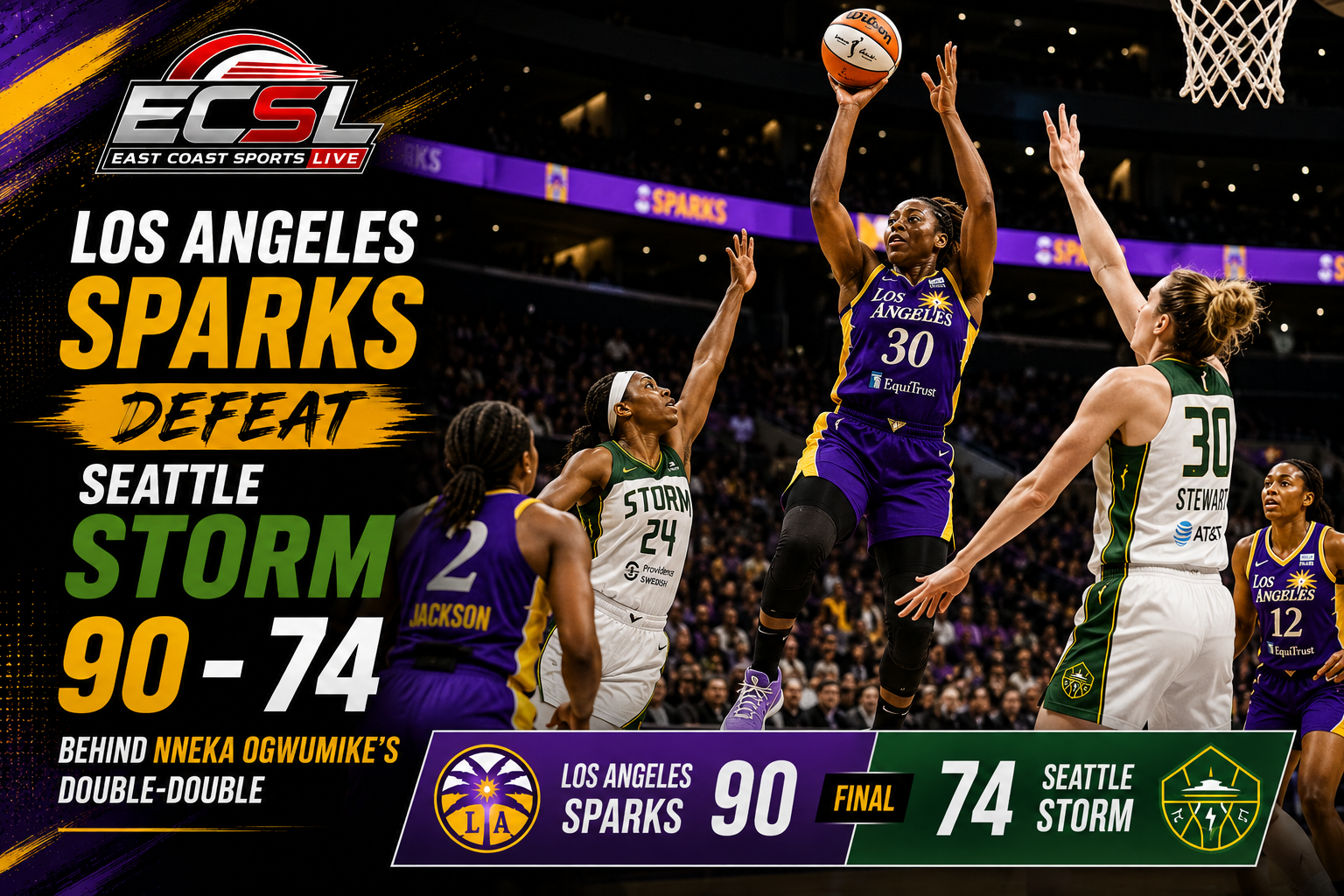
The Los Angeles Sparks made sure they entered the FIBA Women's World Cup break with momentum. Nneka Ogwumike recorded 23 points and 12 rebounds, Rae Burrell added 22 points, and the Sparks defeated the Seattle Storm 90-74 on Sunday, August 30. Los Angeles scored the game's first 13 points, led by as many as 26 and never trailed on the way to its second consecutive victory. The win improved the Sparks to 15-25 and gave them victories in three of their last four games. Seattle dropped to 8-32 despite 19 points from Flau'jae Johnson and a 17-point, 15-rebound performance from Dominique Malonga. Sparks Open the Game With a 13-0 Run Los Angeles established control almost immediately. Burrell opened the scoring with a layup, beginning a 13-0 Sparks run while Seattle missed its first six shots. Burrell and Ogwumike combined for eight points during the early surge, and Erica Wheeler connected from three-point range. Malonga eventually ended Seattle's drought with a jumper. Ogwumike answered by scoring five more points. By the end of the first quarter, Los Angeles held a 14-point advantage after leading by as many as 18 during the period. The fast start forced Seattle to spend nearly the entire afternoon attempting to recover. Ogwumike Sets the Tone for Los Angeles Ogwumike was productive from the opening minutes and remained the centerpiece of the Sparks' offense. She became the first Los Angeles player to reach double figures and ultimately finished with 23 points, 12 rebounds and three assists . Her rebounding helped the Sparks control possessions, while her scoring prevented Seattle from putting together an extended response. Ogwumike was already up to 17 points during the third quarter as Los Angeles continued expanding its advantage. Burrell provided the other half of the Sparks' primary scoring combination. Rae Burrell Follows Fourth-Quarter Heroics With 22 Points Burrell entered the game after scoring 12 fourth-quarter points in Los Angeles' 88-82 comeback victory over Washington. This time, she didn't wait until the fourth. Burrell scored six consecutive Sparks points during the second quarter and reached halftime with 10. She continued attacking after the break, including two early third-quarter free throws. She finished with 22 points, four rebounds and three assists . Combined, Ogwumike and Burrell produced 45 of Los Angeles' 90 points . Their scoring allowed the Sparks to control the game even when Seattle began generating momentum later in the afternoon. Los Angeles Builds a 19-Point Halftime Lead Seattle opened the second quarter with six unanswered points, but the Sparks quickly stopped the run. Chance Gray connected on a three-pointer. Zia Cooke answered from outside for Seattle, only for Gray to make another perimeter shot. Los Angeles then produced another major run. Dearica Hamby's layup with 5:45 remaining in the half completed an 11-0 surge that gave the Sparks a 39-20 advantage . At one stage during the second quarter, Los Angeles was shooting 75% in the period and 59% overall. Seattle could not match that efficiency. The Storm shot 32% from the field in the first half and made only 2 of 11 three-point attempts . Los Angeles entered halftime ahead by 19 after building its lead as high as 22. Sparks Push Advantage to 26 The pattern continued after halftime. Malonga scored early for Seattle, but Burrell answered from the free-throw line and Wheeler connected on another three. With 4:53 remaining in the third quarter, Los Angeles had expanded its advantage to 26 points . Seattle finally began generating sustained offense late in the period. Ezi Magbegor scored five consecutive points as the Storm put together a 9-3 run. That reduced the deficit, but Los Angeles still carried an 18-point lead into the fourth. The Sparks had controlled too much of the first three quarters for one Seattle run to erase the damage. Flau'jae Johnson Leads Seattle's Fourth-Quarter Push Johnson gave the Storm one final opportunity to make the game competitive. She scored 11 of her 19 points in the fourth quarter , including nine during a stretch that helped Seattle put together a 22-6 run . The surge cut Los Angeles' lead to 10. For the first time since the opening stages, the Sparks had to respond to meaningful pressure. They did. Cameron Brink stopped Seattle's momentum with a layup, and Los Angeles soon pushed the advantage back to 15. When Seattle scored four consecutive points during another attempt to close the gap, Brink responded again, this time from three-point range. Every Storm run produced a Sparks answer. Cameron Brink Provides 11 Points Off the Bench Brink finished with 11 points and six rebounds , giving Los Angeles important bench production despite shooting 3-of-15 from the field. Her timing proved more important than her efficiency. During Seattle's strongest fourth-quarter stretch, Brink delivered baskets that helped stabilize Los Angeles. She had also contributed six points and three assists before halftime as the Sparks established their large advantage. Gray and Monique Akoa Makani each added six points off the bench, while Wheeler finished with nine points and four assists. Dearica Hamby Makes an Impact Without Scoring Big Dearica Hamby scored only six points, but her contribution went well beyond scoring. She collected 11 rebounds and four steals , helping Los Angeles control possessions and disrupt Seattle's offense. Her second-quarter layup was also significant, completing the 11-0 run that gave the Sparks a 39-20 advantage. With Ogwumike collecting 12 rebounds and Hamby adding 11, Los Angeles received substantial work on the glass from its veteran frontcourt. Dominique Malonga Records 17 Points and 15 Rebounds Malonga was one of Seattle's most productive players despite the loss. She finished with 17 points and 15 rebounds , although she needed 21 field-goal attempts to score those 17 points. Malonga also scored Seattle's first basket after the Storm opened the game by missing six consecutive shots. Cooke added 14 points on 6-of-17 shooting . But Seattle's perimeter struggles made a comeback considerably more difficult. The Storm finished just 4-of-22 from three-point range . Jordan Horston Leaves Game With Injury Seattle also lost Jordan Horston during the third quarter. Horston fell awkwardly midway through the period, limped to the locker room and did not return , according to the supplied game recap. The source does not provide a diagnosis or additional information about the severity of the injury. Seattle was already playing without Awa Fam and Natisha Hiedeman. Those absences added another challenge for a Storm team trying to overcome a large early deficit. Seattle Falls to 1-18 Against Western Conference Teams The loss dropped Seattle to 8-32 overall and continued its struggles against Western Conference opponents. The Storm are now 1-18 against teams from the West this season . Ironically, their only Western Conference victory came against these same Sparks, an 82-64 win in Los Angeles on July 6 . Sunday's rematch looked completely different. Instead of Seattle controlling Los Angeles, the Sparks dictated the game from the opening possession. They scored the first 13 points and maintained a double-digit advantage for nearly the entire contest. Sparks Enter World Cup Break With Consecutive Wins Los Angeles improved to 15-25 and will enter the World Cup break having won back-to-back games and three of its last four. The Sparks' final two games before the break also demonstrated two very different ways to win. Against Washington, Los Angeles erased a 17-point deficit before winning 88-82. Against Seattle, there was no comeback required. The Sparks seized control immediately and never gave it back. Ogwumike delivered a 23-point double-double. Burrell followed her late-game performance against Washington with another 22 points. Hamby contributed on the boards and defensively, while Brink provided timely scoring when Seattle threatened in the fourth. Los Angeles now heads into the break with momentum before returning on September 17 at Dallas . Seattle will resume its schedule the same day at home against Las Vegas. For the Sparks, the final message before the break was clear. They started fast, answered every Seattle run and finished with a convincing 90-74 victory .
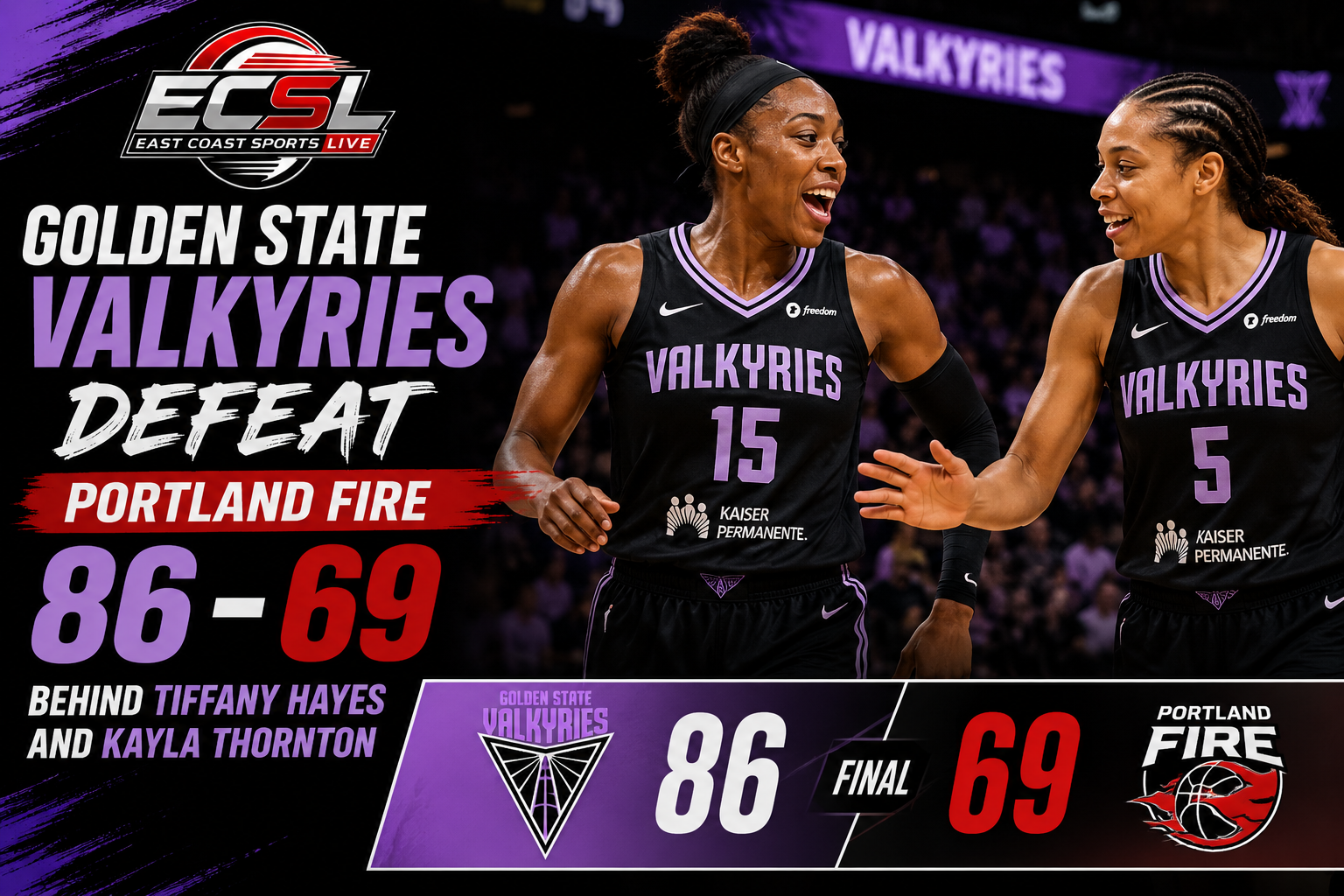
The Golden State Valkyries are heading into the FIBA Women's World Cup break within striking distance of the top spot in the WNBA standings. Tiffany Hayes scored 18 points, Kayla Thornton added 17, and the Valkyries defeated the Portland Fire 86-69 on Sunday, August 30, in Portland. Golden State improved to 29-11 , pulled within two games of league-leading Minnesota and earned another convincing victory despite playing without several key contributors. Kaitlyn Chen added 15 points, while Veronica Burton and Kaila Charles each scored 11. Portland fell to 16-24 despite getting 12 points apiece from Emily Engstler and Megan DiLeo. Valkyries Take Control With Early 13-0 Run Golden State wasted little time establishing control. After Portland remained close during the opening minutes, the Valkyries produced a 13-0 run that completely changed the first quarter. Chen capped the surge with a three-pointer, giving Golden State a 15-4 advantage a little more than five minutes into the game. The Valkyries eventually stretched their lead to as many as 19 points during the opening quarter . Hayes was at the center of the fast start. She attacked off the dribble and connected from outside as Golden State built its advantage. The veteran guard eventually finished with a team-high 18 points. Portland had entered the game after a 101-83 victory over Atlanta that ended a three-game losing streak, but the Fire immediately encountered a much tougher defensive challenge against Golden State. Portland Makes Its Push in the Second Quarter The Fire responded after falling behind early. Jordan Harrison connected from three-point range to complete a 12-3 Portland run , cutting Golden State's advantage to 30-21 with six minutes remaining in the second quarter . For a brief stretch, Portland appeared capable of turning the game competitive again. Thornton quickly stopped that momentum. Just 14 seconds after Harrison's three-pointer, Thornton connected on a short jumper. That basket became the beginning of another overwhelming Golden State run. The Valkyries scored 15 consecutive points , while Portland went more than five minutes without scoring. By halftime, Golden State had restored complete control and carried a 22-point advantage into the break. Tiffany Hayes Leads a Balanced Golden State Offense Hayes finished as Golden State's leading scorer with 18 points , but the Valkyries did not need to rely on one player. Thornton scored 17. Chen added 15. Burton and Charles each contributed 11. That balance was particularly valuable because Golden State entered the game without Gabby Williams, Janelle Salaün and Cecelia Zandalasini . Even with those absences, the Valkyries found scoring throughout the rotation. Hayes provided veteran shot creation, Thornton contributed from multiple areas of the floor and Chen delivered important perimeter shooting. Golden State's depth prevented Portland from focusing its defense on a single offensive threat. Kaitlyn Chen Delivers From the Perimeter Chen's 15-point performance included several timely three-pointers. Her first-quarter three completed the 13-0 run that established Golden State's early advantage. Later, Portland attempted another response in the second half. Bridget Carleton connected from outside as the Fire generated an 8-0 run , giving Portland another opportunity to reduce the deficit. Golden State again had an answer. Burton found Chen on the perimeter, and Chen knocked down another three-pointer to halt Portland's momentum. The sequence illustrated one of the biggest differences between the teams Sunday. Portland produced occasional runs. Golden State responded every time. Veronica Burton Contributes Across the Box Score Burton did considerably more than score 11 points. She also finished with six assists and six rebounds , providing Golden State with production in several areas. Her playmaking was particularly important. On one transition possession, Burton pushed the ball before finding Chen in the corner for a three-pointer that stretched Golden State's advantage to 22. She later connected with Chen again when Portland attempted its second-half comeback. Burton's ability to create for teammates complemented the scoring performances of Hayes and Thornton and helped keep the Valkyries' offense organized. Golden State Defense Shuts Down Portland Golden State's offense created the early separation, but its defense ensured Portland could not complete a comeback. The Fire repeatedly struggled to sustain scoring runs against one of the league's strongest defensive teams. The most damaging drought came during the second quarter. After Portland cut the deficit to nine, the Fire went scoreless for more than five minutes while Golden State scored 15 unanswered points. Portland tried again after halftime with an 8-0 run. Once again, Golden State responded before the game could become competitive. The Valkyries never allowed one Portland surge to develop into a sustained comeback. Emily Engstler and Megan DiLeo Lead Portland Engstler and DiLeo each scored 12 points to lead the Fire, while Carleton added 11. Engstler entered the matchup after scoring a career-high 25 points in Portland's victory over Atlanta. Against Golden State, she found scoring opportunities harder to generate but still reached double figures, including a reverse layup along the baseline. DiLeo attacked the paint and provided another 12 points. Carleton helped spark Portland's second-half push with a three-pointer. But the Fire were missing an important part of their offense. Carla Leite , Portland's leading scorer at 15.9 points per game and leading distributor at 6.3 assists per game, did not play as she prepared for the World Cup. Frieda Buhner was also unavailable. Kayla Thornton Helps Close the Door Thornton's 17 points included important baskets whenever Portland threatened to generate momentum. Her second-quarter jumper ended Portland's 12-3 run and started Golden State's decisive 15-0 response. She remained productive later in the game. During the fourth quarter, Charles moved the ball to Thornton in the corner, where she connected from three-point range. By then, Golden State had already established control. Thornton's scoring simply made Portland's path back increasingly difficult. Valkyries Move Within Two Games of Minnesota The victory improved Golden State to 29-11 and moved the Valkyries within two games of WNBA-leading Minnesota entering the World Cup break. Golden State has four regular-season games remaining. The schedule outlined in the supplied source gives the Valkyries two more games against Portland, along with matchups against Seattle and Los Angeles. Those four opponents entered the stretch with a combined 39-81 record and .325 winning percentage . Minnesota holds an important advantage, however. The Lynx won the season series against Golden State 2-1 , giving Minnesota the playoff tiebreaker. Their remaining schedule includes New York, Connecticut and back-to-back games against Indiana. Golden State therefore needs victories while also receiving help elsewhere if it is going to erase the remaining gap. Golden State Enters World Cup Break at 29-11 Sunday's performance was another example of why the Valkyries remain near the top of the standings. They were missing several notable players. They were playing a Portland team that had just scored 101 points in a victory over Atlanta. Neither circumstance prevented Golden State from controlling the game. The Valkyries established a double-digit advantage in the opening quarter, answered Portland's second-quarter run with 15 consecutive points and shut down another comeback attempt after halftime. Hayes led the scoring with 18. Thornton added 17. Chen scored 15. Burton filled the box score. And Golden State's defense made sure the early advantage held. The result was an 86-69 victory and a 29th win for a Valkyries team still chasing Minnesota at the top of the WNBA standings. Golden State and Portland will meet again on September 18 , this time on the Valkyries' home floor.
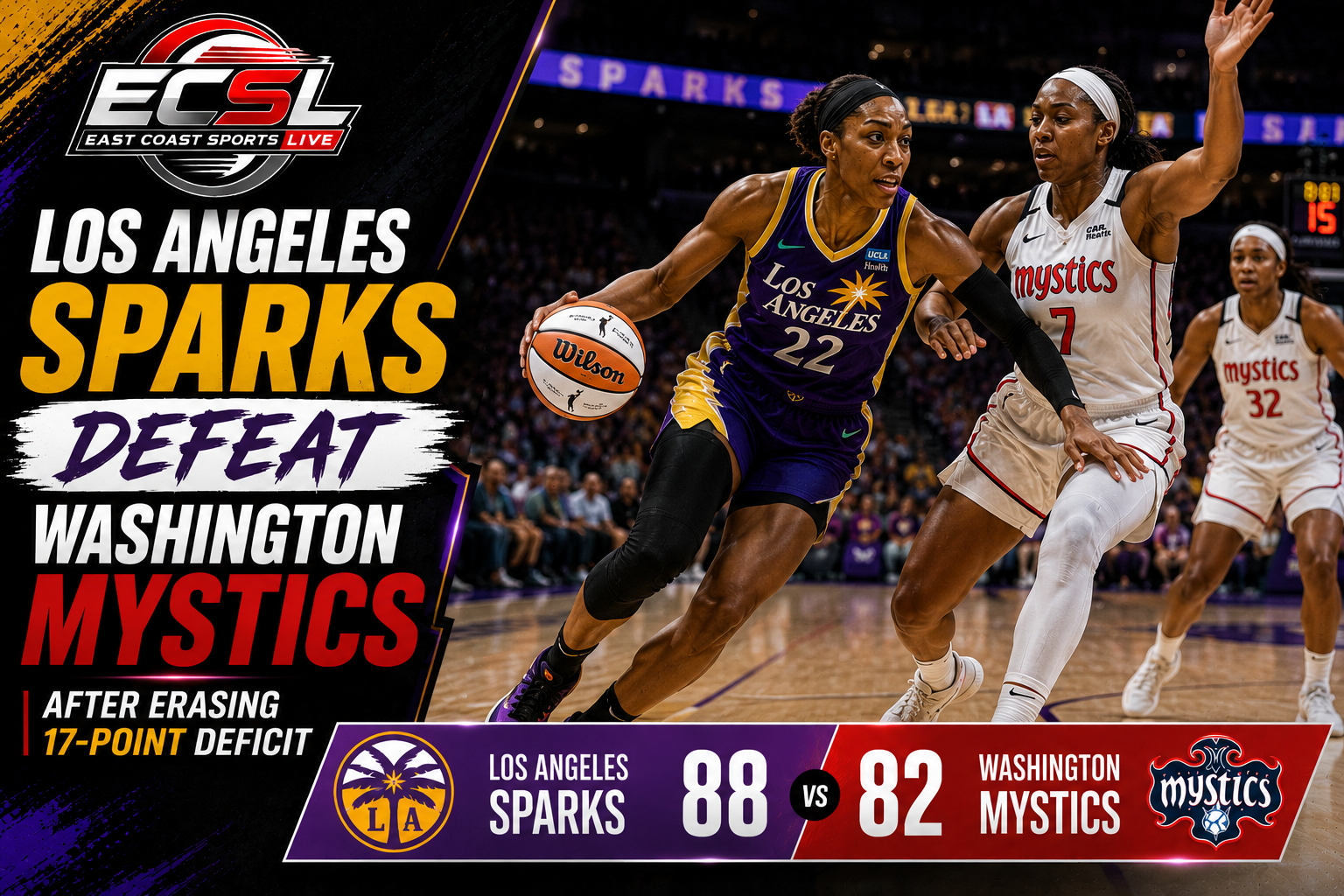
The Los Angeles Sparks looked headed toward a difficult home loss after falling behind by as many as 17 points against the Washington Mystics. Then the second half changed everything. Nneka Ogwumike scored 24 points, Rae Burrell delivered 12 of her 15 points in the fourth quarter, and the Sparks rallied for an 88-82 victory over Washington at Crypto.com Arena. Los Angeles turned defensive pressure into offense, erased an 11-point halftime deficit and closed the game with a decisive 13-2 run. For Washington, the loss spoiled strong performances from Sonia Citron, Shakira Austin and Kiki Iriafen while ending a three-game road winning streak. Mystics Take Control Before Halftime The teams were evenly matched early, finishing the opening quarter tied after both offenses shot efficiently. Washington began creating separation in the second. Austin attacked inside, while Iriafen scored seven points during the period. Los Angeles struggled to maintain its offensive rhythm and at one point had made only two of nine shots during the quarter. The Mystics eventually stretched their advantage into double figures and led by as many as 17. Los Angeles managed an 8-2 run late in the half, but Washington still entered the locker room with a 51-40 advantage . The Mystics appeared firmly in control. Nneka Ogwumike Starts the Sparks’ Comeback Los Angeles needed an immediate response after halftime. Ogwumike provided it. She scored the Sparks' first four points of the third quarter, helping Los Angeles establish the energy it had been missing before the break. Erica Wheeler followed with a three-pointer, and Monique Akoa Makani continued contributing as the Sparks opened the half on a 16-6 run . Suddenly, Washington's comfortable advantage was nearly gone. With 4:59 remaining in the third, Los Angeles had pulled within 57-56 . The Sparks had transformed the game in just over seven minutes. Washington Keeps a Narrow Lead Entering the Fourth The Mystics did not immediately collapse. Austin answered some of Ogwumike's scoring, and Georgia Amoore connected on two three-pointers during the third quarter. Washington managed to take a three-point advantage into the fourth. But the game had changed. The Sparks were defending with greater pressure, moving the basketball more effectively and creating opportunities before Washington could organize defensively. Los Angeles ultimately recorded 28 assists on 36 made field goals , a reflection of how effectively the Sparks shared the ball. That offensive rhythm became increasingly important during the final period. Rae Burrell Takes Over in the Fourth Quarter Burrell had only three points entering the fourth. She finished with 15. Her 12 fourth-quarter points became the defining individual performance of the comeback. The game was tied with approximately five and a half minutes remaining before Los Angeles began to separate. Burrell's biggest sequence arrived late. With 2:54 remaining , she connected on a three-pointer to extend the Sparks' advantage. Washington attempted to answer by going inside to Austin, but Cameron Brink blocked the shot. Los Angeles immediately attacked in transition. Burrell finished the possession with a layup, completing the Sparks' 13-2 run and putting Los Angeles ahead 85-78 . In two possessions, Burrell had delivered five points while Brink supplied the defensive play connecting them. Washington never recovered. Cameron Brink Makes an Impact Off the Bench Brink provided much more than the late block. She finished with 13 points, five rebounds and two blocks off the bench , giving Los Angeles another productive interior option. Her defensive stop against Austin came at the perfect moment. Washington had an opportunity to respond after Burrell's three-pointer and potentially reduce the deficit. Brink instead denied the shot, and Burrell's transition basket pushed the lead to seven. That sequence represented everything that worked for Los Angeles during its comeback: defense creating offense, quick decision-making and execution in transition. Washington Turnovers Become a Major Problem The Mystics' biggest issue was ball security. Washington committed 17 turnovers , and Los Angeles converted those mistakes into an enormous 31 points . In a game decided by six points, that difference proved devastating. The Sparks repeatedly created offense without needing to attack Washington's set defense. Los Angeles also held a 50-34 advantage in points in the paint , giving the Sparks another significant edge despite Washington receiving productive performances from its frontcourt. The Mystics generated enough offense to win. They simply gave Los Angeles too many additional opportunities. Sonia Citron Scores 22 for Washington Sonia Citron led Washington with 22 points and made four three-pointers. Citron was involved immediately, scoring the Mystics' first five points of the game. She remained Washington's most consistent perimeter scorer and tried to keep the Mystics alive late, connecting on a jumper that reduced Los Angeles' advantage to five. Burrell answered again to restore an eight-point Sparks lead and effectively end Washington's comeback hopes. Citron's performance gave Washington a strong scoring option, but the Mystics could not generate enough stops during the decisive fourth-quarter stretch. Shakira Austin and Kiki Iriafen Post Double-Doubles Washington also received significant production inside. Austin finished with 19 points and 10 rebounds , while Iriafen recorded 12 points and 10 rebounds . For Iriafen, it was her 20th double-double of the season , another notable achievement during an impressive campaign. The two combined for 31 points and 20 rebounds. But their production could not erase Washington's turnover problems or Los Angeles' second-half surge. Iriafen had helped Washington take control during the second quarter. By the fourth, the Sparks were dictating the pace. Ogwumike Provides the Foundation for Los Angeles While Burrell became the late-game star, Ogwumike kept the Sparks within reach long enough for the comeback to happen. She finished with a team-high 24 points after scoring eight in the opening quarter and reaching 13 before halftime. When Los Angeles needed an immediate response to start the second half, Ogwumike scored four straight. Her production gave the Sparks stability throughout the night. Burrell provided the finish. Together, they accounted for 39 points and helped Los Angeles overcome a game that appeared to be moving firmly in Washington's direction. Sparks Outscore Washington 48-31 After Halftime The difference between the two halves was dramatic. Washington controlled the second quarter and carried an 11-point advantage into halftime. Los Angeles then outscored the Mystics 48-31 over the final two quarters , including 23-14 in the fourth . The Sparks improved defensively, attacked the paint and punished Washington's mistakes. Their ball movement also remained sharp. Wheeler finished with eight assists, while Akoa Makani contributed 10 points and four assists off the bench. Burrell added three assists and two steals to her 15 points. It became a complete second-half turnaround rather than simply one player's hot shooting. Mystics Feel the Effects of a Back-to-Back Washington entered the game under challenging circumstances. The Mystics were playing on consecutive nights for the first time this season after defeating Phoenix 80-73 on Thursday. Amoore had been the hero of that victory, scoring a career-high 25 points with 16 in the fourth quarter. Against Los Angeles, she finished with nine points on 3-for-8 shooting . Washington still built a significant first-half advantage despite the schedule. The problem was sustaining it. As Los Angeles increased its defensive pressure after halftime, the Mystics struggled to protect the basketball and prevent the Sparks from attacking in transition. Sparks Finish a Memorable Comeback Los Angeles improved to 14-25 with the 88-82 victory, while Washington fell to 24-16 and had its three-game road winning streak snapped. The Sparks next travel to Seattle, while Washington enters the FIBA Women's World Cup break before returning against Chicago on September 17. For Los Angeles, the result was about more than Burrell's fourth-quarter scoring. The Sparks trailed by as many as 17. They were down 11 at halftime. Then they changed the game with defensive pressure, ball movement and aggressive interior offense. Ogwumike kept them close enough to respond. Brink supplied one of the biggest defensive plays. Burrell took over when the outcome was still undecided. By the final buzzer, the Sparks had transformed a 17-point deficit into an 88-82 victory .
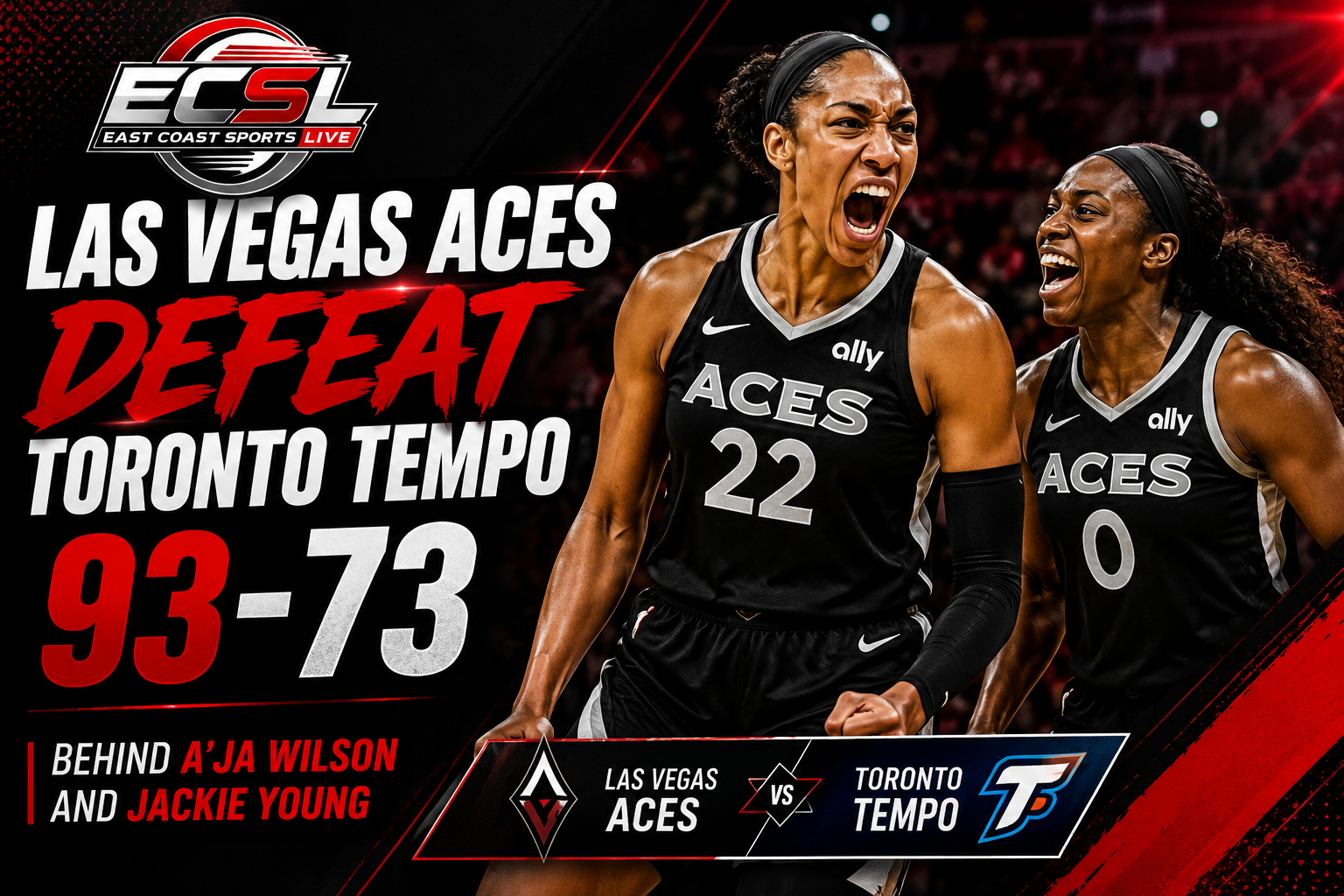
The Las Vegas Aces entered Friday night without NaLyssa Smith, but their two biggest stars made sure her absence did not derail their late-season momentum. A'ja Wilson scored 27 points and grabbed eight rebounds , while Jackie Young added 23 points and eight assists without a turnover as Las Vegas defeated the Toronto Tempo 93-73 at Michelob ULTRA Arena. The Aces improved to 27-13 and maintained their one-game advantage over Indiana for third place in the WNBA playoff race. Las Vegas never trailed after the opening minutes. A hot first quarter created early separation, Wilson took control before halftime, and the Aces kept Toronto at a comfortable distance throughout the second half. Jackie Young Gives Las Vegas the Early Advantage The game featured three ties during the opening minutes before Young changed its direction. With the score tied at eight, Young connected from three-point range to put Las Vegas ahead. The Aces never trailed again. Young scored 12 points in the first quarter , helping Las Vegas build a 27-17 advantage . The Aces shot 50% from the field during the period and made six of their 12 three-point attempts . Toronto compounded the problem by committing 10 first-quarter turnovers, which Las Vegas converted into 10 points. That combination of perimeter shooting and defensive pressure allowed the Aces to establish control quickly. A'ja Wilson Takes Over Before Halftime Young controlled the opening period. Wilson dominated the second. The reigning MVP scored 10 of Las Vegas' final 14 points before halftime , helping the Aces turn their early advantage into a commanding 56-39 lead . Wilson had 14 points by halftime while shooting 4-for-4 from the field and 6-for-6 from the free-throw line. She eventually finished with a game-high 27 points and eight rebounds . Toronto never found a consistent answer for her combination of interior scoring, physicality and ability to earn trips to the foul line. Aces Capitalize on Toronto's Early Mistakes Turnovers created a major early difference. Toronto repeatedly gave Las Vegas additional possessions during the first quarter, while the Aces protected the basketball at the other end. Las Vegas finished the game with only seven turnovers , compared with 16 for Toronto . More importantly, the Aces surrendered only two points off those mistakes, their lowest total of the season. Las Vegas scored 18 points off Toronto turnovers . That 16-point difference in points off turnovers accounted for much of the final margin. The Aces also recorded 10 steals , tying their third-highest total of the season. Jackie Young Finishes With Eight Assists and No Turnovers Young's impact extended far beyond her 23 points. She distributed a game-high eight assists without committing a turnover , giving Las Vegas an exceptionally efficient performance from one of its primary creators. It was Young's 21st game of the season with at least 20 points . She also continued climbing the WNBA's career assist rankings. Young finished the night with 1,287 career assists, moving past Kelsey Plum and into 26th place on the league's all-time list. Against Toronto, her decision-making was particularly valuable. Young created opportunities for teammates without giving the Tempo chances to attack in transition. Las Vegas Plays Its First Game Without NaLyssa Smith Friday marked the Aces' first game since losing NaLyssa Smith for the remainder of the season . Smith suffered a left leg injury during Las Vegas' 88-78 victory over Toronto the previous Sunday. Her absence creates a significant challenge for the Aces as the postseason approaches, particularly around the basket. Las Vegas responded well in its first test without her. The Aces outrebounded Toronto 38-37 and collected 10 offensive rebounds , reaching double digits on the offensive glass for the 12th time this season. One game cannot establish how Las Vegas will replace Smith throughout a playoff run, but Friday provided an encouraging start. Toronto Makes a Third-Quarter Push The Tempo did not completely disappear after falling behind by 17 at halftime. Toronto scored the first basket of the third quarter before Las Vegas responded with six consecutive points to create a 62-41 advantage . The Tempo then produced their best run of the night. An 8-0 Toronto surge reduced the deficit to 13 and briefly gave the visitors an opportunity to make the game competitive again. Las Vegas went scoreless for approximately three minutes during that stretch. Then Chelsea Gray converted an and-one , ending the drought and stabilizing the Aces. Toronto never got closer. Chelsea Gray Contributes on Both Ends Gray finished with 11 points, four assists and four steals . Her scoring total was modest compared with Wilson and Young, but her defensive activity contributed to Toronto's ball-security problems. Gray also delivered the important response during the third quarter after the Tempo had created their best run. Las Vegas didn't require another 20-point scorer. With Wilson and Young combining for 50 points , Gray's playmaking, defense and timely scoring were enough. Isabelle Harrison Leads a Balanced Toronto Offense Toronto had five players reach double figures. Isabelle Harrison led the Tempo with 15 points , while Laura Juskaite scored 14 and Kia Nurse added 12 . Kiki Rice and reserve Kiana Williams each finished with 10. The balanced scoring kept Toronto from suffering an even larger defeat, but the Tempo lacked the dominant individual performance necessary to counter Wilson and Young. Toronto shot 40.3% overall and made 10 three-pointers. Las Vegas wasn't dramatically more efficient from the field, finishing at 42.7%. The Aces separated themselves in other areas. Free Throws Give the Aces Another Advantage Las Vegas repeatedly earned opportunities at the foul line. The Aces finished 19-for-21 on free throws , compared with Toronto's 9-for-13 performance. Much of that advantage developed before halftime. Toronto committed 12 first-half fouls, and Las Vegas responded by making 13 of 14 free throws . Wilson was perfect on six attempts during the opening half. Those free points helped the Aces build their 17-point halftime advantage even after their three-point shooting cooled during the second quarter. A'ja Wilson Moves Closer to Another 1,000-Point Season Wilson's 27-point performance also continued another historic scoring campaign. She increased her season total to 962 points through 37 games , leaving her 38 points away from the second 1,000-point season of her career. Wilson moved into third place on the WNBA's single-season scoring list , passing Jewell Loyd's 939 points from 2023 and Wilson's own 937-point total from 2025. The two totals ahead of her in the supplied team notes are Kelsey Mitchell's 1,001 points this season and Wilson's WNBA-record 1,021 points from 2024. Friday was also Wilson's 30th 20-point game of the season . She has now scored in double figures in 61 consecutive games. Jewell Loyd Reaches Another Career Milestone Jewell Loyd added another historical achievement for Las Vegas. Her first-quarter three-pointer moved her past Katie Douglas for sole possession of eighth place on the WNBA's career three-point list . Loyd finished the night with 729 career makes from beyond the arc. She also moved into sole possession of 29th place on the league's career steals list. The milestones were part of a night when several Aces continued climbing historical leaderboards while the team remained focused on its immediate playoff positioning. Las Vegas Protects Third Place The Aces' 93-73 victory improved them to 27-13 and kept them one game ahead of the Indiana Fever in the race for third place. Indiana defeated Connecticut 111-91 on the same night, meaning Las Vegas could not afford to give away ground. The Aces responded with a wire-to-wire performance after the opening minutes. They took the lead on Young's early three. They built a 10-point advantage by the end of the first quarter. Wilson helped stretch it to 17 by halftime. And when Toronto made its best push in the third, Las Vegas stopped the run before the game could become uncomfortable. Aces Enter the World Cup Break With Momentum Las Vegas will now step away from WNBA competition during the World Cup break. According to the supplied team recap, Wilson, Young and Gray will represent the United States , while Stephanie Talbot will play for Australia and Mai Yamamoto for Japan. The Aces are scheduled to resume WNBA action on September 17 at Seattle . They enter the break with their position in the standings intact and another convincing victory behind them. Smith's season-ending injury creates a challenge that will remain when play resumes. But Friday showed what Las Vegas still has available. Wilson remains one of the league's most dominant scorers. Young can control a game as both a scorer and facilitator. Gray continues to influence both ends. Together, they powered the Aces past Toronto 93-73 and kept Las Vegas firmly in the race for a top playoff seed.
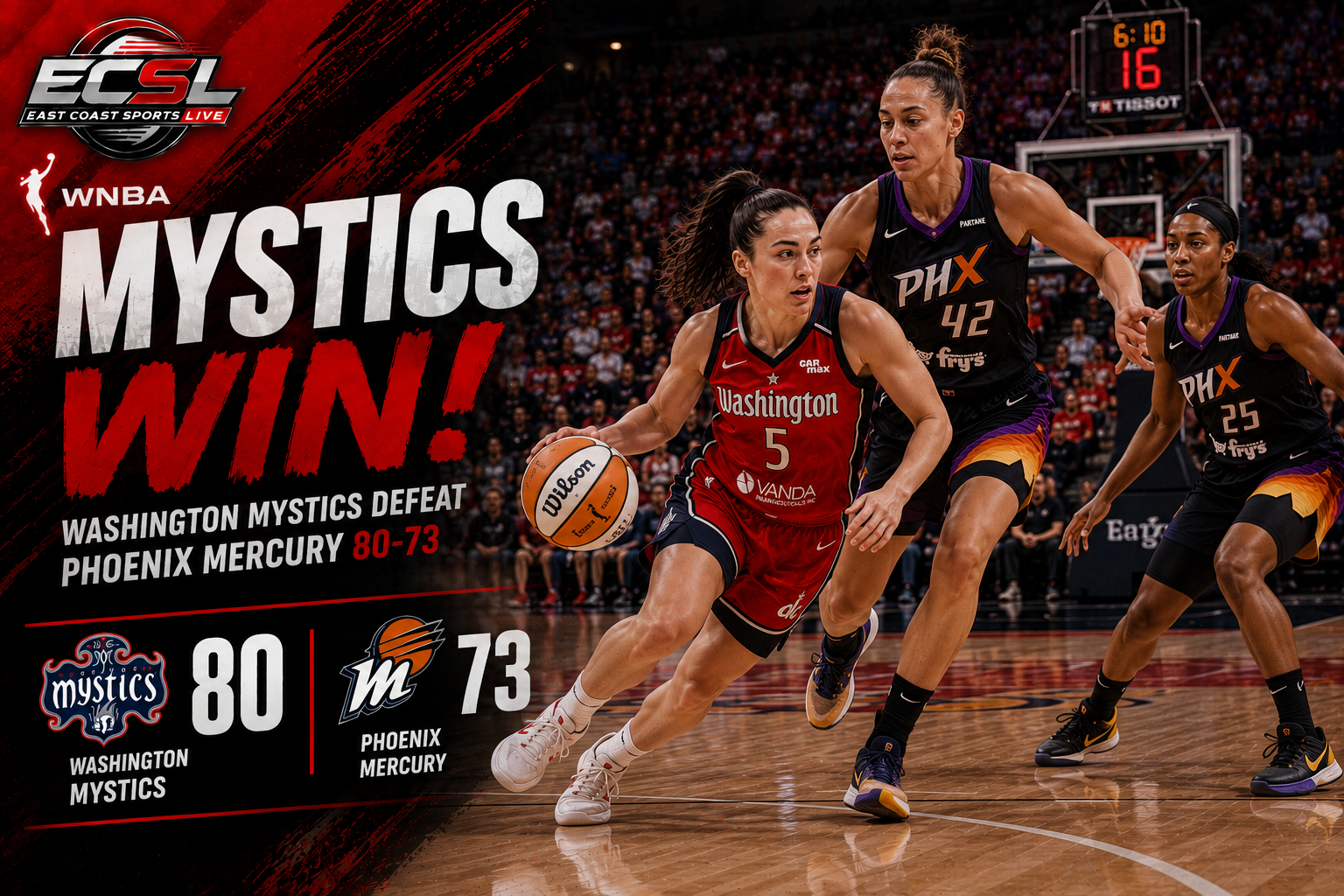
Georgia Amoore scored a career-high 25 points, including 16 in the fourth, as the Washington Mystics rallied past the Phoenix Mercury 80-73.
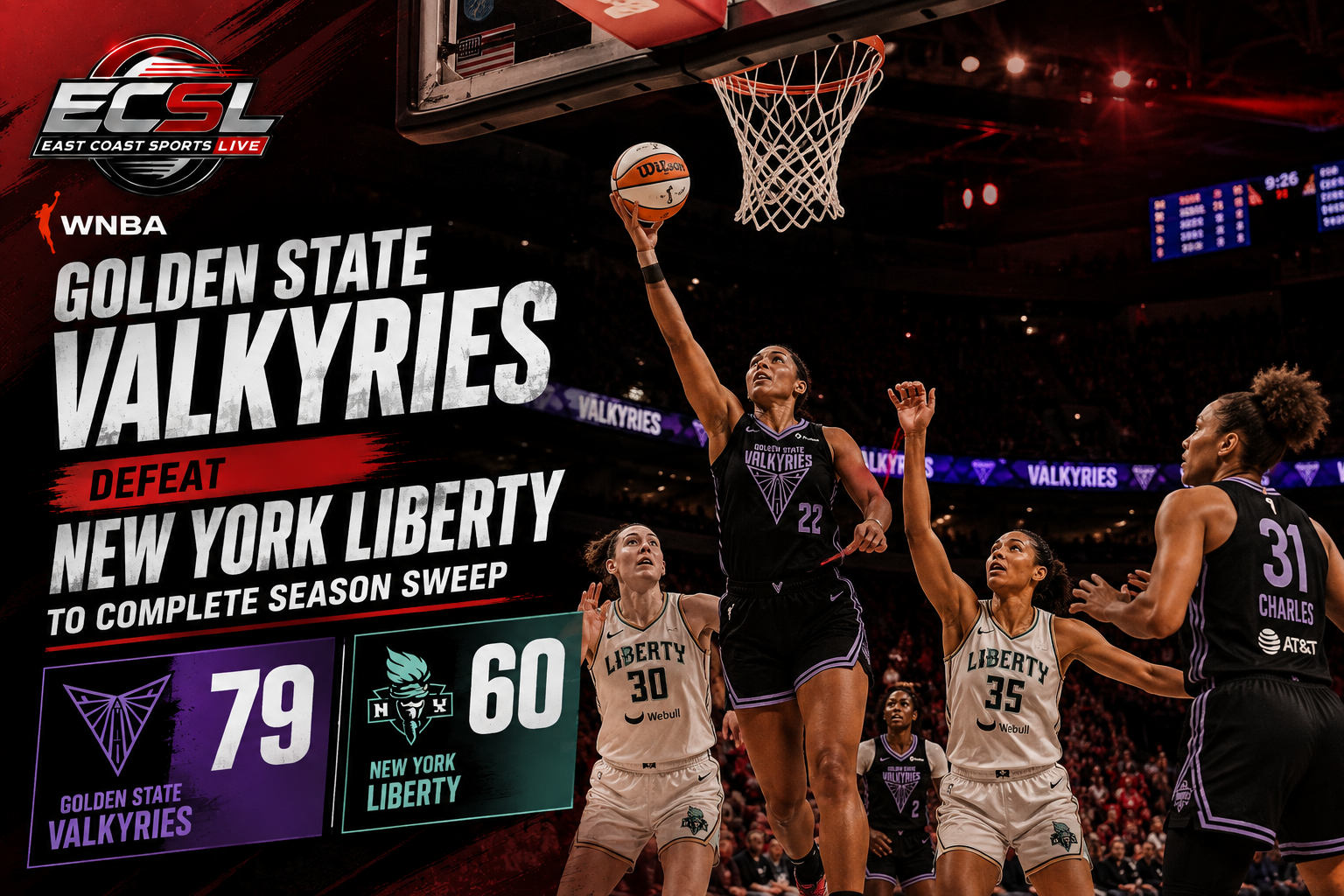
Cecilia Zandalasini scored 20 points as the Golden State Valkyries shut down the New York Liberty 79-60 to complete a 3-0 season sweep.
action shots