Redshirt Freshman: What It Means and How the New NCAA Rules Change It
A redshirt freshman is a college athlete in his or her second academic year who did not use a season of competition in the first year. The student athlete could practice with the team, train, and often travel, but sat out games (or, in football, played in no more than four) to save a year of eligibility. On paper, a redshirt freshman is a second year university student who is a freshman in terms of eligibility, with the same number of seasons left as a true freshman.
That definition is about to change. In June 2026, the NCAA Division I Cabinet approved an age based eligibility model that eliminates redshirt rules for athletes who first enroll in fall 2027 or later. This guide explains what a redshirt freshman is, how the redshirt rules have worked, the medical redshirt, and how the new system changes redshirting in college sports.
What Does Redshirt Freshman Mean?
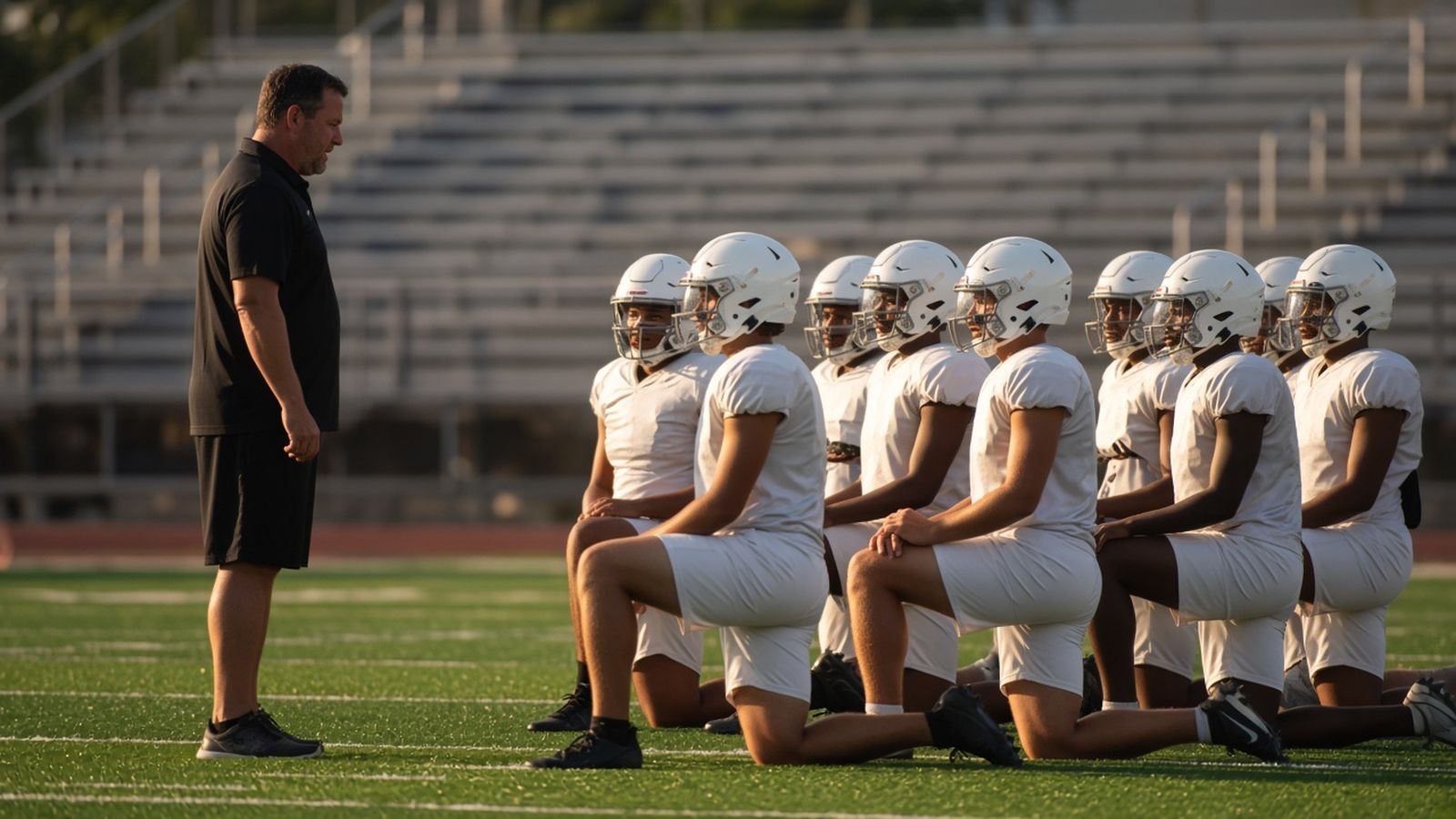
The term redshirt freshman describes a student athlete in the second year of college who is in the first year of competition. The redshirt year is the first year, when the student athlete enrolled, joined the team, and could practice with the team for the entire year, but did not use a season of competition. During that freshman year, the student athlete sits out games while teammates compete.
A true freshman is different. A true freshman plays games in his or her first year of college, using one of the four seasons right away. Both players may be on the same roster, but their redshirt status, and the eligibility they have left, differ.
| Term | Year in school | Eligibility used |
|---|---|---|
| True freshman | First year | First season of competition |
| Redshirt freshman | Second year | First season of competition after a redshirt year |
| Redshirt sophomore | Third year | Second season of competition |
A true sophomore and a redshirt sophomore can be the same age, but the redshirt player has one more year to play.
The term redshirt is commonly said to come from the red practice shirts that non playing athletes wore, though the exact origin is debated.
How NCAA Eligibility Has Worked: The Five Year Clock
Under the long standing Division I rules, a student athlete had four seasons of competition to use within a five year clock, often called the eligibility clock. The clock starts when the student athlete first enrolls full time at a college or university. The extra year inside the five calendar years is what made a redshirt possible: athletes could sit out one year and still play four seasons over five calendar years.
A redshirt did not pause the eligibility clock. It simply let athletes use the additional year to compete. That is why a redshirt freshman could later play as a fifth year senior, sometimes after graduating.
The football four game rule
In 2018, the NCAA Division I Council approved a football specific change: a player could appear in up to four games and still keep the redshirt year. Before that, a single game generally used up a season. The rule gave coaches a way to play younger athletes late in the season, test roster depth, or use them when injuries hit, without costing them a year of eligibility. The same rule also shaped mid season roster decisions, as covered in our story on college football players using the NCAA redshirt rule to leave programs.
Why Do Athletes Redshirt?
Athletes and coaches redshirt for several reasons:
- Physical development: Many freshmen are not yet physically ready to compete against older players who have trained for three or four years. A redshirt year of strength training lets athletes add size before they play.
- Roster depth: If a position already has experienced starters, a freshman may get little playing time in games. Saving the season can be the smarter long term choice.
- Learning the system: A first year in practice helps athletes learn the playbook, techniques, and team activities alongside older teammates.
- Academic adjustment: College life is a big change. A redshirt year can help an athlete settle into the academic year and semester schedule before competing.
- Injury: Athletes with an injury early in the season may receive a medical redshirt, covered below.
Is it good to be redshirted?
It depends on the athlete, the sport, and the team. Many athletes have used the redshirt year to develop and later became starters. Others would rather play right away and not lose a season of games to the sideline. The decision usually involves the athlete, the coaching staff, the team, and the school's compliance office, and it often affects scholarships, playing time, and long term career plans.
Pros and Cons of Redshirting
Pros
- An extra year of practice, training, and development before using a season.
- A chance to learn behind older players at the same position on the team.
- Two years of practice in the system before a player becomes a starter, for some athletes.
- More time to adjust to college life, the semester schedule, and academic demands.
- Under the previous rules, the option of two seasons of competition later in a career, including as a graduate student.
Cons
- A full year with little or no playing time in games.
- The risk of falling behind on the depth chart if coaches change or the roster shifts.
- An extra year in school, which can affect scholarships, costs, and career timing.
Redshirting Beyond Football
Redshirting is used across college sports, not only football. Coaches in basketball, baseball, soccer, track, and other sport programs have used redshirt years for development or injury. The football four game rule was unique to that sport; in most other sports, playing in a game generally used the season. The new age based rules apply across Division I sports, and the NCAA describes similar age based rules for Division II.
Medical Redshirt and the Medical Hardship Waiver
A medical redshirt is different from a regular redshirt. A regular redshirt is planned before the season; a medical redshirt comes after a season ending injury or illness. Under the previous Division I rules, a school could request a medical hardship waiver so the student athlete would not be charged with a season of competition and would keep an extra year. The request needed documentation, and the school's compliance office handled the filing with the conference or the NCAA.
The NCAA has said that under the new age based model, waivers will not be available, including clock extensions and hardship waivers. For current athletes, schools had to submit waiver requests for circumstances during or before the 2025-26 academic year by July 31, 2026.
The New System: Age Based Eligibility
On June 23, 2026, the Division I Cabinet unanimously approved an age based eligibility model. According to the NCAA, athletes get up to five years of eligibility if they enroll in college no later than the academic year after their 19th birthday. The rule eliminates season of competition limits, sport specific rules, redshirt rules, and eligibility extension waivers across NCAA divisions I and II.
The NCAA explains that the five year period begins with the earlier of two events: the athlete's first full time college enrollment, or the start of the academic year after the athlete turns 19. Once it starts, the period runs continuously and does not pause when a student athlete does not compete, transfers, or sits out. Athletes who enter the transfer portal stay on the same clock. The only exceptions that can delay or pause the period are pregnancy, active duty military service, and official religious missions, and only if the athlete does not take part in organized competition during that time.
Who the new rules cover
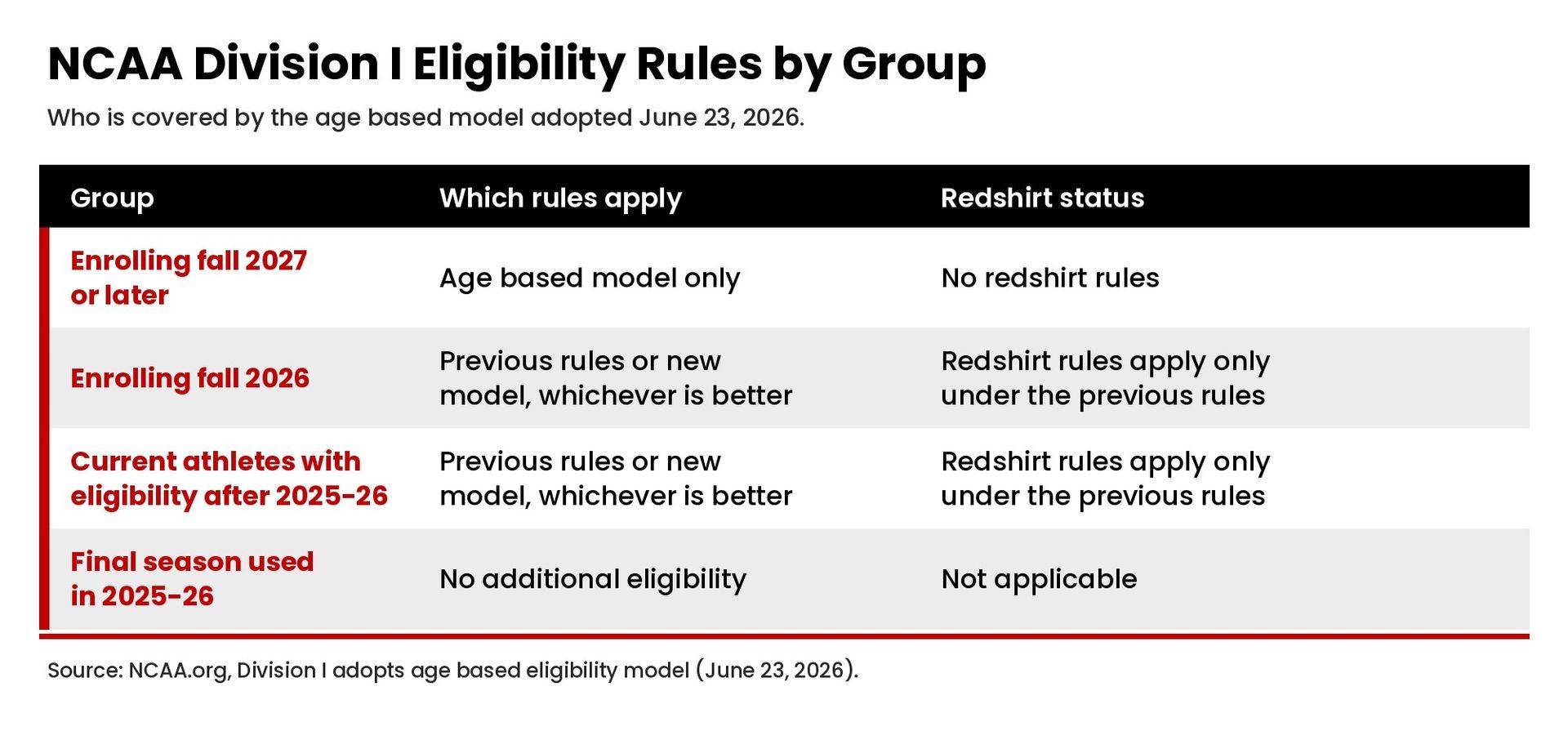
- Fall 2027 enrollees and later: The age based model only. There is no redshirt year to manage, because athletes can be eligible to compete in each of their five years.
- Fall 2026 enrollees and current athletes with eligibility remaining after 2025-26: Schools apply either the previous rules (four seasons within five years) or the age based model, whichever is most favorable to the athlete.
- Athletes who used their final season in 2025-26: No additional eligibility.
The NCAA also notes that the five year period is not a guarantee. An athlete who delays enrollment past the age trigger may have fewer years, and academic and other eligibility rules still apply.
What Changes for Redshirt Freshmen
For athletes in the transition group who stay under the previous rules, the redshirt freshman label and the football four game standard still apply. For athletes who enroll in fall 2027 or later, the term redshirt freshman will fade. An athlete who practices but does not play in the first year will simply have used one of the five years.
That changes the calculation for coaches. Instead of limiting a freshman to four games to save a year, coaches and university staff no longer track redshirts, so coaches can play young athletes whenever they are ready, at any position and in any sport, and scholarships can be planned around a fixed window. The NCAA has said the change is meant to make eligibility simpler to administer and easier to predict for roster management.
Recruiting, the transfer portal, and scholarships will adjust as well. Follow how programs are building rosters in our coverage of high school football recruiting and the latest college football news.
Frequently Asked Questions
Can a redshirt freshman play in any games?
In a redshirt year under the previous rules, a football player could appear in up to four games and keep the redshirt. In most other sports, playing in a game generally used the season. Under the new age based model, there is no redshirt to protect.
Do redshirt freshmen get scholarships?
Yes, many do. A redshirt decision is about eligibility, not financial aid, so redshirt athletes can receive scholarships, including a full athletic scholarship, depending on the program and sport. Scholarships are set by the school, not by redshirt status.
Does a redshirt freshman lose a year of eligibility?
No. Under the previous rules, the redshirt year was the extra year within the five year clock, so athletes did not lose a season. They still had four seasons to compete, or four years of games across five calendar years.
What is the difference between a true freshman and a redshirt freshman?
A true freshman competes in the first year of college. A redshirt freshman is in the second year of school and the first year of competition.
For more college sports explainers, visit our sports news page.
Sources: NCAA.org, Division I adopts age based eligibility model(June 23, 2026) and Division I and Division II Age Based Eligibility Rules: Eligibility 101; AP News, Division I athletes face new five year limit under NCAA eligibility model.