
Louisville Defeats North Carolina 16-14 Behind Jabari Mack's Late Interception as Postgame Brawl Erupts
Louisville Defeats North Carolina 16-14 Behind Jabari Mack's Late Interception as Postgame Brawl Erupts
CHAPEL HILL, N.C. — November 14, 2026 — Louisville survived a late comeback attempt by North Carolina, securing a 16-14 victory Saturday night at Kenan Stadium behind a decisive interception from defensive back Jabari Mack.
The Cardinals relied on defensive pressure, timely turnovers and three field goals to extend their winning streak to five games. The victory improved Louisville's record to 7-3 overall and 6-2 in Atlantic Coast Conference play, keeping the team in contention for a spot in the ACC Championship Game.
North Carolina nearly completed a fourth-quarter comeback after running back Benjamin Hall scored his second touchdown with 3:43 remaining. However, Mack intercepted a fourth-down pass from freshman quarterback Travis Burgess with less than a minute left, allowing Louisville to run out the clock.
The tense finish was followed by a confrontation between players from both teams after the final kneeldown. Coaches and staff intervened as several separate altercations developed before order was restored.
While the postgame incident drew attention, Louisville's defensive performance ultimately determined the outcome of a closely contested conference matchup.
Jabari Mack's Late Interception Secures Louisville Victory
With Louisville protecting a two-point lead, North Carolina regained possession at its own 30-yard line with 1:41 remaining.
The Tar Heels needed to move into field-goal range to potentially win the game.
Burgess, who had replaced injured starting quarterback Billy Edwards Jr. during the third quarter, attempted to lead the final possession.
North Carolina eventually faced fourth-and-12 with its opportunity to extend the drive on the line.
Burgess targeted wide receiver Jordan Shipp, who initially made contact with the football but could not secure the reception.
The deflected pass reached Mack, who completed the interception and returned it 32 yards before sliding to end the play.
With 58 seconds remaining, Louisville gained possession and was able to exhaust the remaining time.
The interception capped a strong performance by Mack, who finished with seven tackles and one takeaway.
His final defensive contribution prevented North Carolina from attempting a potential game-winning field goal and ensured Louisville's fifth consecutive victory.
The play also demonstrated the Cardinals' ability to execute under pressure despite an offense that had struggled to generate consistent second-half production.
Louisville and North Carolina Players Clash After Final Whistle
The conclusion of the game was overshadowed by a physical confrontation involving players from both teams.
After Louisville quarterback Lincoln Kienholz took the final kneeldown, North Carolina defensive tackle Xavier Lewis and Louisville offensive lineman Johnnie Brown III continued engaging physically.
The confrontation escalated as additional players became involved.
What began as pushing between individuals developed into multiple altercations, with groups of players gathering and some falling to the ground.
Other confrontations occurred away from the initial group, including an additional gathering near an end zone.
Coaches, staff members and other personnel moved onto the field to separate the players.
North Carolina head coach Bill Belichick was among those who intervened to direct Tar Heels players away from the confrontation.
Louisville head coach Jeff Brohm also expressed disappointment with the incident following the game.
The teams were eventually separated, and the postgame proceedings continued.
The available reports did not establish a definitive cause beyond the initial confrontation or confirm subsequent disciplinary decisions.
Although the altercation occurred after Louisville had secured the victory, it became a prominent part of the game's conclusion.
Louisville Defense Records Six Sacks and Two Takeaways
Louisville's defense delivered the most important contributions in a game where offensive opportunities were limited.
The Cardinals recorded six sacks, forced two turnovers and held North Carolina to 293 total offensive yards.
Their defensive pressure disrupted the Tar Heels' passing attack and helped prevent North Carolina from establishing sustained momentum.
Linebacker Stanquan Clark led Louisville with 10 tackles, including two tackles for loss and a sack.
Koen Entringer added seven tackles, two sacks and a forced fumble.
Entringer's forced fumble during the second quarter was particularly important because it created the opportunity for Louisville's only touchdown.
Mack contributed seven tackles and the game-sealing interception.
Together, those performances helped compensate for an offense that produced just 302 total yards.
Louisville's defensive effectiveness was particularly evident during the second and third quarters, when North Carolina failed to score.
The Cardinals also responded after Hall's late touchdown brought the Tar Heels within two points.
Rather than allowing North Carolina to complete the comeback, Louisville generated the final takeaway necessary to secure the victory.
Lincoln Kienholz Throws Touchdown Pass to Jaleel Skinner
Louisville quarterback Lincoln Kienholz finished the game completing 23 of 31 passes for 154 yards and one touchdown.
Although the Cardinals struggled to create explosive passing plays, Kienholz delivered an important scoring connection during the second quarter.
Following a forced fumble by Entringer and a recovery by Joshua McDonald, Louisville took possession at the North Carolina 21-yard line.
The favorable field position provided the Cardinals with an opportunity to take control.
After three rushing plays, Kienholz connected with tight end Jaleel Skinner on a 3-yard touchdown pass.
The score gave Louisville a 13-7 lead with 12:15 remaining before halftime.
It would prove to be the Cardinals' only touchdown of the game.
Kienholz managed the offense effectively enough to protect the advantage, but Louisville encountered difficulties sustaining drives during the second half.
The Cardinals had entered the matchup averaging 43.5 points during their previous four victories.
North Carolina's defense limited that production considerably, forcing Louisville to depend on field goals and defensive stops.
Despite the offensive challenges, Kienholz avoided a late turnover and successfully completed the kneeldowns that secured the result.
Carson Hilbert's Three Field Goals Prove Decisive
Louisville kicker Carson Hilbert played an essential role in the two-point victory.
Hilbert converted three field goals, accounting for nine of Louisville's 16 points.
His first successful attempt came during the opening quarter, when he connected from 46 yards to give the Cardinals a 3-0 advantage.
North Carolina responded with a touchdown, but Hilbert added a 32-yard field goal early in the second quarter to reduce the deficit to 7-6.
Louisville then took the lead on Skinner's touchdown reception.
The Cardinals carried a 13-7 advantage into halftime and maintained that margin through a scoreless third quarter.
With 7:28 remaining in the fourth quarter, Hilbert converted a 36-yard field goal to extend Louisville's lead to 16-7.
That kick ultimately supplied the winning margin.
North Carolina scored again later in the quarter, but Louisville's three successful field goals ensured that the Tar Heels still needed another scoring possession to take the lead.
In a defensive matchup decided by two points, Hilbert's consistency was a significant factor.
Benjamin Hall Scores Both North Carolina Touchdowns
North Carolina running back Benjamin Hall provided the Tar Heels' primary scoring production.
Hall finished with 48 rushing yards on 10 carries and scored both of North Carolina's touchdowns.
His first score came during the opening quarter on an 11-yard run that gave the Tar Heels a 7-3 lead.
The touchdown capped a 12-play, 75-yard possession and briefly shifted momentum toward North Carolina.
However, Louisville responded with 10 unanswered points during the second quarter.
North Carolina then struggled to sustain offensive drives through much of the middle portion of the game.
Hall eventually helped bring the Tar Heels back into contention during the fourth quarter.
With North Carolina trailing 16-7, the offense assembled a nine-play, 75-yard touchdown drive.
Hall finished the possession with a 6-yard run, cutting Louisville's advantage to 16-14 with 3:43 remaining.
The score gave North Carolina an opportunity to complete a comeback if its defense could force another possession.
The Tar Heels accomplished the first part of that objective by forcing Louisville to punt.
However, the final offensive drive ended with Mack's interception.
Hall's two-touchdown performance kept North Carolina competitive, but the Tar Heels could not produce the additional points needed to secure the victory.
Billy Edwards Jr. Injury Forces North Carolina Quarterback Change
North Carolina faced an additional challenge when starting quarterback Billy Edwards Jr. left the game during the third quarter.
Edwards completed 10 of 14 passes for 120 yards before suffering an apparent upper-body injury following a sack.
Louisville defender T.J. Capers was credited with the play that forced Edwards from the game.
True freshman Travis Burgess entered as his replacement, making his first college appearance.
Burgess completed six of 11 passes for 59 yards and one interception.
He also contributed 35 rushing yards on eight carries, providing North Carolina with additional mobility at quarterback.
The freshman helped direct the Tar Heels' late touchdown drive and kept the offense competitive during the fourth quarter.
However, Louisville's defensive pressure complicated North Carolina's efforts to move the football consistently.
The final interception came on a pass that reached Shipp but was not secured before Mack collected the deflection.
Although the turnover ended North Carolina's comeback opportunity, Burgess' performance provided valuable experience in a difficult situation.
The available sources did not establish a definitive recovery timeline for Edwards.
North Carolina Defense Limits Louisville to 302 Yards
While Louisville's defense received considerable attention, North Carolina also delivered a competitive defensive performance.
The Tar Heels held the Cardinals to 302 total yards and just one touchdown.
Louisville entered the matchup following four victories in which its offense had averaged 43.5 points.
North Carolina significantly reduced that scoring production by limiting explosive plays and forcing the Cardinals to settle for field goals.
Louisville running back Keyjuan Brown recorded 78 rushing yards on 11 carries, averaging 7.1 yards per attempt.
Isaac Brown added 50 rushing yards on 12 carries.
Receiver Lawayne McCoy led Louisville's passing attack with six receptions for 64 yards.
Despite those contributions, the Cardinals struggled to maintain consistent offensive rhythm during the second half.
North Carolina's defensive effort gave its offense an opportunity to win the game late.
However, the Tar Heels' inability to capitalize on that opportunity ultimately determined the result.
The matchup demonstrated how a strong defensive performance can still end in defeat when turnovers and missed offensive opportunities prevent a team from converting field position into points.
Louisville Extends Winning Streak to Five Games
Louisville's victory represented its fifth consecutive win, strengthening its position in the ACC standings.
The Cardinals improved to 7-3 overall and 6-2 in conference competition.
Their recent success had largely featured strong offensive production, including three victories by at least 24 points during the preceding four-game stretch.
The North Carolina matchup required a different approach.
Instead of relying on a high-scoring offense, Louisville depended on defensive pressure, field-goal accuracy and timely turnovers.
The Cardinals demonstrated that they could win a closely contested conference game even when their offensive production fell below recent levels.
That adaptability could prove important during the final weeks of the regular season.
However, Louisville will need to improve offensive consistency and reduce penalties as it prepares for its remaining opponents.
The victory also preserved the Cardinals' opportunity to compete for a place in the ACC Championship Game.
ACC Championship Race Remains Competitive
Louisville's win carried implications beyond the two teams involved.
Entering the weekend, the Cardinals were the only ACC team with two conference losses still positioned within reach of the championship race.
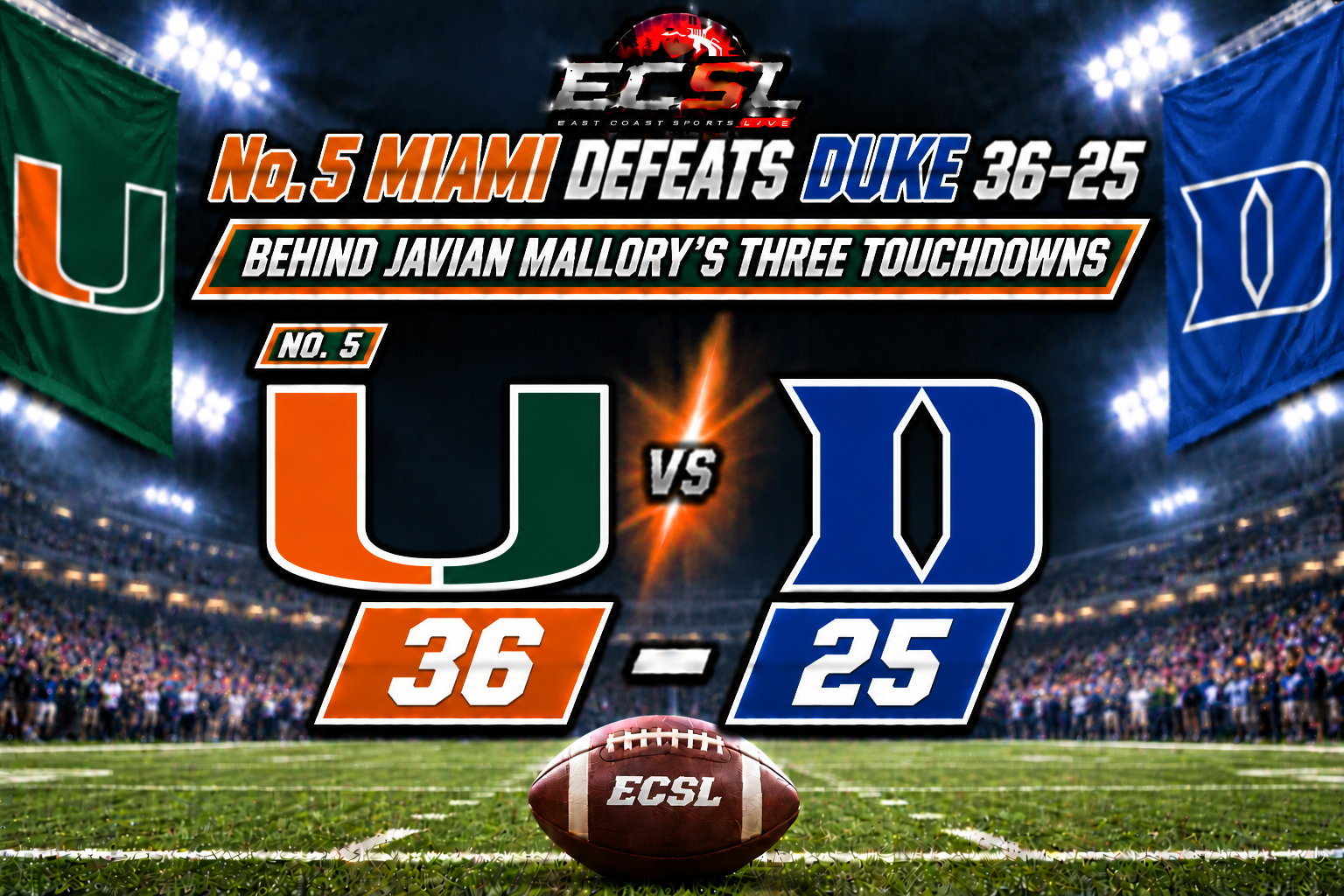
No. 5 Miami remained unbeaten in ACC play at 7-0, while No. 11 Wake Forest held a 6-1 conference record.
A North Carolina victory over Louisville would have secured Miami's place in the conference championship game.
Instead, Louisville's narrow win kept the Cardinals mathematically involved in the race.
Miami still needed one victory in its final two games to clinch its championship appearance, while Wake Forest remained a strong contender.
Louisville's path depended on winning its remaining conference matchup and receiving favorable results elsewhere.
The Cardinals' immediate priority will be their upcoming game against Pittsburgh.
A victory would strengthen their conference position while allowing them to finish ACC play with seven wins.
Although Louisville does not fully control the championship race, its five-game winning streak has kept its postseason ambitions alive.
North Carolina Remains One Win Away From Bowl Eligibility
The defeat left North Carolina at 5-5 overall and 2-4 in ACC competition.
The Tar Heels entered the matchup needing one victory to reach six wins and improve their bowl eligibility prospects.
Their recent offensive production had been encouraging, with the team scoring at least 30 points in each of its previous three games.
Louisville's defense interrupted that momentum.
North Carolina managed only 14 points, its lowest scoring total of the season.
The injury to Edwards further complicated the offense's ability to maintain consistency.
Despite those challenges, the Tar Heels nearly completed a late comeback.
Hall's second touchdown and the subsequent defensive stop gave North Carolina a final opportunity to win.
However, Mack's interception ended that possibility.
The Tar Heels now face additional pressure to secure a victory in their remaining regular-season games.
Their next matchup against Virginia will be particularly important, as both programs enter the contest with five wins and an opportunity to move closer to postseason eligibility.
What's Next for Louisville and North Carolina?
Louisville returns home to face Pittsburgh on November 21 in its final ACC matchup of the regular season.
The Cardinals will look to extend their winning streak to six games while maintaining their position in the conference championship race.
North Carolina travels to Virginia on November 21 for a matchup between two teams seeking their sixth victory.
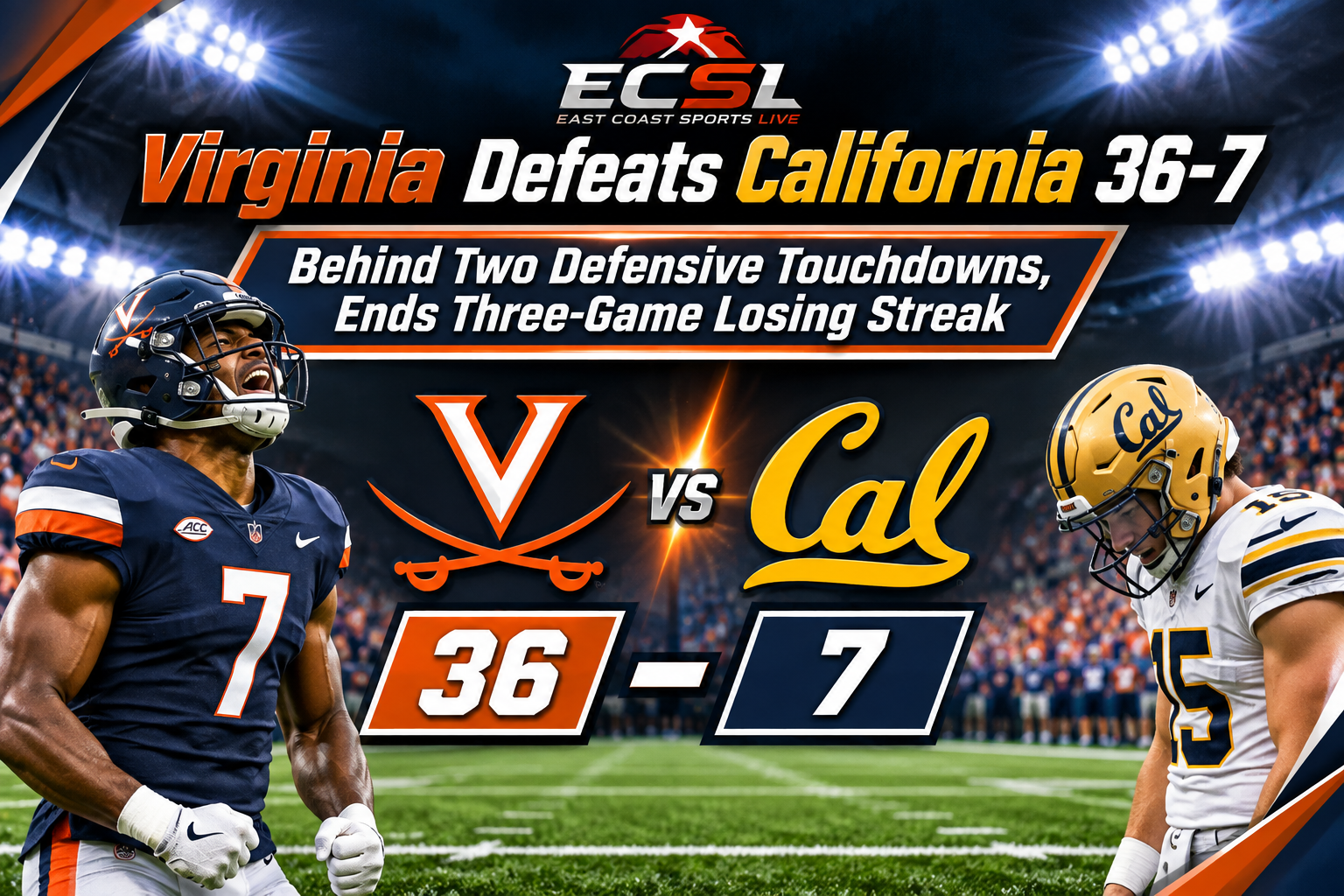
The Tar Heels will need to improve offensive consistency and protect the football more effectively against a Virginia team coming off a 36-7 victory over California.
For Louisville, the 16-14 victory over North Carolina demonstrated the value of defensive execution in a game where scoring opportunities were limited.
Mack's late interception, Entringer's disruptive performance and Hilbert's three field goals provided the foundation for the Cardinals' fifth consecutive win.
The postgame confrontation created an unfortunate conclusion to an otherwise competitive matchup, but the result remained significant for Louisville's conference ambitions.
As the regular season approaches its final weeks, the Cardinals remain in the ACC championship conversation, while North Carolina continues searching for the victory needed to strengthen its postseason hopes.