
Trev Alberts' Next Job: The Open AD Seats That Fit His Record After Michigan's Reversal
A week ago, Trev Alberts had one of the top jobs in college athletics lined up. He had signed a memorandum of understanding to become Michigan's athletic director on Nov. 17, and Texas A&M had already announced that his last day in College Station would be Nov. 30. On Tuesday, Michigan backed out of the hire, according to The Associated Press, leaving one of the most experienced administrators in the sport with no athletic director job lined up after Nov. 30 for the first time since he took over at Omaha in 2009.
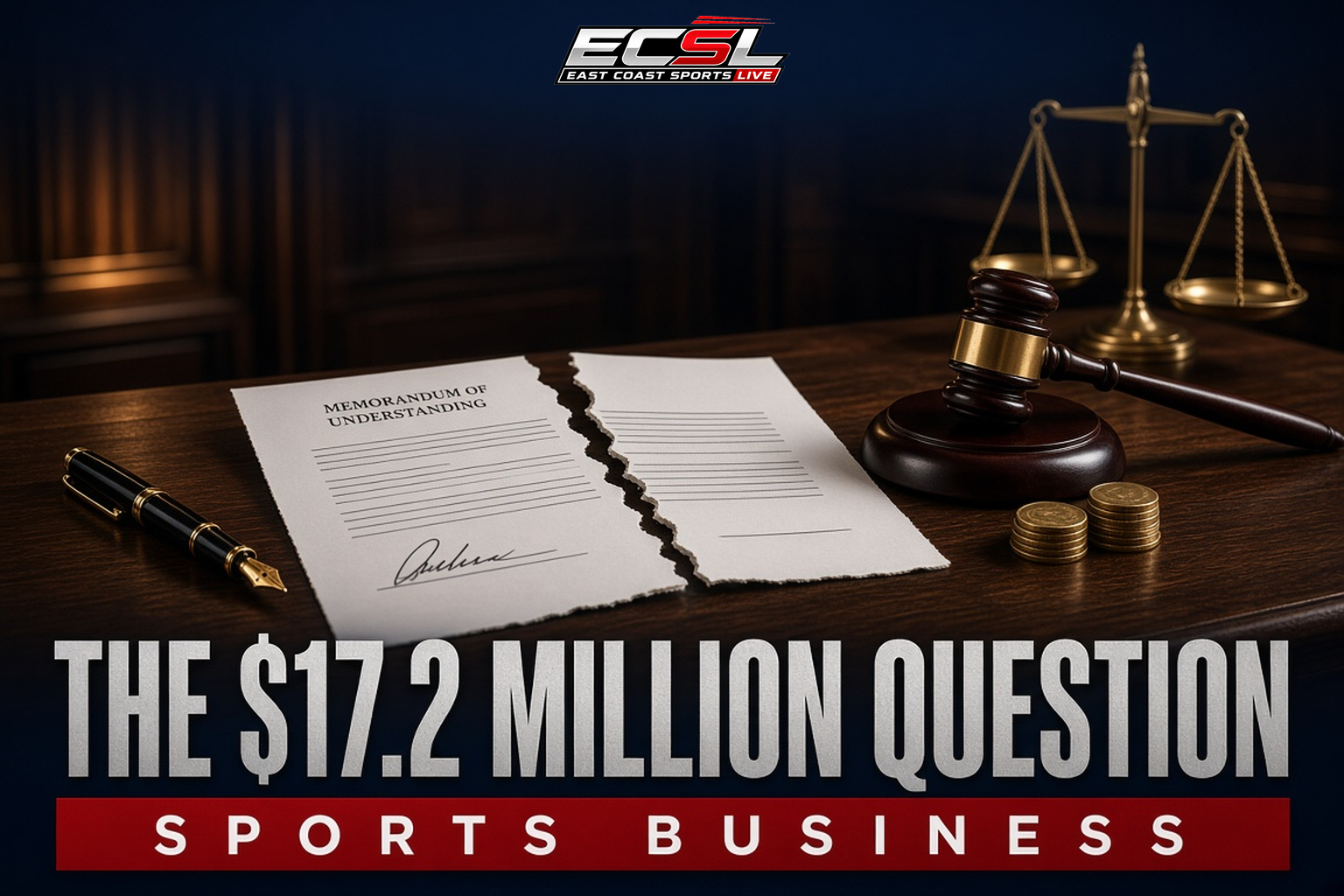
The money is contested. The memorandum, signed by Alberts, Michigan President Domenico Grasso and President-elect C. Cybele Raver, set a term from Dec. 1, 2026, through June 30, 2031, with a $3.2 million base salary in each of the first two years, according to the Detroit Free Press. Alberts' attorneys put Michigan's obligation at about $17.2 million, a figure Michigan disputes, and Michigan also agreed in the MOU to pay the $4 million buyout of his Texas A&M contract. Under the MOU, any severance would be paid in monthly installments over the rest of the term, with his earnings elsewhere deducted. Michigan, in a Nov. 24 letter reported by The Detroit News, said his background check was not acceptable and that it would not complete an employment agreement. ECSL's analysis of the MOU dispute and who has the stronger legal case covers that fight. This piece looks at the market: where a sitting Power conference athletic director goes when his old job has moved on and very few comparable seats are open.
The record a search committee will read
Alberts built his career in three very different settings.
At Nebraska-Omaha, where he was athletic director from 2009 until 2021, he took the department from Division II to Division I in 2011 and placed its programs in the Summit League, according to his Texas A&M biography. He moved the hockey program into the new National Collegiate Hockey Conference for 2013-14, and Omaha reached the Frozen Four the next year. He also led the effort that produced Baxter Arena in 2015 and Maverick Park, a privately funded baseball and softball complex that opened in 2021.
At Nebraska, where he was named athletic director in July 2021, he hired football coach Matt Rhule in the fall of 2022, completed fundraising for the first phase of the Go Big Project, including a new football facility finished in the spring of 2024, and signed a 15-year multimedia rights agreement with Playfly Sports valued at $301 million, according to the Nebraska announcement and his A&M biography. Texas A&M's 2024 hiring release also credited him with Volleyball Day in Nebraska, which drew 92,000 fans to Memorial Stadium.
At Texas A&M, which hired him on March 13, 2024, the school says he cut expenses in his first year and negotiated a 15-year Playfly agreement guaranteeing $515 million, or $34 million a year, which A&M describes as the largest multimedia rights deal in college athletics. During his tenure the Aggies made their first College Football Playoff and won national titles in women's tennis, men's outdoor track and field and volleyball, according to the university.
The pattern is revenue deals, privately funded buildings and large structural changes, a profile suited to schools facing a financial or competitive reset.
Which athletic director jobs are open now
The supply is thin at the top. TRAVIS Athletics, which tracks Division I athletic director changes, listed 16 openings as of Nov. 24, and only three at schools in the autonomy conferences: Michigan, Texas A&M and Miami. Two other Power conference searches closed this fall. Iowa State named Jared Benko in October, and Florida State hired Jeff Purinton in November, as ECSL noted in its analysis of the Seminoles' coaching hire.
The table below lists the notable openings that schools have confirmed. The fit column is ECSL analysis, not reporting that any school is interested in Alberts. ECSL found no reputable report that any school has contacted him.
| School | Conference | Status and source | Why he fits, or does not |
|---|---|---|---|
| Texas A&M | SEC | John Thornton named interim effective Dec. 1; school selecting a search firm (Texas A&M, Nov. 23) | Knows the department, but A&M is already replacing him |
| Miami | ACC | National search since Dan Radakovich's June 1 retirement; co-interim leaders (Miami, April 28) | Media rights record fits; reported preference for a nontraditional hire does not |
| Rice | American | Search committee and Parker Executive Search; Eric George interim (Rice, Sept. 28) | Stadium modernization project matches his facilities work |
| UAB | American | Parker Executive Search; applications for full consideration were due Nov. 13 (UAB position profile) | Profile asks for new revenue streams and fundraising |
| Sam Houston | Conference USA | Expedited search with CSA Search and Consulting; aims to name a director before the December holiday break (Sam Houston, Oct. 30) | Timing fits; new director leads a football coach search |
| Louisiana | Sun Belt | Bryan Maggard left for Missouri; Trey Frazier interim (Louisiana, July 21) | Department seeks to expand financial support |
| Air Force | Mountain West | Interim leadership since the Air Force said June 26 that it no longer accepted Nathan Pine's service as athletic director (Air Force Academy, July 3) | Weak fit; academy board recommends a graduate |
Is a return to Texas A&M possible?
On paper, the cleanest landing spot would be the job he just left. In practice, Texas A&M has moved quickly. President Susan Ballabina told the campus on Nov. 19 that Alberts had accepted a new opportunity, and on Nov. 23 she named John Thornton, a former A&M basketball player and longtime administrator, interim athletic director effective Dec. 1.
Neither school has said anything publicly about Alberts returning, and ECSL is not aware of any official or reputable report that a return is under discussion.
Miami and the Power conference ceiling
Miami is the only open autonomy job without a direct conflict. The university announced in April that Radakovich would retire June 1 and that deputy directors Brian Baptiste and Rachelle Paul would lead the department while a national search was conducted.
The obstacle is the profile Miami reportedly wants. In September, Sports Business Journal, citing the Miami Herald, reported that the school "continues to seek a non-traditional hire as opposed to a current college AD." Alberts has spent 17 years as a college athletic director. His two Playfly deals are his best argument to a search built around revenue, but ECSL has seen no reporting that Miami has changed course.
The Group of Six and the rebuild case
Below the autonomy level, the openings line up more closely with what Alberts did in Omaha. Rice says its next director will be "a key steward of the Gateway Project," a plan to modernize Rice Stadium. UAB's position profile asks for a leader "capable of developing new revenue streams, strengthening philanthropy and corporate partnerships." Those are logical fits because they describe the work on his resume.
Sam Houston is the most time-sensitive. The university wants to name a director before the December holiday break, and that person will lead the search for the next head football coach. Louisiana says it wants an executive who can expand financial support for its department.
Air Force is open, but the academy's Board of Visitors wrote in its August report that "being a USAFA graduate is a key selection criterion." Alberts is a Nebraska graduate.
Whether a former SEC and Big Ten director would take a Group of Six job is a separate question, and the Michigan agreement's mitigation and noncompetition clauses, described below, bear on it.
Practical limits: money, timing and scrutiny
Three factors will shape any move.
The first is the contract. The MOU, which ECSL reviewed, requires Alberts to "deploy reasonable best efforts to maximize the Mitigation Amount," meaning his earnings from other work, which would be deducted from any severance Michigan owes. It also contains a noncompetition clause. During the term, which runs through June 30, 2031, and for two years after it ends, he may not discuss, negotiate or accept employment with any current, future or former Big Ten member or any other college or university within 500 miles of Ann Arbor. Whether either clause still binds him after Michigan withdrew before his start date is part of the dispute, and no court has ruled on it. None of the schools in the table is a Big Ten member or within 500 miles of Ann Arbor, by ECSL's measurement, but if the clause applies it would cover every Big Ten opening and many schools across the Midwest.
The second is timing. Most of these searches are already deep into their processes. UAB's deadline for full consideration has passed, and Sam Houston wants a decision within weeks. A candidate who waits for the Michigan payment to be settled may miss this cycle of searches.
The third is vetting. Michigan's letter did not say what the background check found, and Michigan has not said whether Alberts' deposition testimony was the information it relied on. Alberts is one of the defendants in a federal Title IX lawsuit brought by a former member of Nebraska's women's basketball team, who claims that he and coach Amy Williams failed to respond properly once her relationship with an assistant coach came to light. According to the AP, when an attorney asked him in a Dec. 4, 2025, deposition whether coaches should never have sex with the athletes they coach, his answer included the words "it just depends." The Detroit Free Press reported that he called the issue "nuanced" and said he was "not an expert in that area." The allegations in the lawsuit have not been proven. Alberts said in a statement that "the egregious characterization of words taken out of context from a deposition regarding an incident that occurred years ago is wrong and unfair." In a joint response to the lawsuit, Alberts, Williams and Nebraska's regents said they lacked "sufficient information and belief to either admit or deny the allegations" of a sexual relationship, according to the AP. Any future employer can be expected to examine the case.
What comes next
Alberts said Tuesday that he and his lawyers are "conferring on next steps." In ECSL's view, his options will be shaped by how the Michigan dispute is resolved, because the MOU's mitigation and noncompetition clauses both tie his next job to that agreement. His record in Omaha, Lincoln and College Station still makes him a credible candidate for schools that want revenue growth and new facilities. Whether a Power conference school is willing to hire him now is a question the next few searches will answer.