
Amber Aniston • November 28, 2024

SMU Volleyball Extends Winning Streak with Sweep Over Florida State

Dominant Performance Secures Another Victory

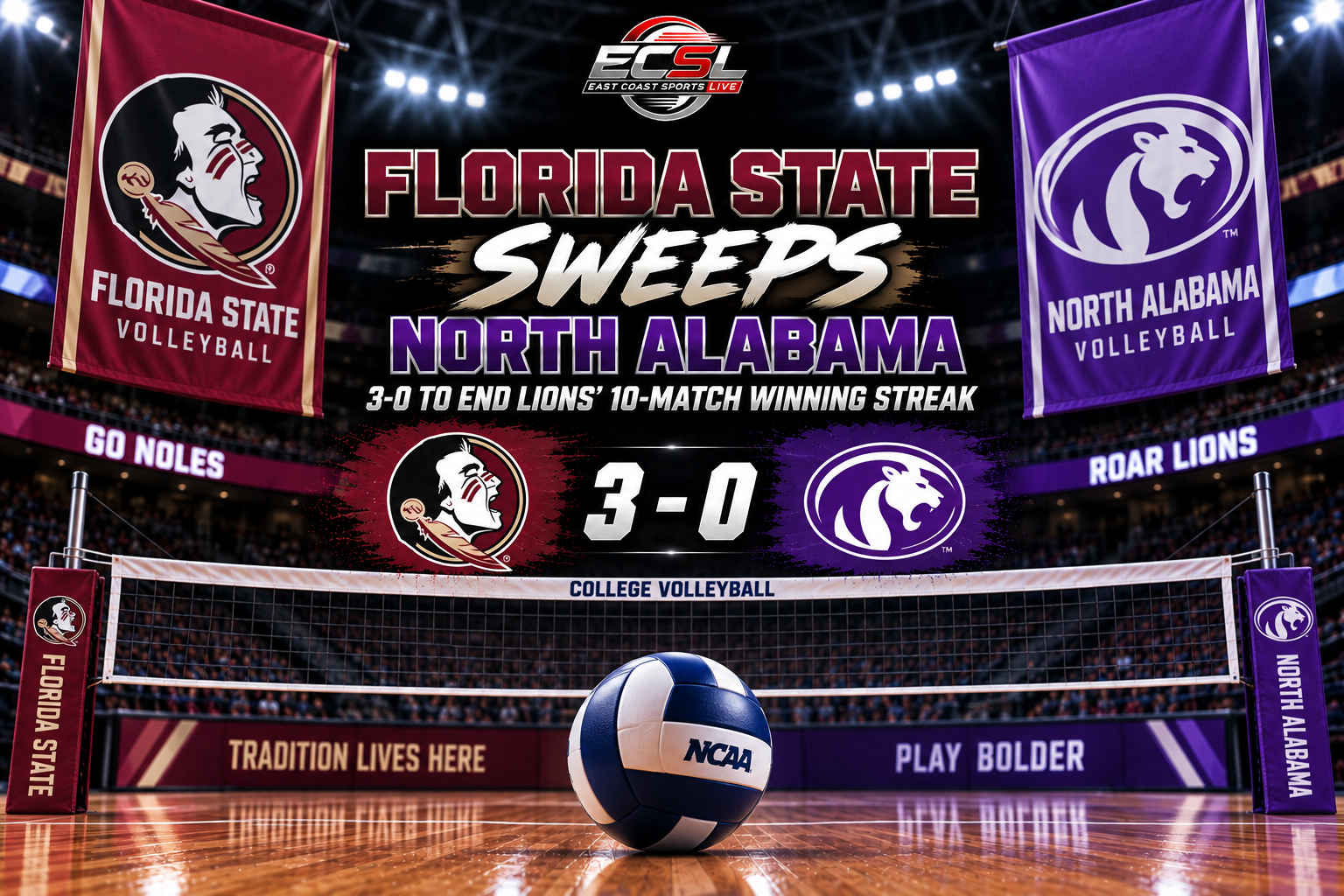
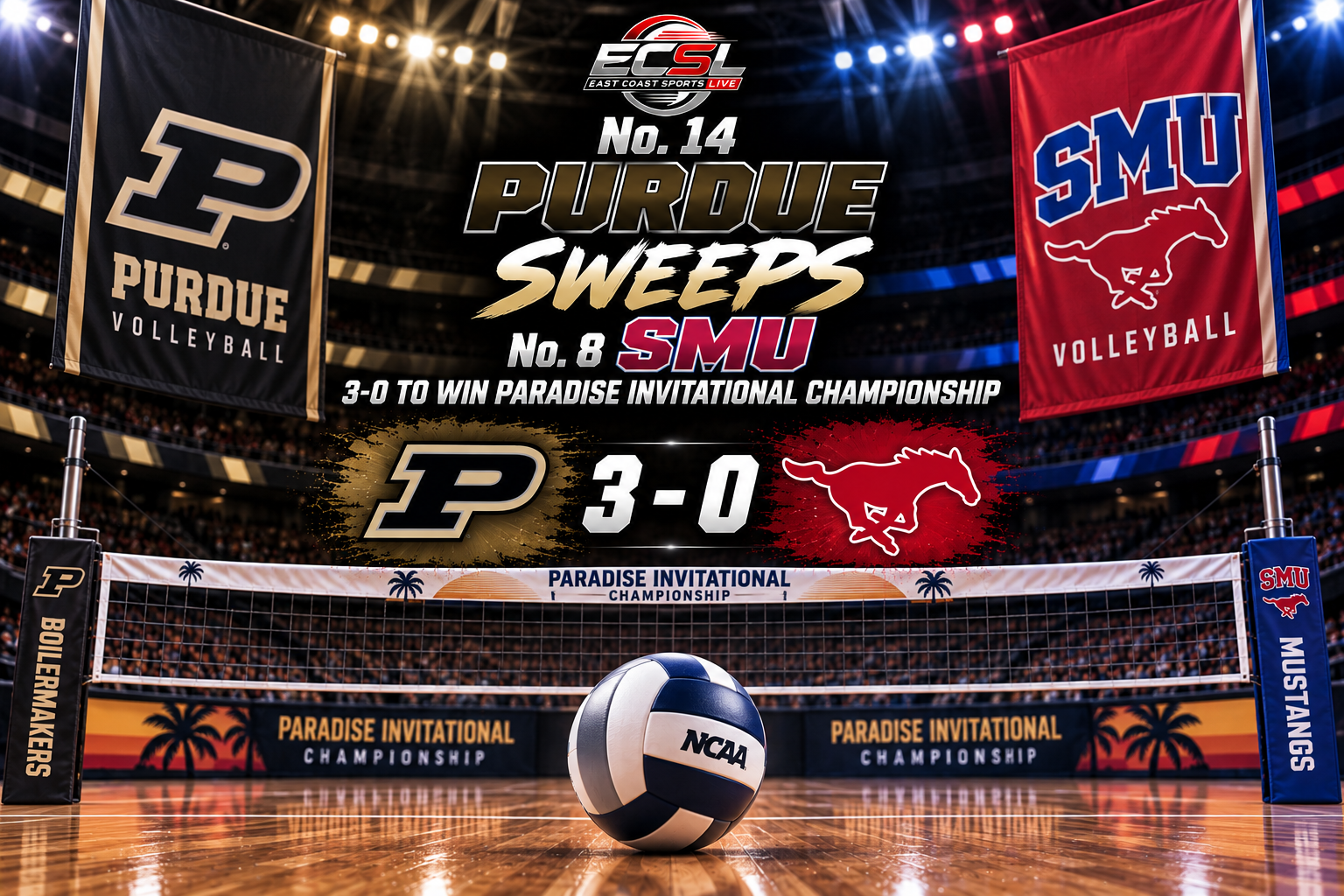
The No. 10 SMU volleyball team continued their remarkable season with a dominant 3-0 sweep over No. 21 Florida State on Wednesday afternoon in Tallahassee. The Mustangs secured set victories of 27-25, 25-23, and 25-21, further extending their winning streak to nine matches and setting a program record for the most road wins in a single season.


With the victory, SMU improved to 24-6 overall and 16-3 in ACC play, solidifying their standing as one of the nation’s top teams as they prepare for the postseason. Florida State dropped to 20-9 overall and 12-7 in conference play, highlighting the intensity of competition at this stage of the season.


Resilience in Key Moments

SMU showcased their strength and versatility throughout the match, excelling in both offensive and defensive phases. The first set proved to be a tightly contested affair, with Florida State initially taking control and reaching a 23-20 lead. However, SMU rallied with a series of precise kills and defensive stops to overcome the deficit and claim the set 27-25. Their ability to remain composed under pressure and capitalize on key opportunities defined their performance.


The second set was another closely fought battle, with SMU maintaining a slight advantage throughout. Late in the set, the Mustangs secured crucial points through their efficient attacking and defensive coverage to close out the set 25-23. Their composure and focus were evident as they minimized errors and maintained control in critical moments.


The third set saw Florida State take an early lead, but SMU responded with a balanced offensive effort and strong net presence to regain momentum. A decisive 5-2 run in the closing stages sealed the set at 25-21, completing the sweep and securing another milestone victory for the Mustangs.


Key Performances Drive Success

SMU’s success was driven by standout performances from several players who showcased their skills in crucial moments. Maya Tabron led the team with 14 kills and a match-high 16 digs, delivering her 12th double-double of the season. Her contributions were pivotal in both offense and defense, allowing SMU to stay competitive in tight exchanges. Naya Shime added 13 kills, seven digs, and three blocks, highlighting her all-around ability to impact the game. Her timely kills in the second and third sets provided the Mustangs with the edge they needed to maintain control.


Celia Cullen orchestrated the offense with precision, recording 32 assists while contributing defensively with five digs and five blocks. Her leadership and decision-making ensured a well-balanced attack throughout the match. Nnedi Okammor anchored the defense at the net with six blocks, including a critical solo block that shifted momentum in the third set. Her ability to disrupt Florida State’s attack created opportunities for SMU to convert defensive stops into scoring runs.


Defensive and Offensive Balance

SMU’s ability to combine offensive efficiency with defensive intensity was a key factor in their victory. The Mustangs hit .252 as a team, converting their opportunities with consistency and precision. Their defensive coverage was equally impressive, with 54 digs and 10 blocks frustrating Florida State’s attackers and limiting their ability to sustain momentum.


The Mustangs’ dominance at the net played a critical role in their success. Their blocking forced Florida State into difficult situations, leading to errors and rushed attempts. This defensive effort, combined with their ability to capitalize on second-chance opportunities, allowed SMU to control the pace of the match.


Milestone Achievements

This victory marked several milestones for SMU as they continued their historic season. The win in Tallahassee was their 12th road win of the season, setting a new program record and underscoring their ability to perform in challenging environments. Additionally, the Mustangs recorded their 15th sweep of the season, reflecting their consistency and dominance against quality opponents.


SMU also improved to 3-0 against Florida State this season, demonstrating their ability to execute effectively against a ranked opponent. These achievements further validate the Mustangs’ status as a top-tier program and highlight their readiness for postseason competition.


Florida State’s Effort Falls Short

Despite the loss, Florida State delivered a strong effort, with standout performances from key players. Khori Louis led the Seminoles with 14 kills and five blocks, while Taylor Head added 12 kills. The Seminoles’ aggressive serving and offensive adjustments kept them competitive, particularly in the first two sets. However, they struggled to maintain consistency in critical moments, allowing SMU to capitalize and pull away.


Florida State’s inability to convert defensive stops into scoring opportunities proved to be a significant factor in their loss. Their struggles at the net, coupled with SMU’s dominance in the middle, limited their ability to sustain rallies and shift momentum in their favor.


Looking Ahead to Postseason Play

SMU returns to Dallas to host NC State in their final regular-season match on Saturday, November 30. With the postseason looming, the Mustangs will aim to build on their momentum and continue their winning streak. The match will also serve as an opportunity to honor the team’s seniors and celebrate their contributions to the program.


Florida State will travel to Winston-Salem to face Wake Forest in their regular-season finale on Friday. The Seminoles will look to rebound and address the areas of improvement highlighted in this match as they prepare for postseason play.


Poised for a Deep Run

SMU’s victory over Florida State underscores their emergence as a dominant force in collegiate volleyball. Their ability to execute in high-pressure situations, combined with their depth and versatility, positions them as a serious contender heading into the postseason. With their winning streak intact and their confidence soaring, the Mustangs are poised to make a deep run in the weeks ahead.
Camera Set-Up in Basketball Court or Gymnasium
By Amber Aniston August 3, 2026
Discover how East Coast Sports Live delivers reliable sports livestream production for schools, leagues, and sponsors. From high school streaming to tournaments, we provide professional multi-camera broadcasts with seamless workflows and integrated sponsor assets. Request your proposal today.
By Angelie Te July 31, 2026
Why Sports Video Production Matters in the World of 2026 Sports video production in 2026 covers far more than pressing record and capturing the final score. It spans live game broadcasts, tournament streaming, vertical social clips, recruiting reels, and sponsor activation content for schools, teams, leagues, and athletics organizations at every level. The job of a modern sports producer is to build year-round storylines, ensure sponsor visibility across every screen, and produce scout-ready assets that athletes and families can use for years. Consider the scale: global sports rights spending exceeded $67 billion in 2026 , and LiveU deployed 1,700 units for the 2026 FIFA World Cup to connect venues across North America. This industry momentum reaches every stage of competition, from youth travel tournaments to college showcases. Sports video production is considered challenging due to unpredictable action and lack of second takes-which is exactly why professional planning matters. The real goal of sports video production isn't just documenting what happened. It's creating content that works long after the final whistle.  East Coast Sports Live helps programs of all sizes compete with pro-level production quality without needing an in-house broadcast team. This article walks you through planning, filming, packaging, and distributing sports content designed to satisfy athletes, fans, and sponsors.
Tony Romo wearing a broadcast headset during a CBS Sports football game broadcast.
By Amber Aniston July 31, 2026
CBS placed Tony Romo on leave following his Wisconsin arrest, elevating J.J. Watt to its lead NFL broadcast team as the season approaches.
Harrison Bader in Yankees uniform during a game with a focused expression in a stadium.
By Amber Aniston July 31, 2026
Harrison Bader's season-ending scooter crash has raised questions about MLB contract rules, high-risk activities, and what comes next for the Giants outfielder.
By Amber Aniston July 31, 2026
Todd Bowles is keeping the Buccaneers focused on football despite Baker Mayfield's contract dispute and Vita Vea's trade request entering training camp.
FOOTBALL
By Amber Aniston July 31, 2026
FIFA's World Cup investment proposal has sparked opposition from major football confederations, with governance and transparency emerging as the central issues.
football player
By Amber Aniston July 30, 2026
Build a stronger 2026 fantasy football roster by understanding why drafting running backs early can create flexibility and long-term value in half-PPR leagues.
By Amber Aniston July 30, 2026
One of the most significant pieces of legislation in the history of college athletics is facing an uncertain future. The proposed Protect College Sports Act (PCSA) was designed to create a nationwide framework for regulating name, image and likeness (NIL), transfer rules, revenue sharing, and athlete eligibility. However, with the Big Ten and SEC withholding their formal support, lawmakers are running out of time to move the bipartisan bill through Congress before the Senate's August recess. The legislation has been viewed by many athletic directors and conference commissioners as the best opportunity to restore stability to an increasingly fragmented college sports landscape. But ongoing disagreements over several key provisions have placed its future in jeopardy. Why the Protect College Sports Act Matters College athletics has undergone dramatic changes over the past several years. NIL compensation, the transfer portal, athlete revenue sharing, and repeated court rulings have fundamentally altered how schools recruit, retain, and compensate student-athletes. The Protect College Sports Act was introduced to establish consistent national standards rather than leaving schools to navigate a patchwork of state laws and ongoing legal challenges. Among its major goals are: Creating uniform NIL regulations nationwide Standardizing transfer portal rules Establishing revenue-sharing guidelines Providing five years of athlete eligibility Giving conferences greater authority to enforce regulations Offering additional legal protections related to antitrust challenges Supporters believe the legislation could bring much-needed structure to college athletics after years of uncertainty. Why the Big Ten and SEC Have Not Signed Off Despite generally supporting federal legislation, the two most powerful conferences remain unwilling to endorse the current version of the bill. Conference leaders say several important issues remain unresolved, particularly language involving so-called "associated entities." These include corporate sponsors, multimedia rights partners, and outside organizations that could potentially direct additional compensation to athletes outside the proposed revenue-sharing cap. Big Ten and SEC officials argue that unless those loopholes are addressed, schools could effectively bypass spending limits, undermining the legislation's purpose.  Ohio State Athletic Director Ross Bjork summarized the conferences' position simply: "We need a ceiling." Revenue-Sharing Cap Remains the Biggest Obstacle Much of the debate centers on how athlete compensation would be limited. Current negotiations include a structure featuring: $21.3 million base revenue-sharing cap Approximately $20–22.5 million additional retention pool Up to $5 million designated for women's athletics Conference leaders support increasing athlete compensation but insist those figures must be paired with a truly enforceable hard cap. Without stronger safeguards, administrators worry schools could continue funneling money through outside partnerships while technically remaining under the cap. Time Is Becoming the Biggest Challenge Even if negotiators reach an agreement, Congress faces a rapidly approaching deadline. The Senate is scheduled to begin its month-long recess on August 7 , leaving only a narrow window for lawmakers to advance the legislation. Senate staff members have publicly acknowledged that every passing day reduces the likelihood of securing a floor vote before lawmakers leave Washington. Conference representatives and congressional staff have continued negotiating revised language, but formal approval from the Big Ten and SEC has yet to arrive. Lawmakers Say Major Concessions Have Already Been Made Congressional leaders argue they have significantly revised the proposal in response to conference concerns. According to reports included in the source material, lawmakers agreed to numerous requested changes, including: Stronger recruiting and tampering provisions Modified revenue-sharing language Changes involving conference governance Adjustments affecting NIL oversight Additional flexibility regarding institutional NIL agreements Despite those revisions, conference officials maintain they still need to review final legal language before committing their support. Conference Leaders Say They Need More Certainty Big Ten Commissioner Tony Petitti has repeatedly emphasized that conference officials cannot endorse language they have not fully reviewed. Rather than rejecting the legislation outright, Petitti has described the negotiations as an effort to ensure the final bill accomplishes its intended purpose. Conference officials also continue seeking broader antitrust protections and greater certainty regarding how future enforcement would work under the proposed law. SEC Commissioner Greg Sankey has similarly stated in recent weeks that congressional legislation remains the preferred outcome but acknowledged the conference has discussed alternative governance models if federal action ultimately fails. Alternative Plans Already Being Discussed If Congress cannot pass the Protect College Sports Act, college athletics may move toward alternative solutions. Among the possibilities currently under discussion are: Plan B Revising the current College Sports Commission structure Negotiating updated revenue-sharing rules among the Power Four conferences Creating stronger conference-led enforcement mechanisms Plan C A self-governance model led by the major conferences Independent enforcement of recruiting, NIL, and compensation rules Greater conference autonomy outside the existing NCAA structure Neither option is considered ideal by conference leaders, who continue describing federal legislation as the preferred long-term solution. Industry Remains Divided Not every stakeholder agrees with the conferences' position. Executives representing multimedia rights companies argue that legitimate endorsement agreements should not automatically count against athlete compensation limits. Others believe an overly restrictive cap could unintentionally reduce genuine commercial opportunities for student-athletes who have built valuable personal brands. That disagreement highlights the broader challenge facing lawmakers: balancing competitive fairness with athletes' growing opportunities to profit from their name, image, and likeness. What's Next? Negotiations between congressional leaders, the White House, and conference representatives remain ongoing. According to the latest reports, lawmakers submitted what has been described as a "best and final" revised version of the legislation to the Big Ten and SEC while asking both conferences to make their decision quickly. Whether that will be enough to secure their support remains unclear. For now, the Protect College Sports Act remains alive—but time is quickly becoming its biggest opponent. If an agreement cannot be reached before Congress begins its August recess, the effort to establish national standards for college athletics could be delayed for months, leaving schools, athletes, conferences, and fans to continue navigating one of the most uncertain periods in the history of collegiate sports.
More Posts