WOMEN'S SOCCER

east coast sports live

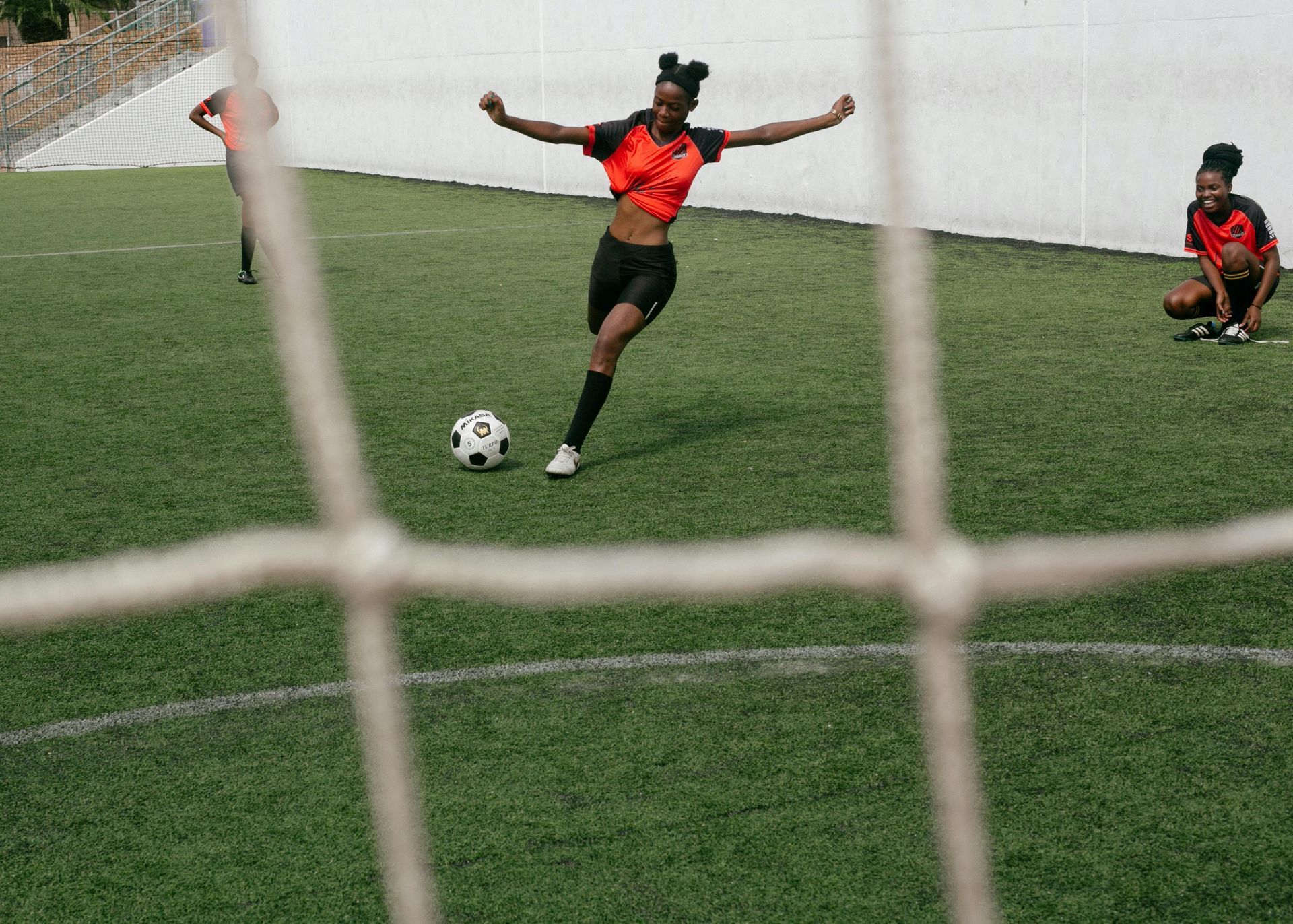
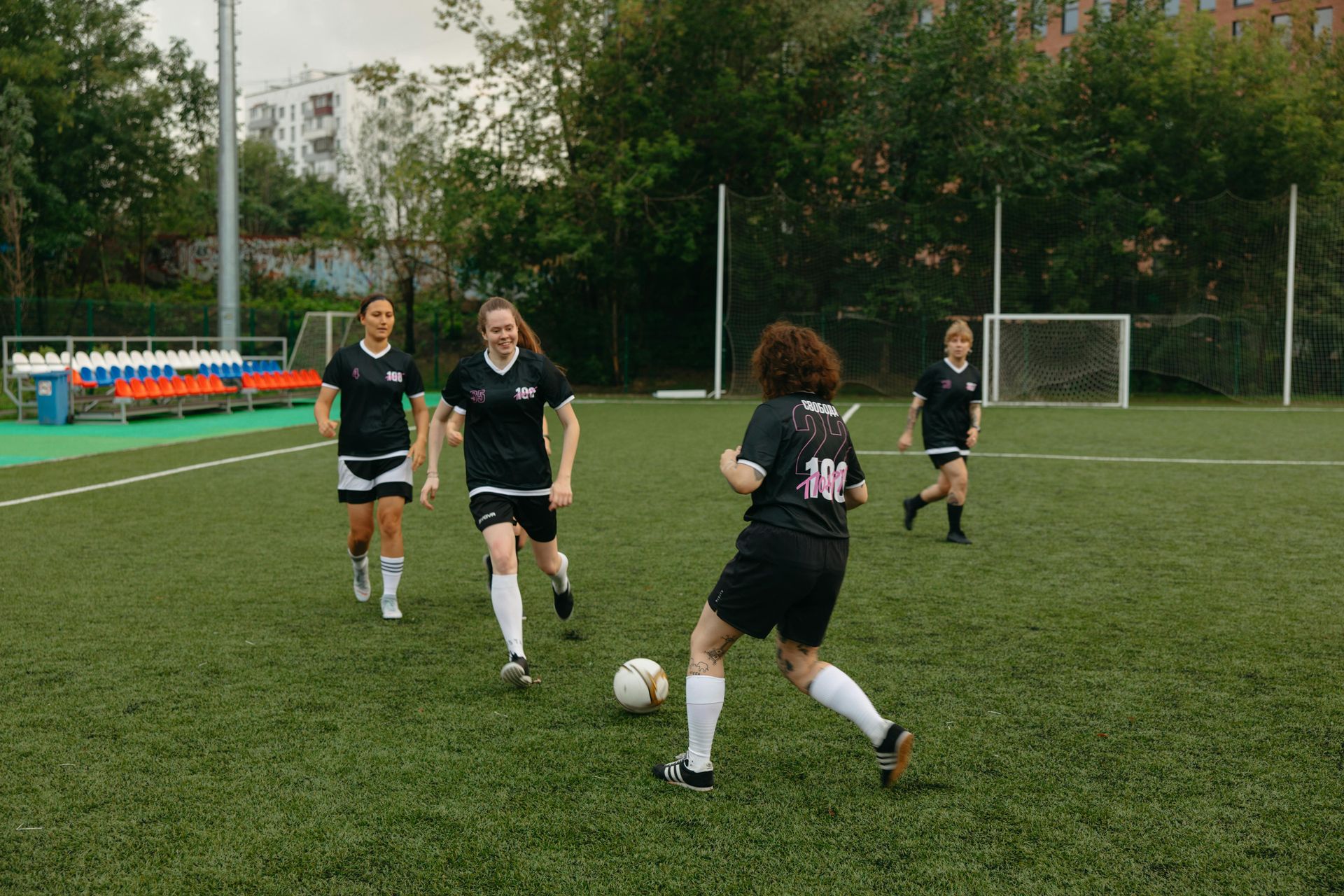
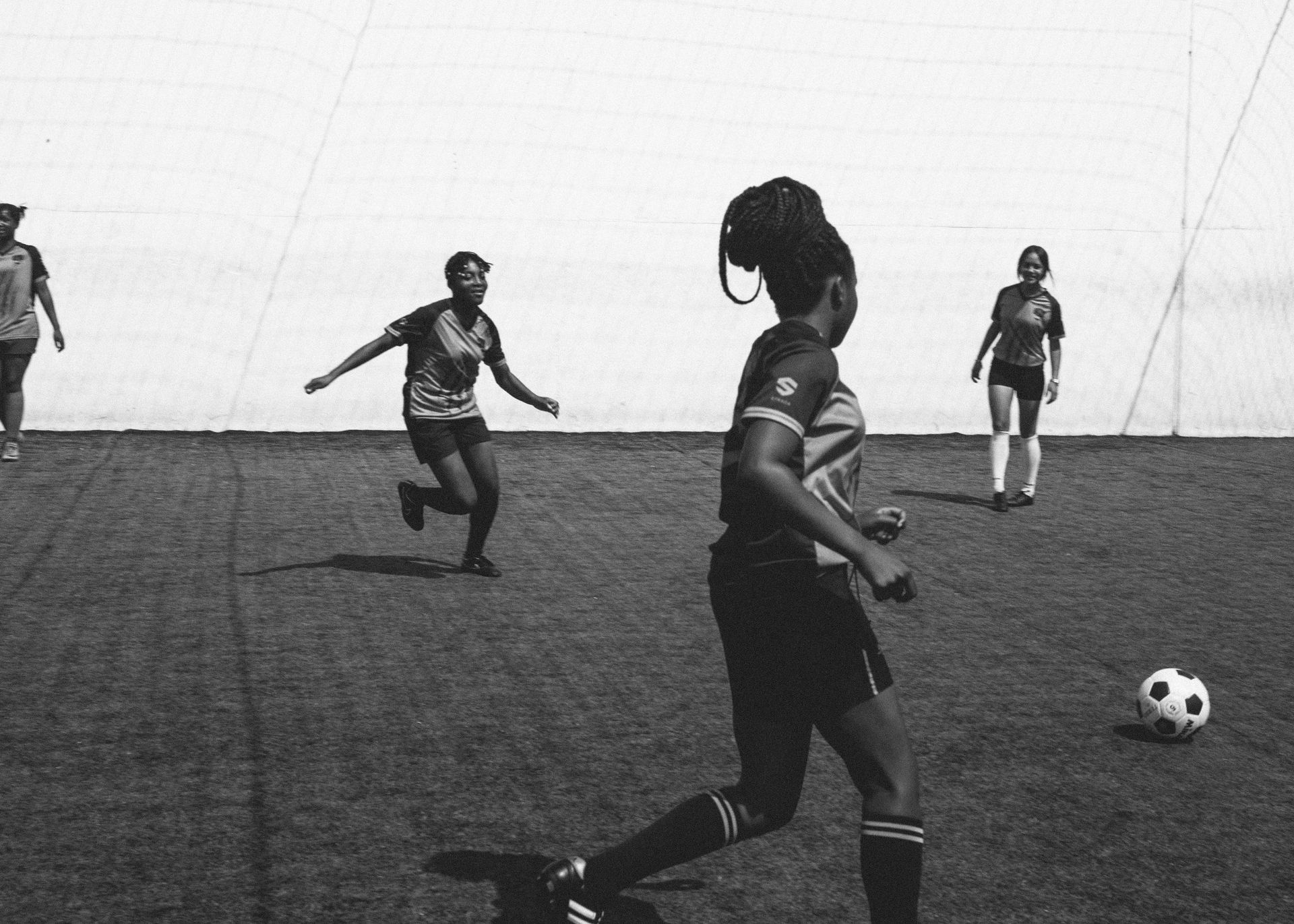
Welcome to East Coast Sports Live, your premier source for all things women's soccer! Stay up to date with the latest U.S. Women's Soccer team news, highlights from NCAA Women's Soccer, and comprehensive coverage of the FIFA Women's Soccer tournaments and the Olympic Women's Soccer games. Our platform features exclusive interviews, in-depth analysis, and the best in multimedia content for women’s soccer fans.

Women's Soccer Tournaments: FIFA, NCAA, and Olympic Games

Exclusive Videos and Highlights from Women’s Soccer Leagues

Women's NCAA Soccer Bracket tournaments

Women's Soccer Final games

Training Sessions

Watch exciting match recaps from the latest Women’s NCAA Soccer Bracket tournaments.

Explore highlight reels of Women's Soccer Final games and the best goals of the season.

Get behind-the-scenes footage of training sessions, player interviews, and expert analysis.

Breaking News and Updates

USL Super League Women's Soccer Coverage by East Coast Sports Live

Get ready for unparalleled coverage of the USL Super League, the newest frontier in Women’s Soccer. East Coast Sports Live is proud to bring you exclusive content, in-depth analysis, and behind-the-scenes action from the USL Super League, featuring some of the brightest talents in women's soccer. Stay tuned for updates on match results, player interviews, and the journey of teams in this exciting league.

USL Super League Kicks Off: What to Expect This Season

Read our Blog

Top Players to Watch in the USL Super League 2024

Read our Blog

USL Super League Expands to New Cities: Teams and Predictions

Read our Blog

sports articles

women's basketball players
By Amber Aniston April 2, 2026
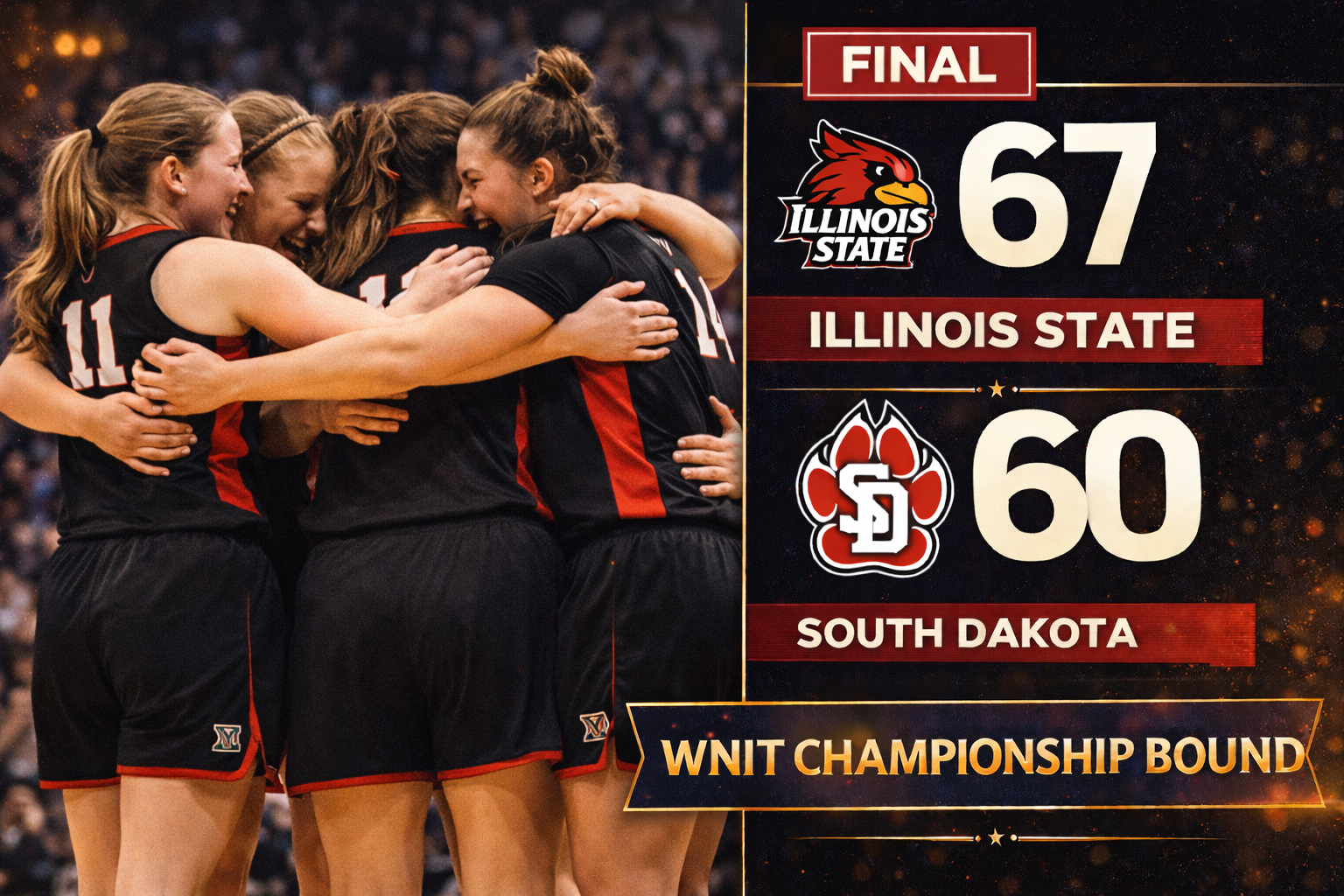
VERMILLION, S.D. — Illinois State delivered a composed road performance Wednesday night, defeating South Dakota 67–60 in the WNIT semifinals to secure a spot in the championship game. The Redbirds improved to 24–13 on the season and advanced to the WNIT title game for the first time in program history, while South Dakota saw its season conclude at 26–10 after falling short despite a late comeback attempt on its home floor. Early Back-and-Forth Sets the Tone South Dakota came out with energy in front of its home crowd, establishing early momentum with an 8–0 run to take control in the opening minutes. The Coyotes used strong ball movement and efficient shooting to build a 17–12 lead by the end of the first quarter. Illinois State responded by staying composed and gradually settling into its offensive rhythm. Doneelah Washington played a key role early, helping the Redbirds remain within striking distance as they adjusted to South Dakota’s pace. The Coyotes extended their lead to 20–12 early in the second quarter, creating their largest advantage of the game. Illinois State answered immediately, using a 7–0 run to cut the deficit to one possession and shift momentum. Redbirds Take Control Before Halftime The second quarter turned into a tightly contested stretch, with both teams trading baskets and momentum. Illinois State began to find more consistent scoring opportunities, particularly through its frontcourt, which created mismatches and opened the floor. The Redbirds eventually took the lead late in the half and carried that momentum into the final seconds. A late basket gave Illinois State a 33–31 advantage heading into halftime, completing the turnaround after trailing earlier in the period. Third-Quarter Run Creates Separation Illinois State seized control early in the second half with a decisive scoring run. The Redbirds opened the third quarter with a 6–0 burst, quickly extending their lead and forcing South Dakota to respond. Washington continued to lead the charge, connecting from the perimeter and creating offensive opportunities that allowed Illinois State to build separation. The Redbirds followed with another scoring surge later in the quarter, pushing the lead to double digits. An 8–0 run capped by a three-pointer extended the margin to 50–39 late in the third quarter. Although South Dakota managed a late basket to trim the deficit, Illinois State entered the fourth quarter with a 50–41 lead and clear momentum. South Dakota Rallies but Falls Short South Dakota refused to let the game slip away, mounting a comeback effort in the fourth quarter. The Coyotes increased their defensive intensity and began to find more consistent scoring, cutting into the Redbirds’ lead. A 7–0 run reduced the deficit to single digits, and the home crowd provided energy as South Dakota continued to apply pressure. The Coyotes eventually trimmed the margin to just five points with under three minutes remaining, putting Illinois State under late-game pressure. Despite the surge, Illinois State maintained composure. The Redbirds responded with timely plays on both ends of the floor, preventing South Dakota from fully completing the comeback. Free Throws Seal the Victory The final minutes were defined by execution and discipline. Illinois State relied on its ability to convert at the free-throw line, making key shots to preserve its lead as South Dakota attempted to close the gap. South Dakota had opportunities to cut further into the deficit but was unable to string together enough stops and scoring possessions to take control. Illinois State’s ability to execute under pressure ultimately secured the 67–60 victory and a place in the championship game. Washington Leads Balanced Offensive Effort Doneelah Washington delivered a standout performance, leading Illinois State with 21 points and 11 rebounds to record a double-double. Her ability to impact the game both inside and from the perimeter proved to be a decisive factor. Washington also connected on four three-pointers, providing a scoring boost that helped Illinois State build and maintain its lead throughout the second half. The Redbirds received strong support across the lineup, with Addison Martin and Trista Fayta each contributing 14 points. Bella Finnegan added 10 points, giving Illinois State four players in double figures and reinforcing its balanced offensive approach. Defense and Efficiency Make the Difference Illinois State’s defensive execution played a critical role in the win. The Redbirds disrupted South Dakota’s offensive rhythm, forcing difficult shots and limiting efficient scoring opportunities. The Redbirds also maintained strong offensive efficiency, shooting 49 percent from the field and consistently converting scoring chances throughout the game. South Dakota showed resilience, particularly in the fourth quarter, but struggled with consistency and shot selection against Illinois State’s defensive pressure. South Dakota’s Season Ends on Strong Note South Dakota concluded its season with 26 wins and one of its deepest postseason runs in program history. The Coyotes demonstrated competitiveness and resilience throughout the WNIT, including a strong effort in the semifinal matchup. Molly Joyce led South Dakota with 16 points, while Angelina Robles added 14. The team’s late comeback effort highlighted its ability to compete under pressure, even as the early deficit proved too difficult to overcome. Final Takeaway Illinois State’s 67–60 victory over South Dakota was defined by composure, balanced scoring, and second-half execution. The Redbirds overcame an early deficit, built separation in the third quarter, and held off a late rally to secure the win. South Dakota showed resilience and pushed the game to the final minutes, but Illinois State’s efficiency and ability to execute in key moments proved decisive. With the victory, Illinois State advances to the WNIT Championship for the first time in program history, setting up a final matchup against Marshall with a postseason title on the line. 
women's basketball players
By Amber Aniston April 2, 2026
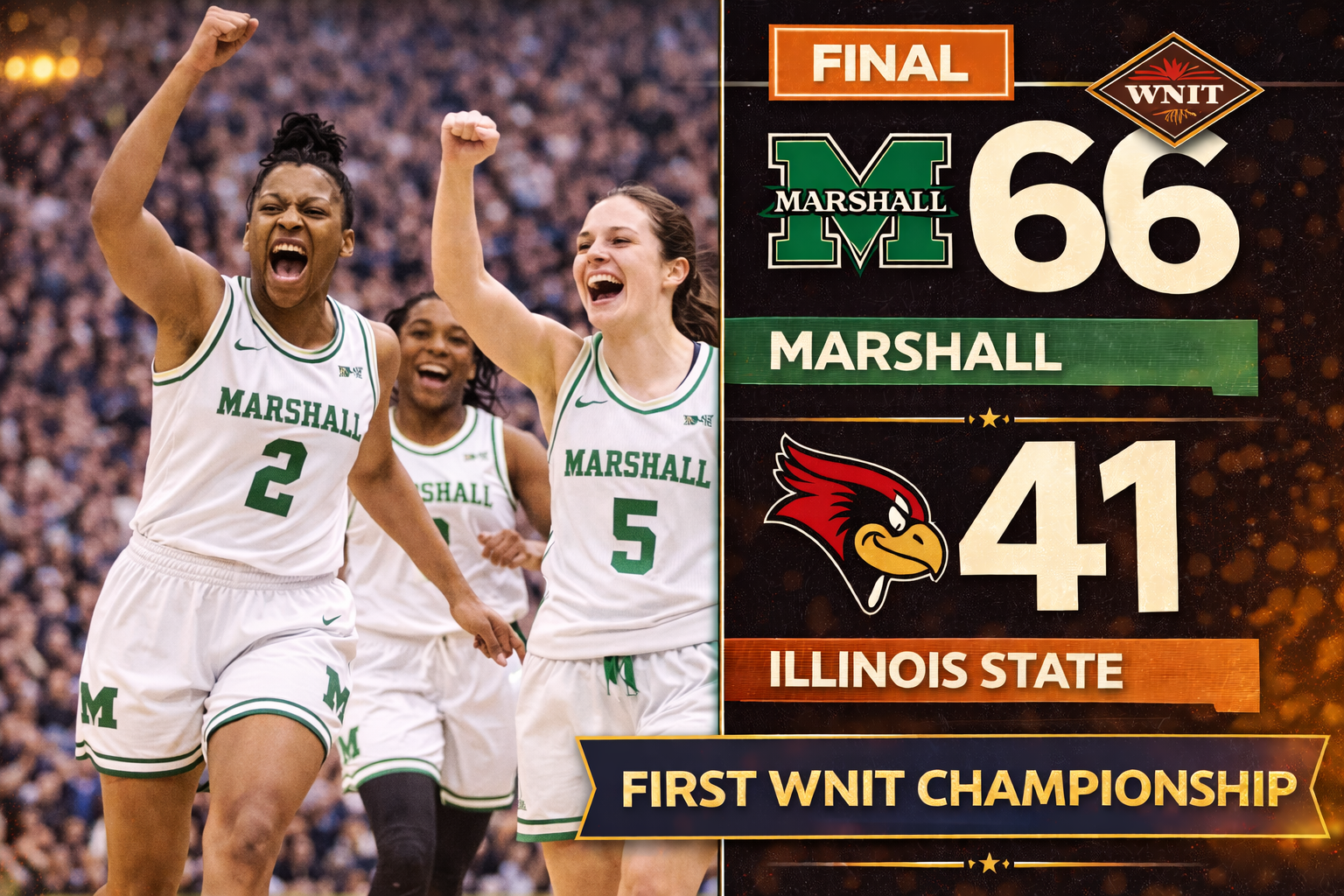
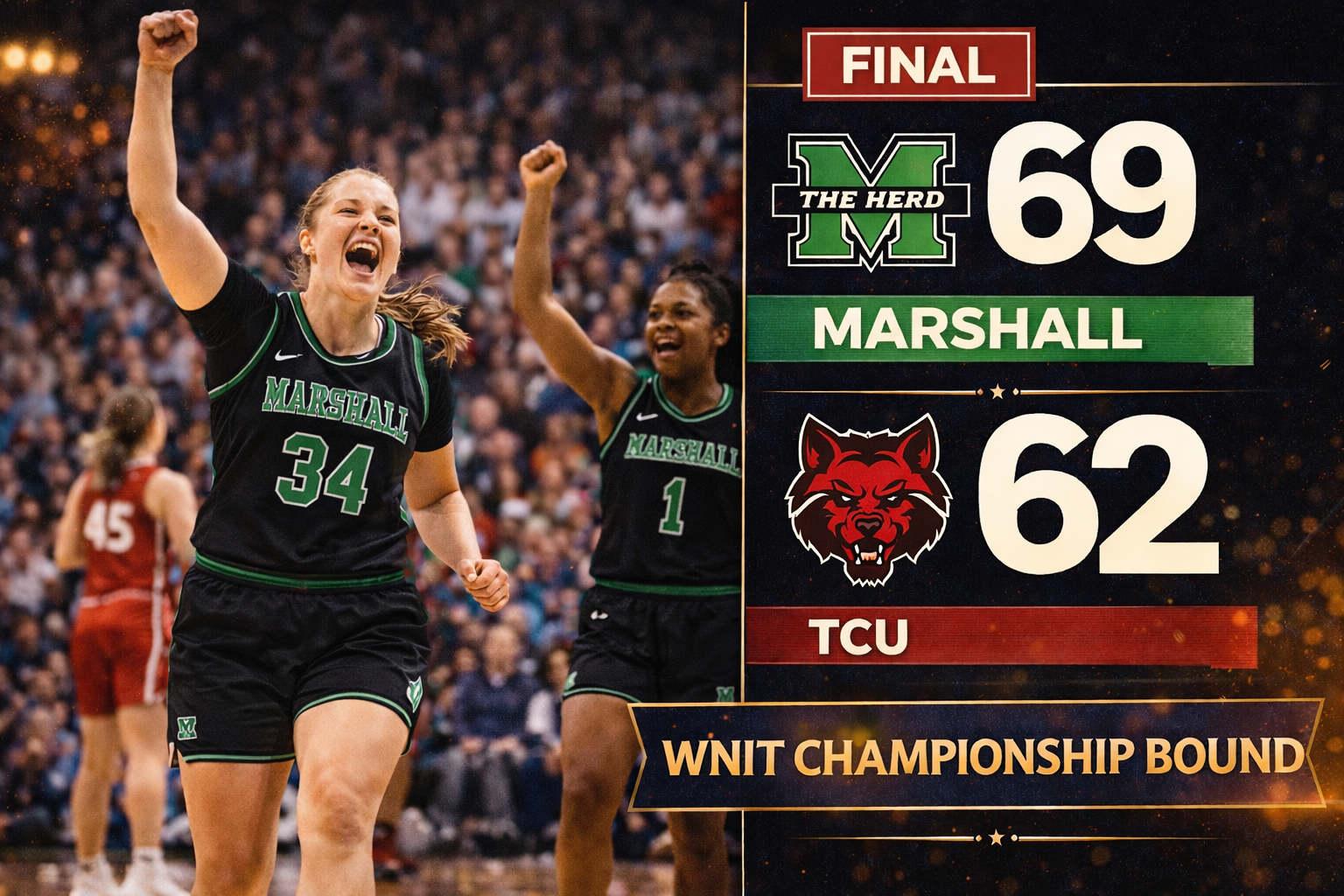
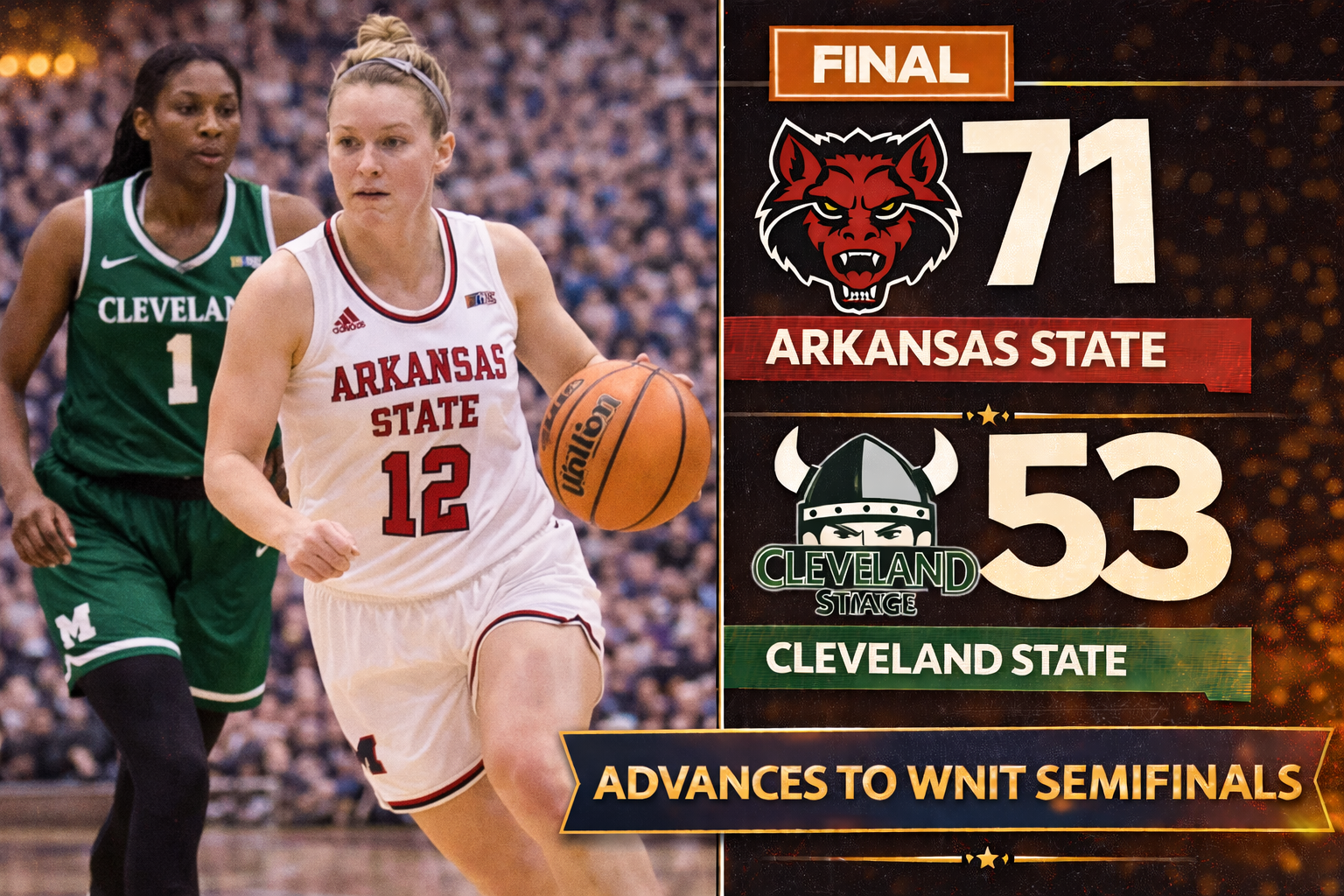
JONESBORO, Ark. — Marshall delivered a composed and complete performance Wednesday night, defeating Arkansas State 69–62 in the WNIT semifinals to secure a spot in the championship game. The Thundering Herd improved to 28–9 on the season and advanced to the WNIT title game for the first time in program history, while Arkansas State saw its impressive season conclude at 27–10 after falling just short in a competitive semifinal matchup. Marshall Sets the Tone Early Marshall established control from the opening minutes, using defensive pressure and efficient scoring to take an early lead. Arkansas State struggled to find its rhythm early, going nearly five minutes without a field goal as Marshall built a double-digit advantage. The Red Wolves managed just six points in the first quarter, while Marshall’s defense forced multiple turnovers and disrupted offensive flow. The early deficit placed Arkansas State in a position where it had to play from behind for the remainder of the game. Marshall carried that momentum into the second quarter, maintaining its lead through consistent execution and balanced scoring. Arkansas State Responds Before Halftime Arkansas State began to settle in during the second quarter, improving its shot selection and finding success from the perimeter. Back-to-back three-pointers helped cut into the deficit, briefly bringing the Red Wolves within striking distance. The teams traded baskets over the final minutes of the half, but Marshall maintained its composure and continued to control the pace. By halftime, the Thundering Herd held a 32–25 lead, reflecting their early dominance and defensive effectiveness. Second Half Becomes Back-and-Forth Battle Arkansas State showed resilience in the second half, gradually chipping away at the deficit and increasing its defensive intensity. The Red Wolves found more consistent scoring, particularly from Crislyn Rose and Bella Weary, who combined to provide a significant offensive boost. Weary delivered a strong performance off the bench, finishing with 19 points and seven rebounds, while Rose added 16 points and six assists. Their production helped Arkansas State stay competitive and apply pressure throughout the second half. Marshall, however, continued to respond to every run. The Thundering Herd maintained control by executing in key moments and limiting Arkansas State’s ability to fully seize momentum. Fourth Quarter Decides the Outcome The game tightened significantly in the fourth quarter, with Arkansas State cutting the deficit to just one point at 55–54 with five minutes remaining. The Red Wolves appeared poised to complete the comeback and take control for the first time. Marshall responded with its most decisive stretch of the game. A key three-pointer sparked a 9–0 run that pushed the Thundering Herd’s lead back to double digits, effectively halting Arkansas State’s momentum. The run proved to be the turning point, as Marshall regained control and dictated the final minutes. Arkansas State was forced to foul late in an attempt to extend the game, but Marshall converted key free throws and maintained possession to secure the victory. Lewis-Eutsey Leads the Way Timaya Lewis-Eutsey delivered a standout performance for Marshall, leading all scorers with 31 points. She shot efficiently from the field and provided consistent offense throughout the game, particularly during key stretches when Arkansas State threatened to close the gap. Her ability to create scoring opportunities and convert under pressure played a major role in Marshall’s success. The performance marked her seventh 30-point game of the season, highlighting her importance as the team’s primary offensive leader. Marshall also received contributions across the roster, with additional scoring support and strong rebounding helping maintain balance. Defense and Turnovers Prove Critical Marshall’s defense was a defining factor in the win. The Thundering Herd forced 21 turnovers and converted those opportunities into 23 points, creating a significant advantage in the possession battle. The defensive effort also limited Arkansas State’s efficiency from beyond the arc, holding the Red Wolves to just 26 percent shooting from three-point range. Additionally, Marshall’s ability to maintain defensive intensity throughout the game prevented Arkansas State from sustaining long scoring runs. Arkansas State’s Season Comes to an End Arkansas State delivered a strong performance despite the loss, showing resilience after falling behind early. The Red Wolves fought back in the second half and nearly completed a comeback in the final minutes. Weary and Rose led the team’s offensive effort, while the team’s improved play in the second half demonstrated its ability to compete under pressure. The loss concluded a successful season that included 27 wins and a deep postseason run. Marshall Advances to Historic Championship Appearance With the victory, Marshall advanced to the WNIT championship game for the first time in program history. The Thundering Herd also set a single-season record for wins, continuing one of the most successful seasons the program has experienced. Marshall will host Illinois State in the championship matchup, carrying momentum from a strong postseason run that has been defined by defense, balanced scoring, and consistent execution. Final Takeaway Marshall’s 69–62 victory over Arkansas State was defined by early control, defensive pressure, and timely execution in the fourth quarter. The Thundering Herd built an early lead, withstood a second-half comeback, and responded with a decisive run to secure the win. Arkansas State showed resilience and nearly completed a comeback, but Marshall’s defense and late-game execution proved too much to overcome. With the victory, Marshall advances to the WNIT championship, positioning itself for a historic opportunity to capture its first postseason title.
women's basketball players
By Amber Aniston April 1, 2026
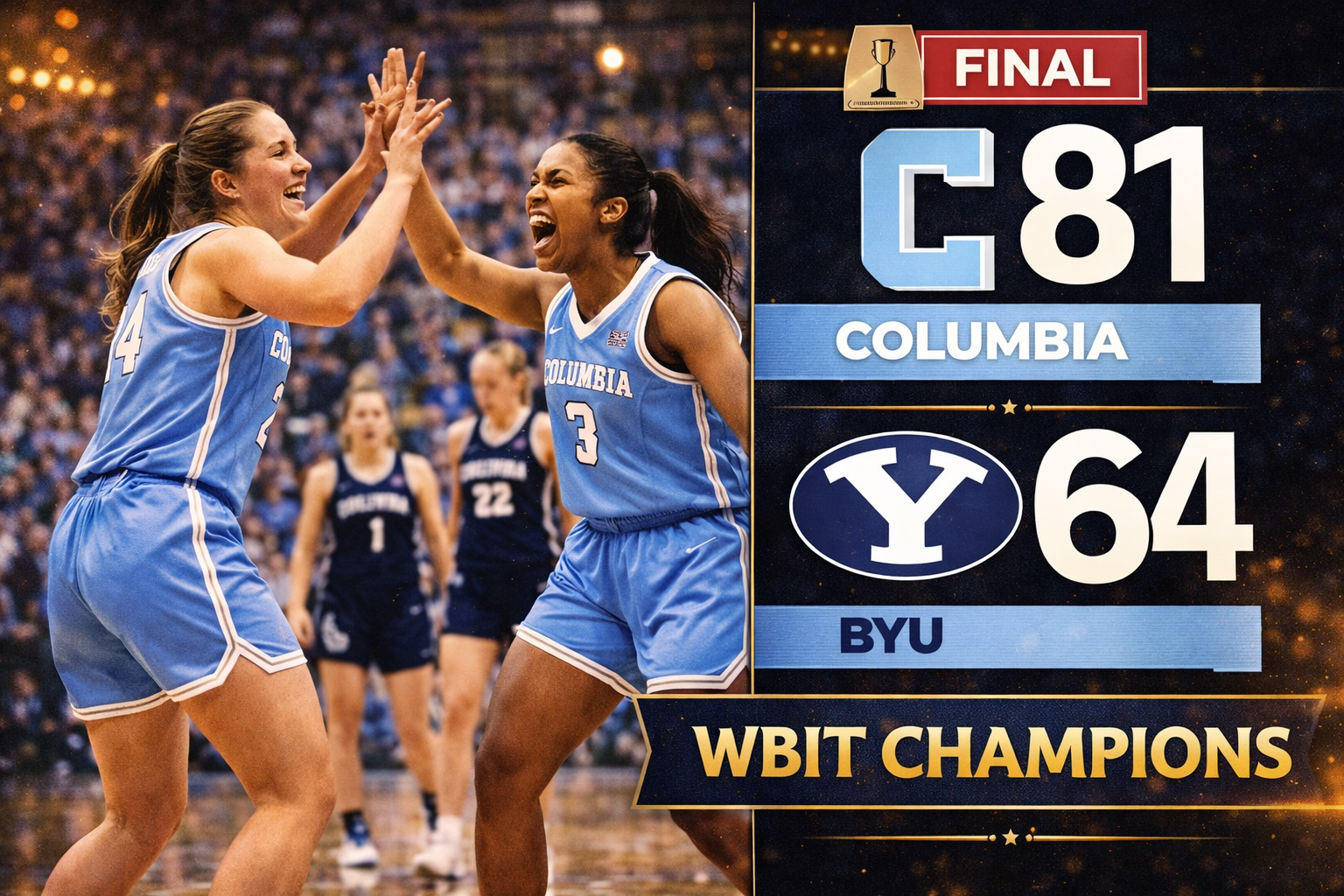
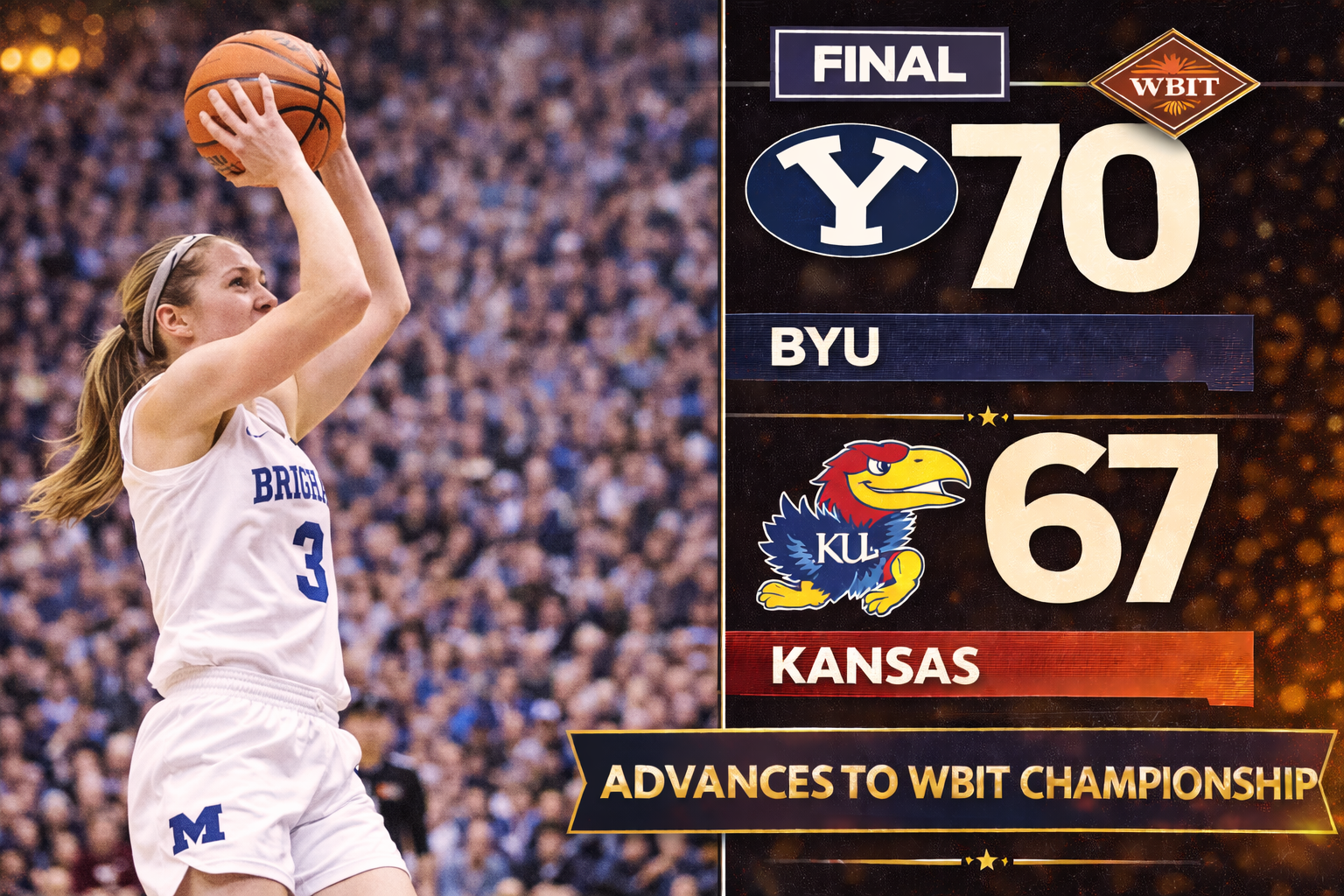
WICHITA, Kan. — Columbia completed a dominant postseason run Wednesday night, defeating BYU 81–64 at Charles Koch Arena to win the Women’s Basketball Invitation Tournament championship. The fourth-seeded Lions finished the tournament in commanding fashion, controlling the game from start to finish and securing the program’s postseason title behind balanced scoring and consistent execution. BYU, the tournament’s top seed, saw its strong run end after an impressive late push fell short. Columbia Sets the Tone Early Columbia established control in the opening quarter, using defensive pressure and efficient shot-making to create early separation. After a brief back-and-forth start, the Lions delivered a 10–2 run that shifted momentum and forced BYU into a difficult offensive rhythm. The Cougars struggled to convert early opportunities, shooting inefficiently and missing several open looks. Columbia capitalized by pushing the pace and generating transition opportunities, building a 19–10 lead by the end of the first quarter. That early advantage set the foundation for the rest of the game, as Columbia maintained control and dictated tempo. Second Quarter Expands the Lead The Lions extended their lead in the second quarter with a combination of perimeter shooting and interior scoring. Riley Weiss and Mia Broom led the charge, combining for a scoring surge that stretched the margin to double digits. Columbia’s offensive efficiency remained steady, while its defense continued to disrupt BYU’s rhythm. The Cougars attempted to respond with improved ball movement and perimeter shooting, but Columbia answered each push with timely baskets. By halftime, the Lions held a 42–24 lead, reflecting their dominance on both ends of the floor. BYU Shows Fight, But Columbia Maintains Control BYU showed increased energy in the second half, focusing on defensive pressure and transition opportunities to cut into the deficit. The Cougars forced turnovers and generated second-chance points, briefly gaining momentum during stretches of the third quarter. However, Columbia responded consistently, using disciplined offense and strong execution to maintain its advantage. The Lions opened the third quarter with a 7–0 run, pushing the lead beyond 20 points and preventing BYU from making a sustained comeback. Columbia’s ability to control key possessions allowed it to carry a 60–37 lead into the fourth quarter, keeping the game firmly in its favor. Fourth-Quarter Surge Falls Short for BYU BYU mounted its strongest push in the final period, delivering a late surge fueled by transition scoring and aggressive play in the paint. The Cougars went on a 13–0 run, cutting the deficit significantly and creating brief momentum. During that stretch, BYU capitalized on fast-break opportunities and second-chance points, trimming the margin to single digits with under a minute remaining. Despite the surge, the early deficit proved too large to overcome. Columbia remained composed, responding with free throws and interior scoring to halt the momentum and secure the victory. Balanced Scoring Leads Columbia Columbia’s success was driven by balanced production across its lineup. Mia Broom led all scorers with 23 points, delivering efficient shooting and consistent scoring throughout the game. Riley Weiss added 20 points, including a strong first-half performance that helped establish the early lead. Susie Rafiu contributed 12 points and eight rebounds, while Nasi Simmons added 10 points, giving the Lions four players in double figures. The balanced scoring prevented BYU from focusing its defensive efforts on a single player and allowed Columbia to maintain offensive consistency. BYU’s Effort Led by Gibb and Hamlin BYU received strong performances from Delaney Gibb and Olivia Hamlin, who led the Cougars offensively. Gibb finished with 24 points, eight rebounds, and five assists, while Hamlin added 17 points. The Cougars also found success in physical areas, finishing with 46 rebounds and generating 20 second-chance points. BYU outscored Columbia in the paint and created multiple fast-break opportunities, particularly during the fourth quarter. Despite those efforts, BYU struggled with perimeter shooting, connecting on just four three-pointers and limiting its ability to keep pace with Columbia’s scoring output. Columbia’s Consistency Proves Decisive Columbia’s ability to maintain control throughout the game proved to be the difference. The Lions never trailed and built leads through consistent execution in both halves. Their defense limited BYU’s scoring efficiency early, while their offense capitalized on opportunities to create separation. Even when BYU made its late push, Columbia responded with composure and secured the win through disciplined play. The victory capped a strong tournament run in which Columbia controlled nearly every game and demonstrated its ability to perform under pressure. Final Takeaway Columbia’s 81–64 win over BYU was defined by early dominance, balanced scoring, and steady execution. The Lions built a substantial first-half lead, maintained control through the third quarter, and held off a late BYU surge to secure the championship. BYU showed resilience and produced a strong fourth-quarter effort, but the early deficit and shooting struggles proved too difficult to overcome. With the victory, Columbia claims the WBIT title and concludes its postseason run with momentum, while BYU wraps up a successful season that included a deep tournament run and strong overall performance. 

women's basketball players
By Amber Aniston April 1, 2026
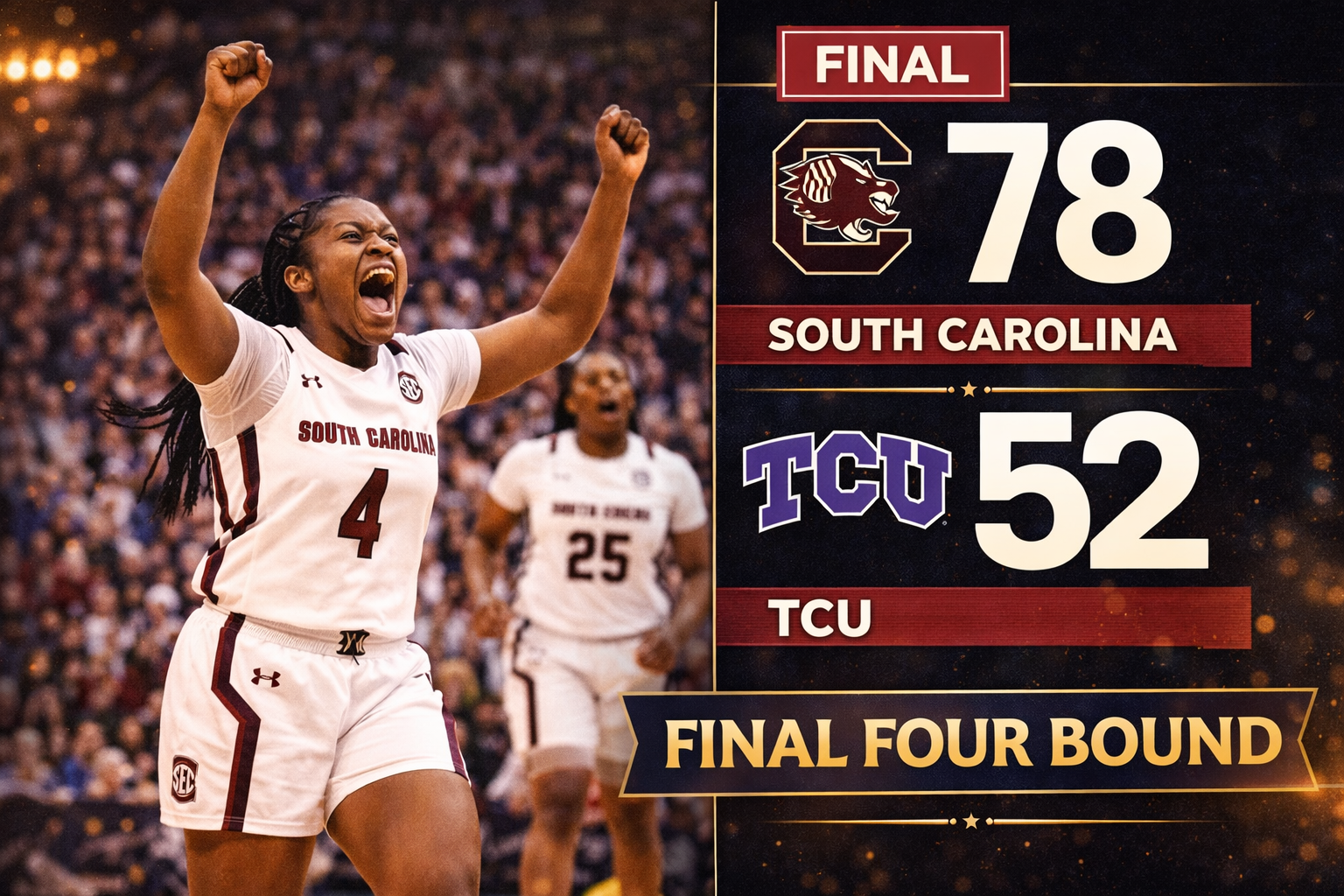
SACRAMENTO, Calif. — South Carolina delivered a dominant fourth-quarter performance to defeat TCU 78–52 in the Elite Eight, using its depth, rebounding advantage, and late-game execution to secure another trip to the Women’s Final Four. The top-seeded Gamecocks improved to 34–3 on the season and continued their remarkable postseason consistency, advancing to the Final Four for the seventh time in the past nine years. TCU, seeded third, concluded its season at 32–6 after remaining competitive for much of the game before being overwhelmed in the closing minutes. TCU Starts Strong, Challenges Early TCU entered the matchup with confidence and delivered one of its strongest early stretches of the tournament. The Horned Frogs opened the game with aggressive offense and efficient execution, jumping out to an early lead and forcing South Carolina to adjust. TCU built a 12–4 advantage midway through the first quarter and carried that momentum into the second period. The Horned Frogs extended their lead to 22–18 early in the second quarter, creating pressure on a South Carolina team that had dominated its previous tournament games. The Gamecocks, however, responded with composure, gradually settling into their offensive rhythm while tightening defensively. Second-Quarter Run Shifts Momentum The turning point of the first half came late in the second quarter, when South Carolina delivered a decisive 17–5 run to regain control. The surge was fueled by improved shot selection, defensive stops, and consistent interior scoring. South Carolina’s ability to control the paint and capitalize on rebounds allowed it to generate second-chance opportunities, shifting momentum in its favor. The Gamecocks closed the half with a 35–27 lead, having erased TCU’s early advantage and established control heading into the break. Competitive Third Quarter Keeps Game Close TCU remained within reach throughout the third quarter, showing resilience and maintaining pressure on South Carolina. The Horned Frogs cut the deficit to single digits multiple times, including trimming the margin to 47–39 late in the period. Olivia Miles led TCU’s effort, providing consistent scoring and playmaking while helping the team stay competitive. Despite the Gamecocks’ size and depth, TCU continued to fight on both ends of the floor, preventing South Carolina from pulling away early. However, the physical demands of the game began to take a toll as South Carolina’s depth and rebounding advantage became more apparent. Fourth Quarter Decides the Outcome South Carolina took full control in the final quarter, delivering a dominant performance that turned a competitive game into a decisive victory. The Gamecocks opened the fourth period with a scoring surge that quickly created separation. Joyce Edwards and Agot Makeer led the charge, combining to score the first 12 points of the quarter and pushing the lead into double digits. The Gamecocks outscored TCU 29–11 in the fourth quarter, showcasing their ability to execute under pressure and close out games effectively. South Carolina’s defense also tightened during this stretch, limiting TCU’s scoring opportunities and forcing contested shots. The Horned Frogs struggled to generate offense as the Gamecocks controlled both ends of the floor. Edwards and Makeer Lead Balanced Attack Joyce Edwards delivered a standout performance, finishing with 24 points, 12 rebounds, and multiple defensive contributions. Her presence inside played a major role in South Carolina’s ability to control the paint and dominate the glass. Agot Makeer added 18 points, providing a significant scoring boost and contributing across multiple areas. Her production off the bench gave South Carolina additional depth and offensive flexibility. Together, Edwards and Makeer anchored a balanced offensive effort that allowed the Gamecocks to maintain consistency and extend their lead in the second half. Rebounding and Depth Prove Decisive South Carolina’s dominance on the glass played a critical role in the outcome. The Gamecocks held a significant rebounding advantage, finishing with a 52–24 edge and converting offensive rebounds into second-chance points. This advantage allowed South Carolina to control possessions and limit TCU’s opportunities to generate scoring runs. The Gamecocks’ depth also contributed to their success, as multiple players provided key contributions throughout the game. TCU’s Run Ends After Strong Season TCU delivered a competitive performance, particularly in the first half and throughout the third quarter, but struggled to match South Carolina’s physicality and depth over the full 40 minutes. Olivia Miles led the Horned Frogs with 18 points and six assists, providing leadership and consistent production. However, TCU’s offense became less efficient in the fourth quarter, and the team was unable to respond to South Carolina’s late surge. Despite the loss, TCU completed one of the most successful seasons in program history, including a conference championship, a 30-win campaign, and consecutive Elite Eight appearances. Final Takeaway South Carolina’s 78–52 victory over TCU was defined by resilience, depth, and late-game execution. After facing early pressure and a competitive third quarter, the Gamecocks delivered a dominant fourth-quarter performance to secure the win. TCU showed the ability to compete with one of the nation’s top teams but could not overcome South Carolina’s rebounding advantage and scoring surge in the final period. With the victory, South Carolina advances to the Final Four with momentum and experience, continuing its pursuit of another national championship as the tournament reaches its final stage.
women's basketball players
By Amber Aniston March 30, 2026
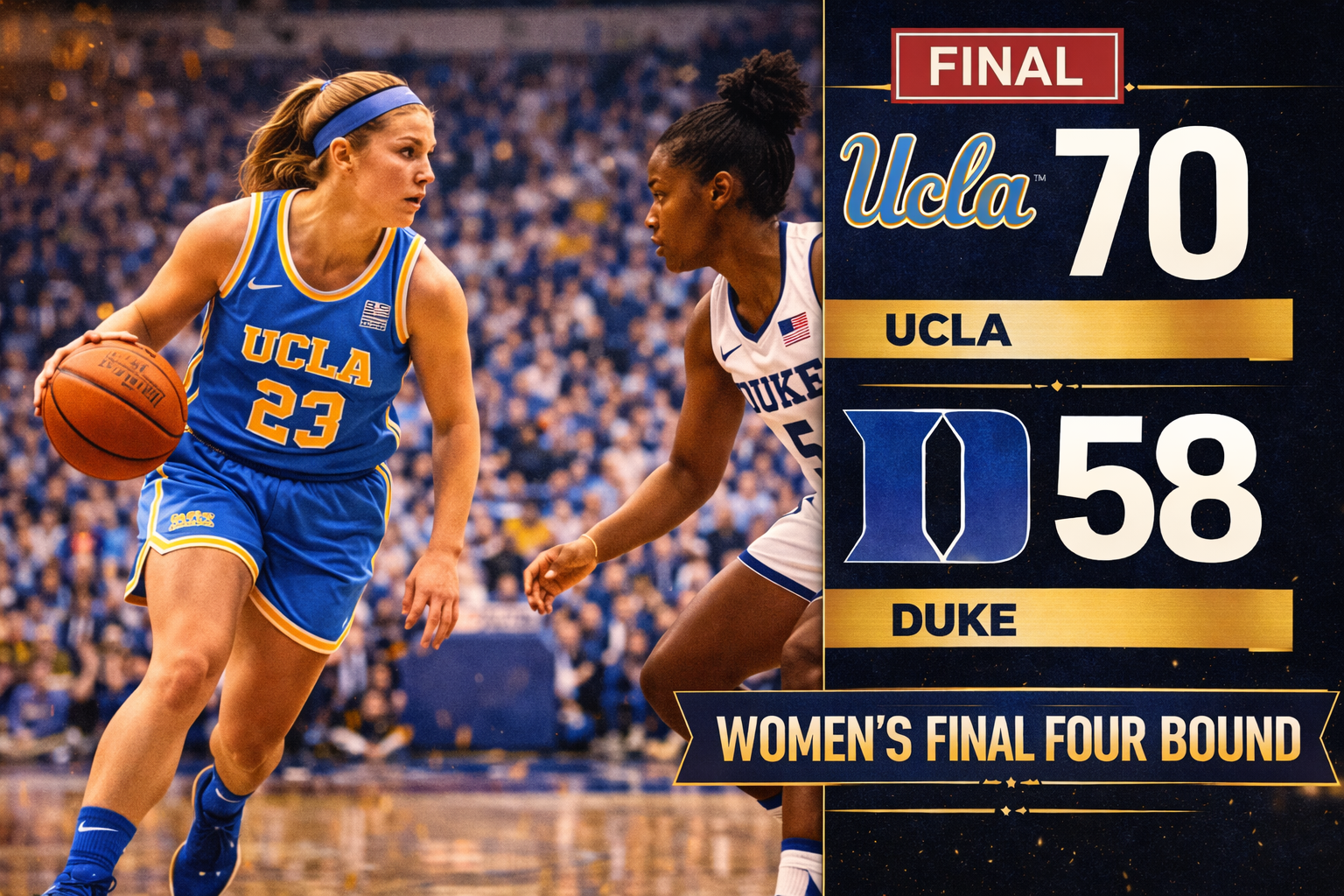
SACRAMENTO, Calif. — UCLA delivered a dominant second-half turnaround to defeat Duke 70–58 in the Elite Eight, overcoming a halftime deficit and securing a return trip to the Women’s Final Four. The top-seeded Bruins improved to 35 wins on the season, the most in program history, and advanced to the Final Four for the second consecutive year. Duke, seeded third, saw its tournament run end after controlling much of the first half before being overwhelmed after the break. Duke Controls First Half Behind Defensive Pressure Duke entered the matchup with a clear defensive game plan and executed it effectively in the opening half. The Blue Devils applied consistent pressure, forced turnovers, and disrupted UCLA’s offensive rhythm. The Bruins struggled to establish their usual flow, committing multiple turnovers and failing to consistently capitalize on touches inside. Duke converted those opportunities into points, building an advantage through transition scoring and disciplined half-court execution. UCLA’s offense showed flashes of efficiency, but the lack of consistency and ball security prevented the Bruins from gaining control. Duke’s defensive intensity limited second-chance opportunities and kept UCLA from building momentum. By halftime, Duke held a 39–31 lead, reflecting its ability to dictate the tempo and capitalize on UCLA’s early struggles. Second Half Marks Complete Shift in Momentum The game shifted dramatically after the break as UCLA emerged with renewed intensity on both ends of the floor. The Bruins quickly adjusted their approach, focusing on rebounding, interior scoring, and defensive discipline. UCLA began to control the pace, limiting Duke’s offensive opportunities while generating efficient scoring possessions. The Bruins’ defense tightened significantly, forcing Duke into difficult shots and extended scoring droughts. A key moment came late in the third quarter when UCLA regained the lead for the first time since the opening minutes. A perimeter shot sparked the momentum shift, and the Bruins maintained control from that point forward. UCLA outscored Duke 39–19 in the second half, a decisive swing that turned a halftime deficit into a comfortable victory. Betts Leads Dominant Second-Half Effort Lauren Betts anchored UCLA’s comeback with a dominant all-around performance. The senior finished with 23 points and 10 rebounds, recording a double-double while also contributing defensively with multiple blocks. Betts’ presence in the paint became a defining factor after halftime. She controlled the glass, finished through contact, and altered shots on the defensive end, helping UCLA regain control of the game’s physical areas. Her ability to impact both ends of the floor allowed UCLA to sustain momentum and extend its lead throughout the second half. Defensive Adjustments Shut Down Duke UCLA’s defensive transformation played a critical role in the outcome. After allowing Duke to control the first half, the Bruins limited scoring opportunities and forced the Blue Devils into extended droughts. Duke was held without a field goal for a significant stretch late in the third quarter, allowing UCLA to build separation. The Bruins’ ability to close out possessions and control rebounds prevented Duke from generating second-chance opportunities. Even when Duke briefly regained offensive rhythm early in the fourth quarter, UCLA responded quickly and maintained control of the game. Balanced Production Supports UCLA’s Surge While Betts led the way, UCLA received contributions across the lineup. The Bruins’ veteran leadership played a major role in the turnaround, with experienced players providing scoring, rebounding, and defensive stability. UCLA’s balanced attack allowed the team to maintain efficiency and prevent Duke from focusing defensive attention on a single player. The Bruins executed effectively in transition and half-court situations, ensuring consistent production throughout the second half. The team’s ability to share scoring responsibilities and maintain composure under pressure proved essential in completing the comeback. Duke Unable to Sustain First-Half Success Duke showed strong execution in the first half, particularly on the defensive end, but struggled to maintain that level after halftime. The Blue Devils’ offense became less efficient as UCLA tightened defensively, and scoring opportunities became more limited. Despite early success from its backcourt, Duke was unable to generate consistent production in the second half. The team’s offensive rhythm declined, and the inability to respond to UCLA’s run proved decisive. Duke remained competitive for stretches but could not overcome the momentum shift as UCLA extended its lead late in the game. Historic Step Forward for UCLA The victory marked another milestone for UCLA, as the Bruins continued their pursuit of the program’s first national championship. Advancing to the Final Four for the second straight year reflects the program’s growth and consistency at the highest level of competition. UCLA’s ability to respond to adversity and deliver a dominant second-half performance reinforced its status as one of the top teams in the tournament. Final Takeaway UCLA’s 70–58 win over Duke was defined by second-half execution, defensive adjustments, and strong leadership. The Bruins overcame early struggles, controlled the pace after halftime, and delivered a decisive performance to secure the victory. Duke’s strong first half demonstrated its defensive capability, but UCLA’s adjustments and dominance in key areas proved too much to overcome. With the win, UCLA advances to the Final Four with momentum and confidence, positioning itself for a championship push as the tournament reaches its final stage.
women's basketball players
By Amber Aniston March 30, 2026
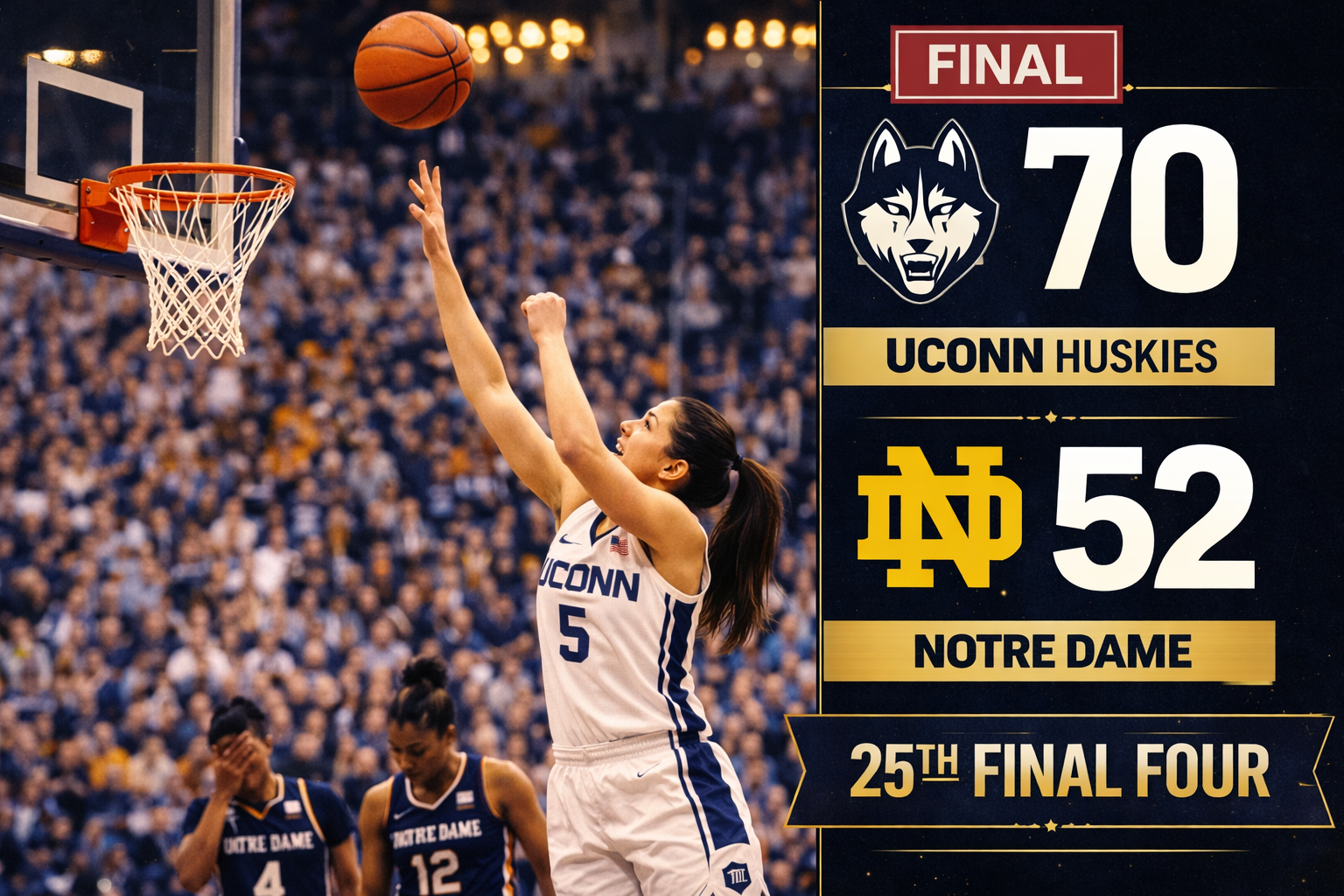
FORT WORTH, Texas — UConn once again proved why it remains one of the most dominant programs in college basketball, defeating Notre Dame 70–52 in the Elite Eight to secure its 25th Final Four appearance in program history. The top-seeded Huskies improved to 38–0 on the season, extending their winning streak to 54 games and continuing a remarkable run of consistency on the national stage. With the victory, UConn advances to the Final Four in Phoenix, where it will pursue another national championship. Notre Dame, the No. 6 seed, concluded its season at 25–11 after a strong tournament run that included a return to the Elite Eight for the first time since 2019. Freshman Sparks UConn’s First-Half Control While UConn entered the game with star power at the top of its lineup, it was freshman Blanca Quiñonez who set the tone early. The guard delivered an immediate impact, scoring 14 points in the first half and helping UConn build momentum as the offense struggled to find its usual rhythm. Quiñonez’s scoring proved critical during a stretch when UConn’s leading players were slowed by Notre Dame’s physical defensive approach. Her ability to attack the basket and convert perimeter opportunities allowed the Huskies to maintain control even as their primary scoring options adjusted. UConn used that early spark to build a steady lead, gradually creating separation through defensive pressure and efficient scoring. The Huskies entered halftime with a 32–25 advantage, having limited Notre Dame’s offensive production while finding timely contributions across the roster. Notre Dame Battles Behind Hidalgo Notre Dame relied heavily on standout guard Hannah Hidalgo, who delivered another strong performance in the postseason. Hidalgo led the Irish with 22 points and 11 rebounds, providing consistent production on both ends of the floor.  Her ability to create offense and control tempo helped keep Notre Dame within reach during the first half. The Irish also showed improved physicality compared to previous matchups, competing effectively on the defensive end and limiting UConn’s early scoring runs. However, Notre Dame struggled to generate balanced scoring. No other player reached double figures, placing increased pressure on Hidalgo to carry the offensive load throughout the game. Huskies Extend Lead in Second Half UConn took control of the game in the third quarter, using a combination of defensive stops and interior scoring to extend its lead. The Huskies opened the second half with a scoring push that created double-digit separation and forced Notre Dame into a difficult position. Even during a brief offensive drought in the third quarter, UConn’s defense prevented Notre Dame from making a significant run. The Irish were unable to capitalize on missed opportunities, allowing the Huskies to maintain control despite several empty possessions. Once UConn regained its offensive rhythm, the lead continued to grow. The Huskies pushed the margin to double digits and maintained that advantage heading into the final quarter. Strong and Fudd Take Over Late After a slow start, UConn’s leading scorers took control in the second half. Sarah Strong led the Huskies with 21 points, delivering a dominant performance that included a decisive fourth quarter. Her scoring inside and ability to finish through contact helped UConn maintain its advantage. Azzi Fudd added 13 points and provided key contributions during the closing stretch, including timely baskets that prevented Notre Dame from mounting a comeback. Together, Strong and Fudd anchored UConn’s offense in the second half, complementing Quiñonez’s early impact and ensuring the Huskies maintained control throughout the final period. Defensive Depth and Balance Make the Difference UConn’s depth and defensive discipline played a major role in the outcome. The Huskies consistently applied pressure, limited Notre Dame’s scoring opportunities, and controlled key areas such as rebounding and transition defense. The team’s ability to rotate defenders and maintain intensity helped neutralize Notre Dame’s offensive rhythm. Hidalgo remained productive, but the lack of additional scoring options prevented the Irish from closing the gap. UConn also benefited from contributions across the roster, with multiple players stepping up in key moments to support the team’s overall performance. Notre Dame’s Run Ends Short of Final Four Notre Dame’s tournament run showcased resilience and growth, highlighted by a return to the Elite Eight and several strong performances along the way. The Irish competed with physicality and effort, particularly in the first half, but were unable to sustain that level against UConn’s depth and execution. Despite the loss, Notre Dame demonstrated its ability to compete at a high level, setting a foundation for continued success in future seasons. Final Takeaway UConn’s 70–52 victory over Notre Dame was defined by depth, defensive execution, and timely scoring. The Huskies relied on a strong first-half performance from Blanca Quiñonez and a dominant second-half effort from Sarah Strong to secure the win. Notre Dame showed competitiveness and relied on a standout performance from Hannah Hidalgo, but UConn’s balanced attack and ability to control the game’s key moments proved decisive. With the victory, UConn advances to its 25th Final Four appearance, continuing its legacy as one of the most consistent and dominant programs in college basketball while positioning itself for another championship run.

women's basketball players
By Amber Aniston March 29, 2026
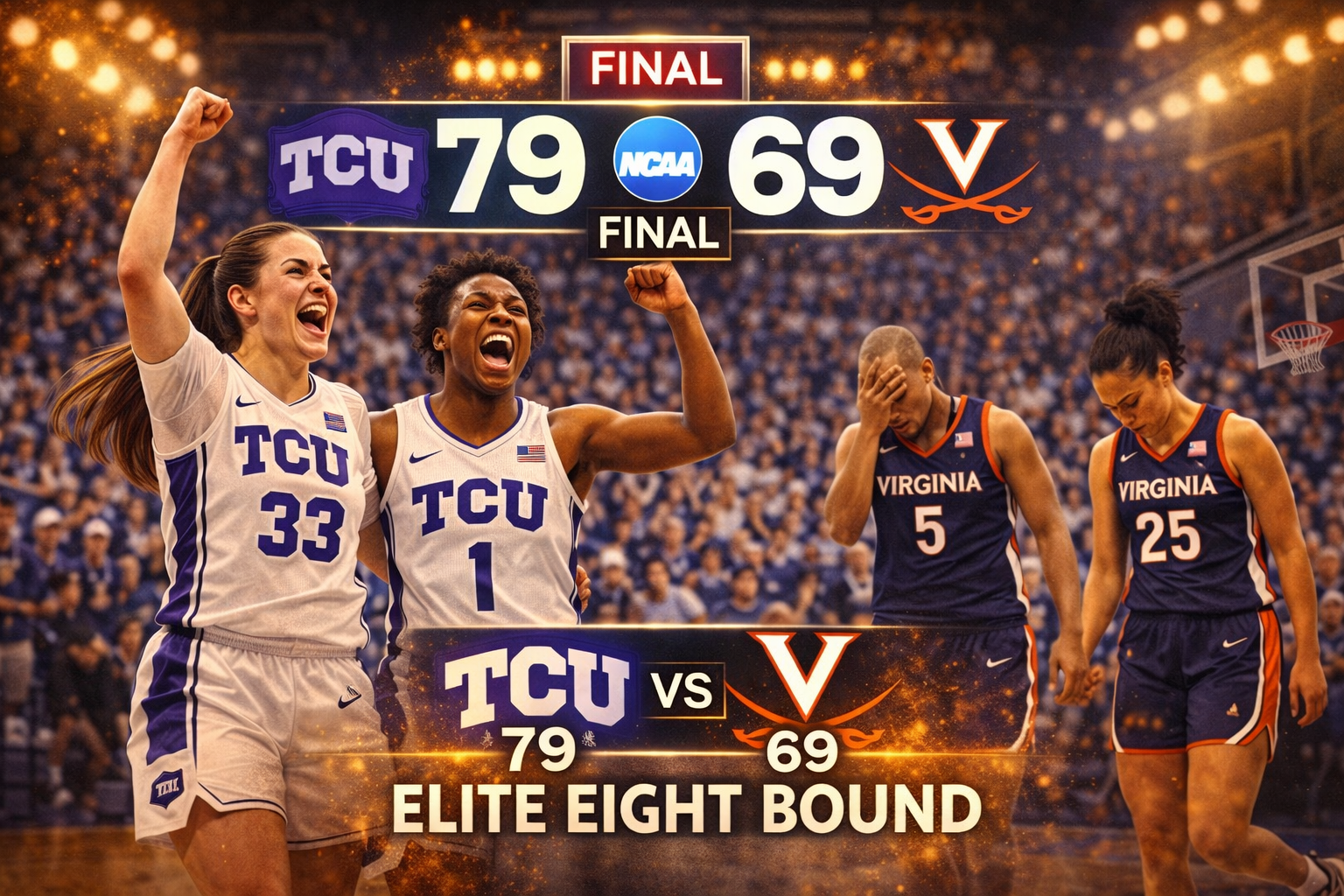
SACRAMENTO, Calif. — TCU delivered a decisive second-half performance to defeat Virginia 79–69 in the Sweet Sixteen of the NCAA Women’s Tournament, using a dominant third quarter and standout performances from Marta Suarez and Olivia Miles to advance to the Elite Eight. The victory pushed third-seeded TCU to 32–5 on the season and secured the program’s second consecutive appearance in a regional final. Virginia, seeded 10th, saw its tournament run come to an end at 22–12 after competing through a tightly contested first half before being overwhelmed after the break. Competitive First Half Sets the Stage The opening half unfolded as a back-and-forth battle, with Virginia showing early confidence and offensive rhythm. The Cavaliers built momentum through perimeter shooting and efficient ball movement, at one point using a strong run to take control of the game. Virginia closed the first quarter with a scoring surge fueled by three-point shooting, establishing an early advantage and forcing TCU to respond. The Cavaliers maintained that energy into the second quarter, continuing to find success from beyond the arc and in transition. Despite Virginia’s strong start, TCU stayed within reach behind the individual scoring efforts of Suarez and Miles. The duo accounted for the majority of the Horned Frogs’ offense in the first half, combining for 30 of the team’s 35 points while the rest of the roster struggled to contribute consistently. Virginia carried a narrow 36–35 lead into halftime, reflecting a closely contested game in which both teams traded momentum but neither was able to create lasting separation. Third-Quarter Surge Turns the Game The defining stretch of the game came immediately after halftime. TCU emerged with renewed energy and quickly seized control with a decisive scoring run that shifted the momentum permanently. The Horned Frogs opened the second half with an extended 17–4 run, transforming a one-point halftime deficit into a double-digit lead within minutes. The surge was driven by defensive intensity, improved shot selection, and a clear emphasis on attacking the paint. Suarez played a central role in the third-quarter takeover, scoring 13 points during the period and consistently creating mismatches both inside and on the perimeter. Her ability to stretch the floor while also finishing through contact proved difficult for Virginia to contain. TCU’s defense also tightened significantly during this stretch. The Horned Frogs limited Virginia’s scoring opportunities, held the Cavaliers to inefficient shooting, and controlled the glass, preventing second-chance opportunities that had helped Virginia earlier in the game. By the end of the third quarter, TCU had built a 59–47 advantage, firmly establishing control and forcing Virginia into a difficult position entering the final period. Suarez and Miles Deliver Dominant Performances Suarez delivered one of the most impressive individual performances of the tournament, finishing with a career-high 33 points and 10 rebounds. She also connected on four three-pointers, showcasing her versatility as both a perimeter threat and interior presence. Miles complemented that performance with a near triple-double, recording 28 points, 10 rebounds, and eight assists. Her ability to create offense, control tempo, and contribute across multiple areas made her a constant challenge for Virginia’s defense. Together, Suarez and Miles combined for 61 of TCU’s 79 points, accounting for the majority of the team’s offensive production and driving the outcome of the game. Their efficiency and consistency allowed TCU to maintain control even during stretches when Virginia attempted to close the gap. Virginia Battles but Cannot Close Gap Virginia showed resilience in the final quarter, refusing to allow the game to turn into a complete blowout. The Cavaliers mounted a late push, cutting the deficit to as few as six points in the closing minutes. Paris Clark led Virginia with 20 points, providing consistent scoring throughout the game. Kymora Johnson added 18 points along with eight assists, contributing both as a scorer and facilitator. Despite those efforts, Virginia struggled to overcome TCU’s advantages in key areas. The Horned Frogs controlled the rebounding battle, finishing with a 38–27 edge, and dominated scoring in the paint during the second half. Virginia’s offensive efficiency also declined after halftime, as TCU’s defensive adjustments limited clean looks and forced more contested shots. Late Execution Secures the Win Although Virginia managed to apply pressure late, TCU maintained composure in the closing moments. The Horned Frogs executed effectively at the free-throw line and capitalized on defensive stops to prevent any further comeback. Timely plays on both ends ensured that Virginia could not fully close the gap, allowing TCU to preserve its lead and secure the 79–69 victory. Final Takeaway TCU’s win was defined by its second-half execution, led by a dominant third-quarter run that turned a tightly contested game into a controlled finish. Suarez and Miles delivered elite performances, combining for 61 points and driving the Horned Frogs’ offense from start to finish. Virginia showed competitiveness and resilience, particularly in the first half and late stages, but TCU’s size, rebounding, and defensive adjustments proved decisive.  With the victory, TCU advances to the Elite Eight with momentum and a balanced identity built around star power and second-half execution, while Virginia’s tournament run concludes after one of its most successful seasons in recent years.
women's basketball players
By Amber Aniston March 24, 2026
STORRS, Conn. — No. 1 UConn delivered a performance that left little doubt about its championship credentials, overwhelming Syracuse 98–45 on Monday night at Gampel Pavilion to advance to the Sweet Sixteen for the 32nd consecutive season. In a game that quickly turned into a showcase of dominance, the Huskies combined elite shooting, suffocating defense, and relentless depth to dismantle the Orange, ending the contest as a competitive matchup before halftime. UConn improved to a perfect 36–0 on the season, continuing one of the most impressive runs in women’s college basketball, while Syracuse closed its campaign at 24–9 after running into a program that has consistently been its postseason roadblock. Explosive First Half Buries Syracuse Early The tone of the game was established almost immediately. UConn came out sharp on both ends of the floor, with Sarah Strong scoring seven of the team’s first nine points to ignite an early run. The Huskies quickly built a double-digit lead behind efficient offense and defensive pressure that prevented Syracuse from settling into any rhythm. Then came the defining stretch. UConn unleashed a staggering 31–0 run in the first half, completely overwhelming Syracuse for more than 10 minutes of game time. During that stretch, the Huskies forced consecutive empty possessions, created turnovers, and converted nearly every opportunity on the offensive end. By the time Syracuse finally broke the drought, the game was already out of reach. At halftime, UConn led 65–12, a margin that reflected one of the most dominant first halves in recent NCAA Tournament history. Three different Huskies — Azzi Fudd, Sarah Strong, and Blanca Quiñonez — had already scored more points individually than the entire Syracuse team. Azzi Fudd Delivers Historic Performance At the center of UConn’s offensive explosion was Azzi Fudd, who turned her final game at Gampel Pavilion into a historic performance. Fudd finished with 34 points, tying her career high while knocking down eight three-pointers, also matching her personal best. She scored 26 of those points in the first half alone, delivering a scoring barrage that Syracuse had no answer for. Her shot-making came in every form — catch-and-shoot threes, transition opportunities, and confident pull-ups — all while maintaining efficiency and control. Beyond scoring, Fudd contributed five assists and four steals, impacting the game across multiple areas. Her performance not only fueled UConn’s early surge but also set the tone for a team that looked entirely in command from start to finish. Balanced Attack Highlights UConn’s Depth While Fudd’s scoring headlined the night, UConn’s balance proved just as important. Sarah Strong added 18 points and nine rebounds, providing a consistent presence inside while complementing the perimeter attack. Blanca Quiñonez also scored 18 points, contributing key buckets during the first-half run that broke the game open. The Huskies received contributions throughout the rotation. Kayleigh Heckel added nine points, while Ashlynn Shade filled the stat sheet with six points, five rebounds, four assists, and three steals, showcasing UConn’s ability to impact the game from multiple positions. Six different players scored during the 31–0 run alone, underscoring the depth that makes UConn one of the most complete teams in the country. Defensive Pressure Leaves Syracuse Searching UConn’s defense was just as dominant as its offense. The Huskies held Syracuse to 1-of-18 shooting from three-point range and forced 20 turnovers, consistently disrupting the Orange’s offensive flow. Syracuse struggled to generate clean looks, often settling for contested shots late in the shot clock. At one point in the first half, the Orange missed 10 consecutive shots and went more than 10 minutes without a made field goal, a stretch that effectively decided the game. Even when Syracuse found brief momentum in the second half, including an 11–0 run in the third quarter, the deficit remained far too large to threaten UConn’s control. Syracuse’s Season Ends Against Familiar Foe For Syracuse, the loss marked another postseason meeting with UConn that ended in defeat, continuing a trend that has defined the program’s tournament history. Despite entering the game with momentum following a first-round win, the Orange were unable to withstand UConn’s early surge. Uche Izoje and Sophie Burrows led Syracuse in scoring, but the team struggled to find consistent production or defensive answers. Still, the Orange showed resilience throughout the season, reaching the second round and continuing to build under head coach Felisha Legette-Jack. Monday’s result, however, highlighted the gap between Syracuse and the sport’s elite programs. What the Win Means for UConn With the victory, UConn advances to the Sweet 16, where it will face No. 4 seed North Carolina in Fort Worth. The Huskies now carry not only an undefeated record but also significant momentum. Their combination of scoring depth, defensive intensity, and postseason experience positions them as one of the clear favorites to make another deep tournament run. UConn has now won 52 consecutive games and continues to demonstrate the consistency and dominance that has defined the program for decades. Final Takeaway UConn’s 98–45 win over Syracuse was more than just a victory — it was a statement. The Huskies delivered a near-perfect first half, showcased elite individual performances, and overwhelmed their opponent with depth and execution. Syracuse never had the opportunity to recover from the early avalanche, and UConn never allowed the game to become competitive again.  As the tournament progresses, UConn looks every bit like a championship contender, combining star power with depth in a way few teams can match.
women's basketball players
By Amber Aniston March 24, 2026
COLUMBUS, Ohio — Notre Dame withstood an explosive individual performance and a series of momentum swings to defeat No. 3 Ohio State 83–73 on Monday afternoon at the Schottenstein Center, advancing to the Sweet 16 for the fifth consecutive season. In a game defined by runs, star power, and late execution, the Fighting Irish leaned on balanced scoring, defensive pressure, and composure in the fourth quarter to close out the Buckeyes and end their season on their home floor. Ohio State surged early behind All-American guard Jaloni Cambridge, but Notre Dame responded with sustained offensive balance and timely defensive stops that ultimately proved decisive down the stretch. Fast-Paced Start Sets the Tone The opening quarter unfolded at a high tempo, with both teams pushing pace and trading scoring runs. Ohio State came out firing, racing to an early double-digit lead fueled by Cambridge’s aggressive play. She scored seven quick points as the Buckeyes built an 11–0 advantage in the opening minutes, energizing the home crowd and putting Notre Dame on its heels. But the Irish quickly adjusted. Iyana Moore sparked Notre Dame’s response with back-to-back three-pointers, and Hannah Hidalgo began to impact the game defensively, generating steals that led to transition opportunities. Notre Dame trimmed the deficit with a 9–2 run, closing the gap to a one-possession game. By the end of the first quarter, Ohio State still held a narrow 22–20 lead, but momentum had already begun to shift. Notre Dame Takes Control Before Halftime The second quarter marked a turning point. After briefly trailing, Notre Dame surged ahead with an extended run fueled by defensive pressure and improved ball movement. The Irish forced turnovers and capitalized on extra possessions, taking their first lead of the game midway through the period. While Ohio State continued to shoot efficiently, turnovers proved costly. The Buckeyes committed 11 first-half turnovers, allowing Notre Dame to convert those mistakes into valuable points and maintain control. Notre Dame closed the half strong, scoring the final six points to take a 43–35 lead into the locker room. The Irish’s ability to balance scoring across multiple players gave them a clear advantage, with several contributors stepping up to complement Hidalgo’s leadership. Cambridge Fuels Ohio State’s Third-Quarter Push Ohio State refused to fade after halftime. Despite Notre Dame briefly extending its lead to double digits early in the third quarter, Cambridge delivered one of the most impressive performances of the tournament, carrying the Buckeyes back into contention. She scored from all areas of the floor—knocking down perimeter shots, finishing through contact, and converting free throws—to spark a 10–0 run that brought Ohio State within a single possession. At one point, the Buckeyes trimmed the deficit to just one point, threatening to fully shift momentum. Cambridge’s scoring surge kept Ohio State within striking distance, finishing the third quarter with 25 points. But even as the Buckeyes surged, Notre Dame never lost control. The Irish responded with key baskets to maintain a 58–54 lead entering the final quarter, preserving just enough separation to withstand the comeback. Fourth-Quarter Execution Seals the Win The final period belonged to Notre Dame. The Irish opened the fourth quarter with another decisive run, knocking down perimeter shots and capitalizing on defensive stops to rebuild a double-digit lead. Moore and Vanessa de Jesus connected from three-point range, while Hidalgo added key buckets to extend the advantage. Notre Dame’s defense tightened significantly during this stretch, limiting Ohio State’s shot attempts and forcing additional turnovers at critical moments. The Buckeyes struggled to generate consistent offense outside of Cambridge, and the lack of secondary scoring proved costly. Despite a late scoring burst from Cambridge, who finished with 41 points, Ohio State was unable to close the gap. Notre Dame maintained control in the final minutes, converting free throws and managing possessions effectively to secure the 83–73 victory. Balanced Irish Attack Outduels Individual Brilliance While Cambridge delivered a historic performance, Notre Dame’s depth ultimately made the difference. Hidalgo led the Irish with 26 points while adding 13 rebounds and eight steals in a near triple-double performance. Her impact extended beyond scoring, as she disrupted Ohio State’s offense and created transition opportunities throughout the game. The Irish also received strong contributions across the lineup. Vanessa de Jesus added 15 points, while Cassandre Prosper and Iyana Moore each scored 13. KK Bransford chipped in 10 points off the bench, giving Notre Dame five players in double figures. In contrast, Ohio State relied heavily on Cambridge, with no other player reaching double digits. That imbalance became more evident as the game progressed, especially in the fourth quarter when Notre Dame’s depth and defensive pressure took over. What the Result Means With the victory, Notre Dame advances to the Sweet 16 for the fifth straight season, continuing its run as one of the most consistent programs in women’s college basketball. The Irish will face the winner of Vanderbilt and Illinois in the next round, with a spot in the Elite Eight on the line. For Ohio State, the loss marks another disappointing early exit despite hosting tournament games for the third consecutive season. The Buckeyes showed resilience and star power but were ultimately undone by turnovers and a lack of offensive balance. Final Takeaway Notre Dame’s 83–73 win over Ohio State was a showcase of depth, discipline, and execution under pressure. While Jaloni Cambridge delivered one of the most memorable individual performances of the tournament, Notre Dame’s balanced attack and defensive consistency proved too much to overcome. The Irish absorbed every run, responded in key moments, and controlled the fourth quarter to secure the win.  As the tournament progresses, Notre Dame carries both momentum and confidence, looking like a team fully capable of making another deep postseason run.
women's basketball players
By Amber Aniston March 24, 2026
IOWA CITY, Iowa — Virginia continued its remarkable NCAA Tournament run Monday night, defeating No. 2 seed Iowa 83–75 in a double-overtime contest at Carver-Hawkeye Arena to secure its first Sweet 16 appearance since 2000. The 10th-seeded Cavaliers improved to 22–11 on the season and became the first team from the First Four to reach the regional semifinals, completing a demanding stretch of three victories in five days. Iowa, which entered the tournament as one of the top seeds, finished its season at 27–7. Virginia’s Tournament Run Built on Consistency Virginia’s progression through the bracket has been defined by composure and execution in high-pressure moments. After narrowly advancing from the First Four, the Cavaliers followed with an overtime win in the first round before delivering their most significant result of the season against Iowa. Facing a hostile environment and a higher-seeded opponent, Virginia maintained control of key possessions and responded effectively to each momentum shift throughout the game. First Half Remains Competitive The opening half featured a tightly contested matchup, with both teams trading scoring runs and neither side gaining clear separation early. Virginia found an edge in the second quarter, using a 15–4 run to create a working margin. Caitlin Weimar provided early stability for the Cavaliers, contributing efficient scoring inside while helping Virginia establish a rhythm offensively. By halftime, Virginia held a 28–23 lead despite shooting just 39.3 percent from the field. Defensively, the Cavaliers limited Iowa’s perimeter success, holding the Hawkeyes to 1-of-12 shooting from three-point range in the first half, which proved critical in maintaining the lead. Iowa Takes Control in Third Quarter Iowa responded with its strongest stretch of the game after halftime. The Hawkeyes significantly improved their shooting efficiency, converting 10 of 15 attempts in the third quarter while outscoring Virginia 25–11. Ava Heiden led the surge, scoring 12 points in the period and helping Iowa build a 48–39 advantage. Iowa’s offensive rhythm and improved ball movement allowed the home team to take control entering the fourth quarter. At that point, Virginia faced its largest deficit of the game and needed a response to stay within reach. Fourth-Quarter Rally Forces Overtime Virginia answered with a composed and efficient fourth-quarter performance. Paris Clark played a key role during this stretch, scoring eight consecutive points to quickly reduce the deficit. Kymora Johnson later connected on a crucial three-pointer to tie the game at 57–57 with just over two minutes remaining, completing the comeback and shifting momentum back toward the Cavaliers. Both teams had opportunities to close out the game in regulation, but missed shots in the final seconds forced overtime. Double Overtime Execution Secures Victory In the extra periods, Virginia executed more effectively in key situations. Kymora Johnson led the Cavaliers with 28 points, including 14 in the overtime sessions, while playing all 50 minutes. Virginia outscored Iowa 18–10 across the two overtime periods, capitalizing on turnovers and converting free throws to create separation. The Cavaliers controlled the pace late, limiting Iowa’s opportunities and finishing possessions with greater efficiency in the closing minutes. Balanced Production Supports the Win Virginia’s victory was supported by contributions across the lineup. Four players finished in double figures, led by Johnson’s 28 points and Clark’s 20-point performance, which also included seven rebounds and four assists. Romi Levy added 13 points, while Caitlin Weimar contributed 12 points and eight rebounds, providing a consistent interior presence. Virginia also found success from beyond the arc, connecting on nine three-pointers while holding Iowa to just 17 percent shooting from long distance, a decisive statistical advantage. Iowa’s Effort Falls Short Despite Opportunities Iowa generated scoring opportunities throughout the game but struggled with overall efficiency. The Hawkeyes attempted 21 more shots than Virginia but converted just 36.9 percent from the field. Ava Heiden led Iowa with 26 points, while Hannah Stuelke added 15 points and 19 rebounds. Despite those performances, Iowa was unable to capitalize on late opportunities in both regulation and the first overtime period. Turnovers in the second overtime also limited Iowa’s chances to regain control. What the Result Means The victory sends Virginia to the Sweet 16 for the first time in over two decades and marks one of the most notable tournament runs in program history. The Cavaliers will face No. 3 seed TCU in the regional semifinals. Virginia also became the first team to reach the Sweet 16 after playing in the First Four, further highlighting the significance of the run. Final Takeaway Virginia’s 83–75 double-overtime victory over Iowa was defined by execution in critical moments, defensive discipline, and balanced scoring. The Cavaliers overcame a second-half deficit, maintained composure under pressure, and controlled overtime to secure a place in the Sweet 16.  The result reflects Virginia’s ability to sustain performance across extended minutes and deliver in high-pressure tournament situations, continuing one of the most resilient runs in this year’s NCAA Tournament.
Show More

Stay Connected with East Coast Sports Live

Don’t miss any updates—subscribe to our newsletter and follow us on social media to stay connected to the latest in Women's Soccer news, videos, and gear. Whether you're following the U.S. Women's Soccer Team or watching your favorite NCAA matchups, East Coast Sports Live has the in-depth coverage and exclusive content you need!